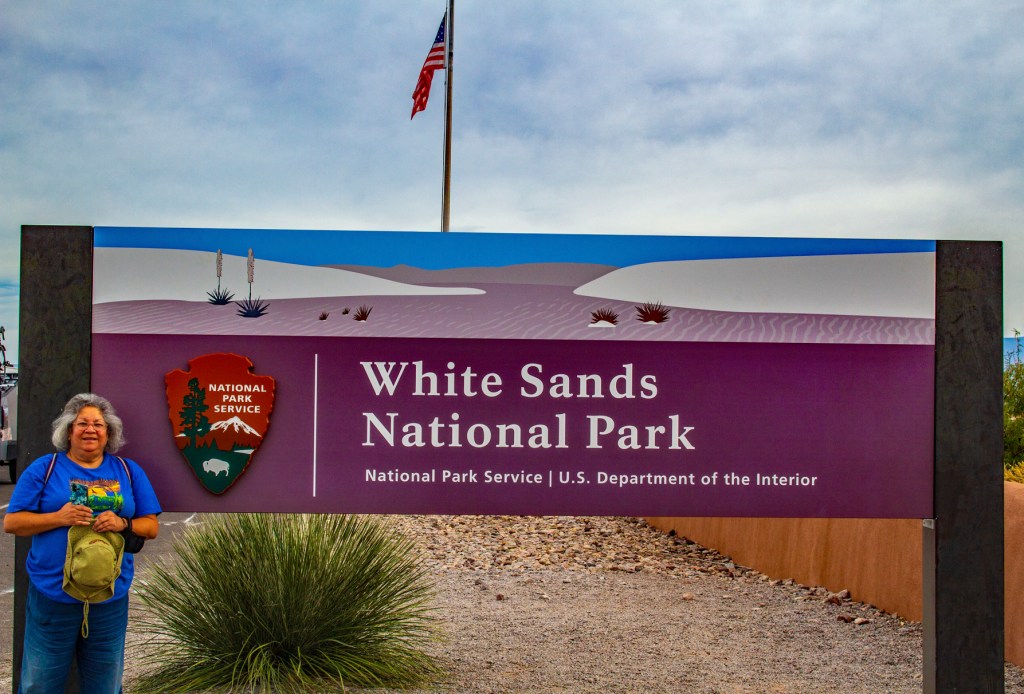
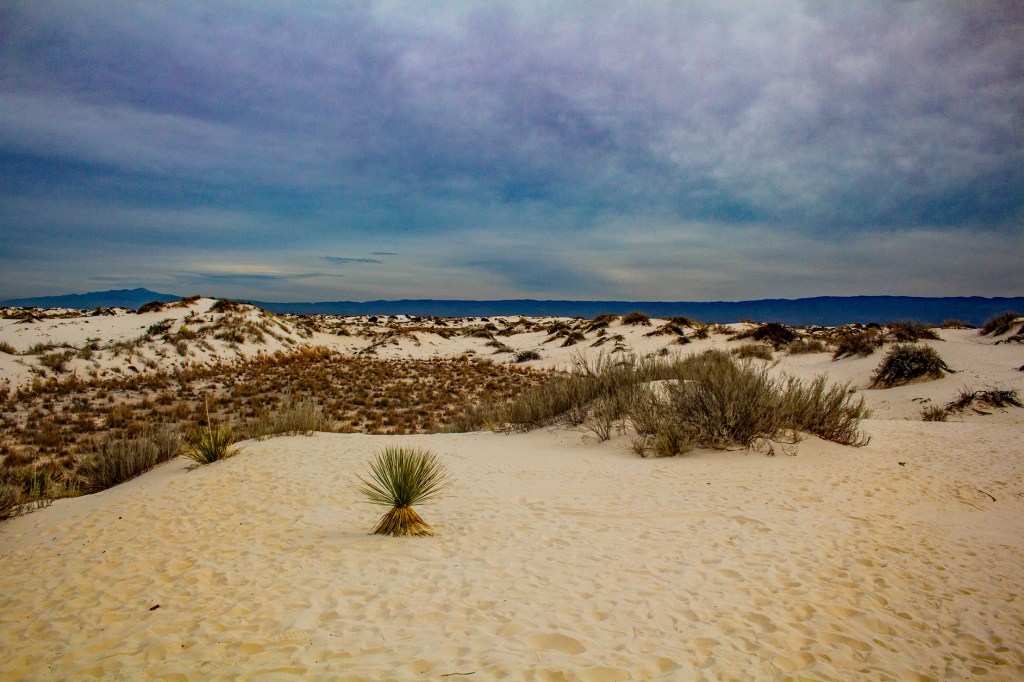
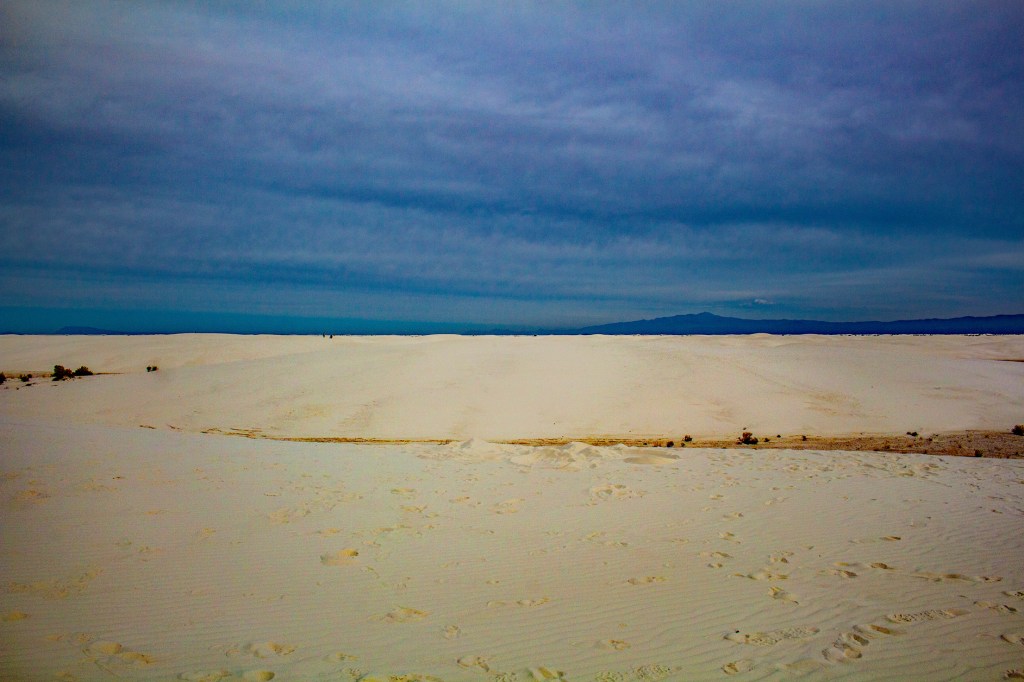
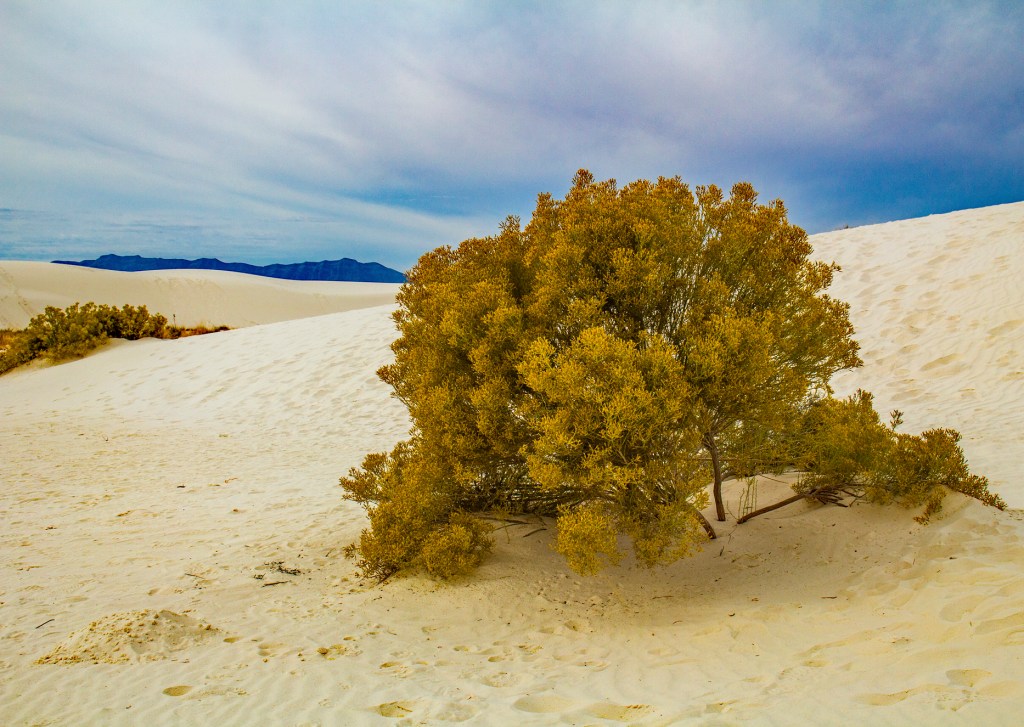
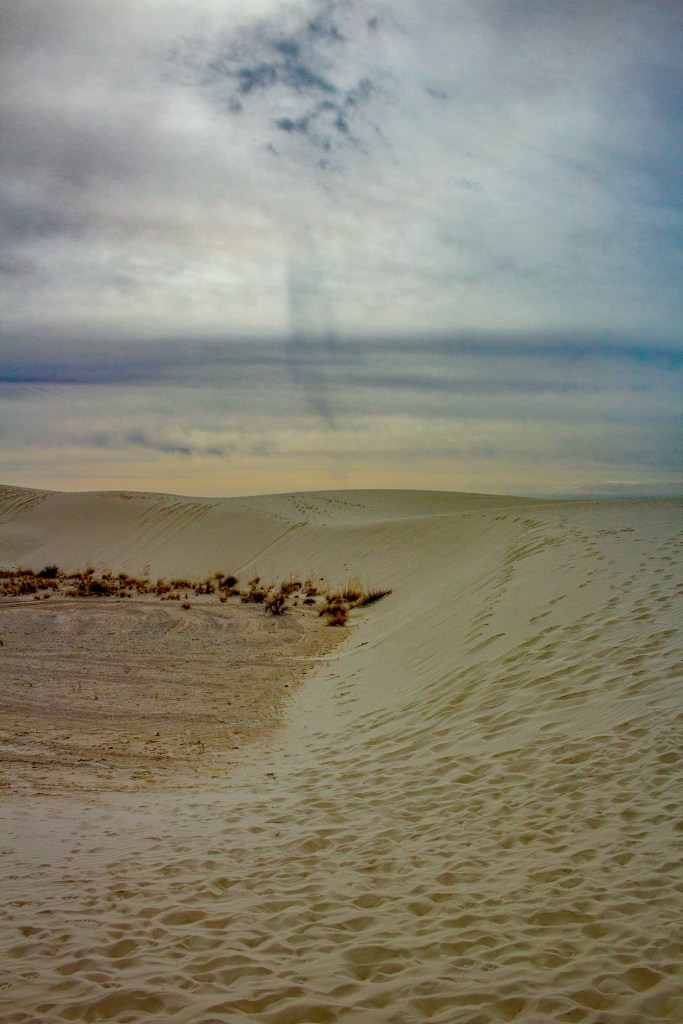
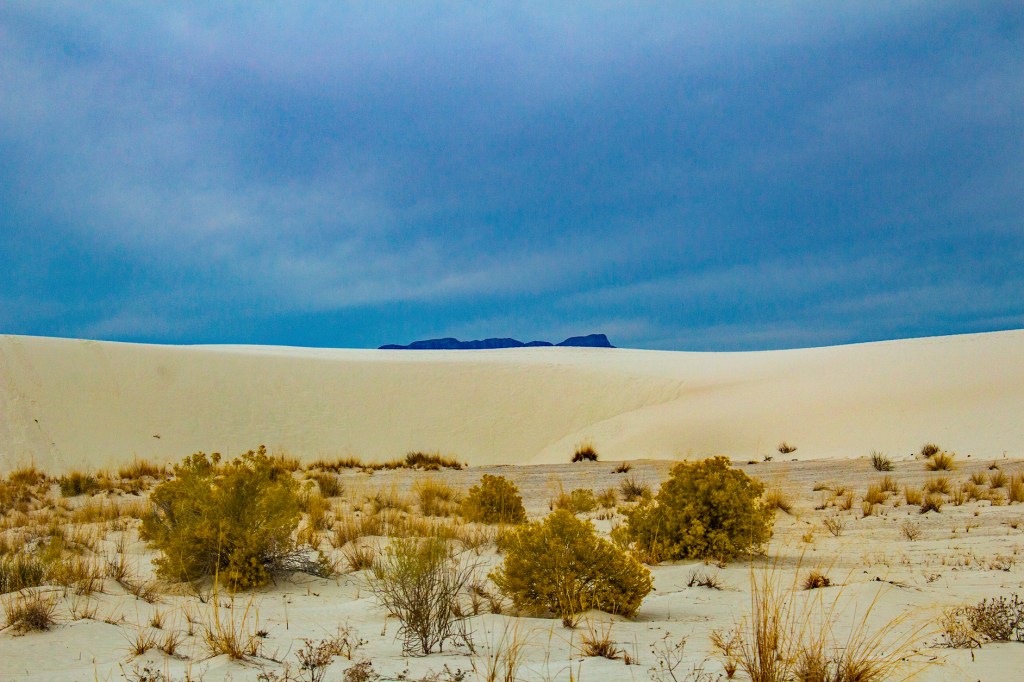
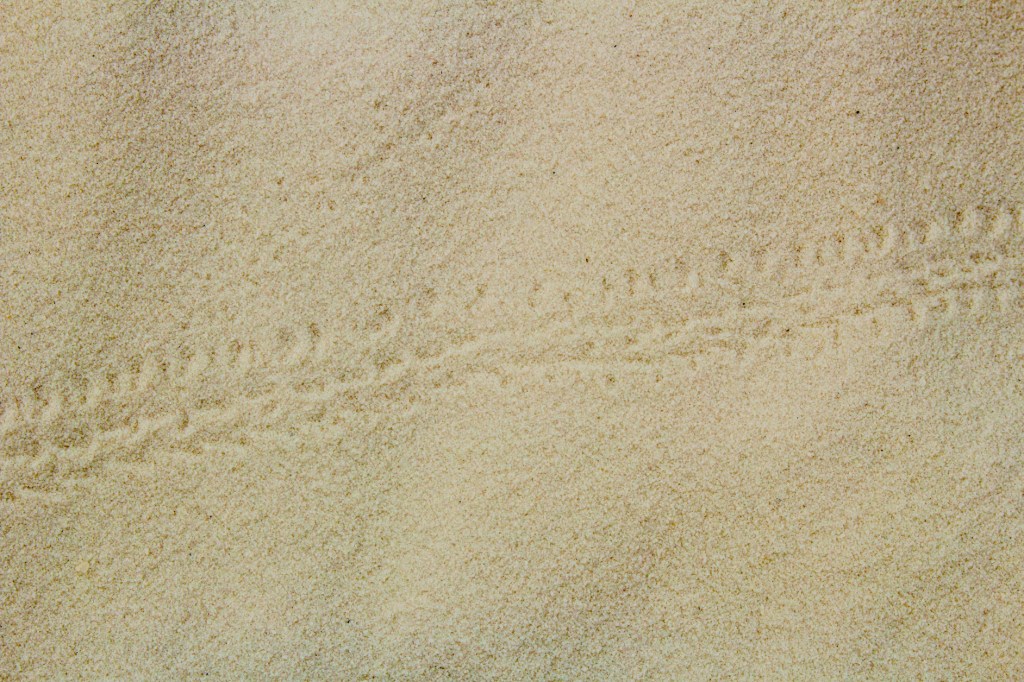
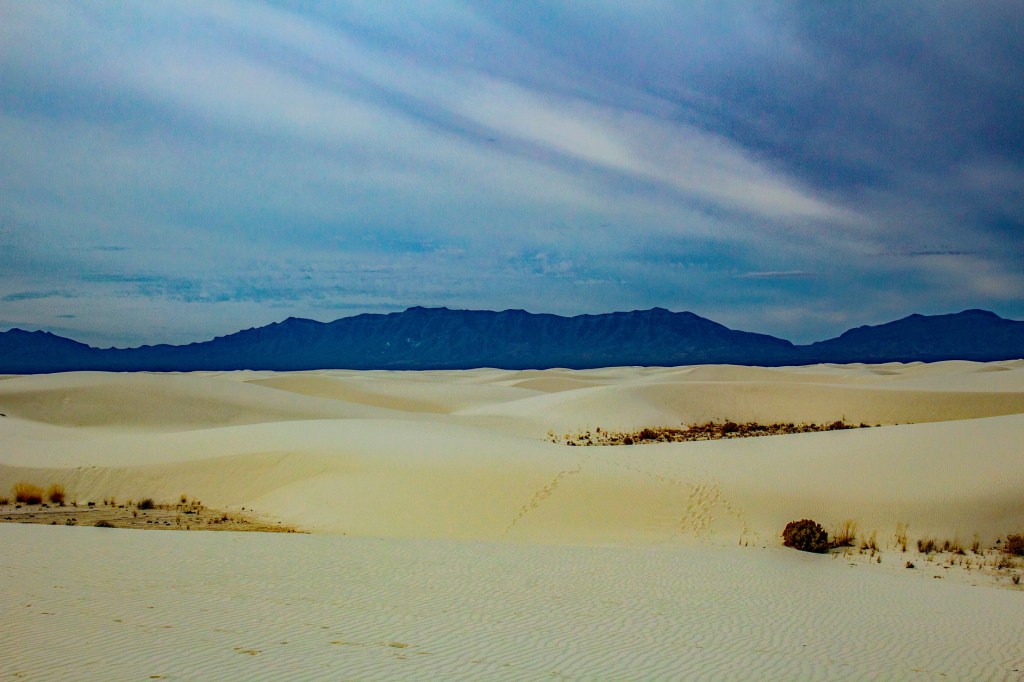
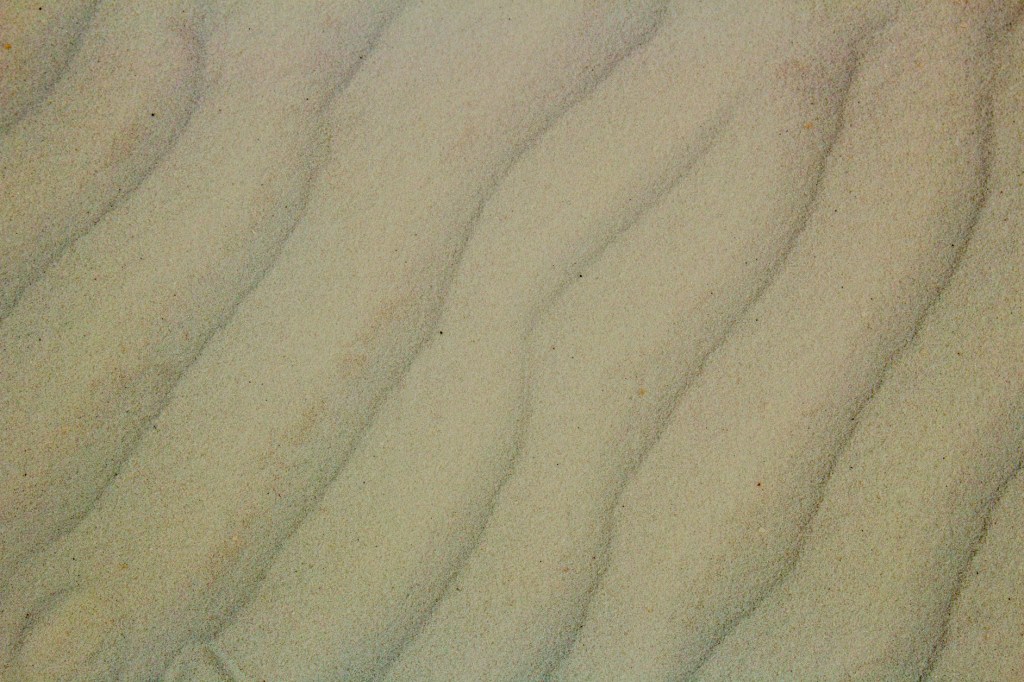
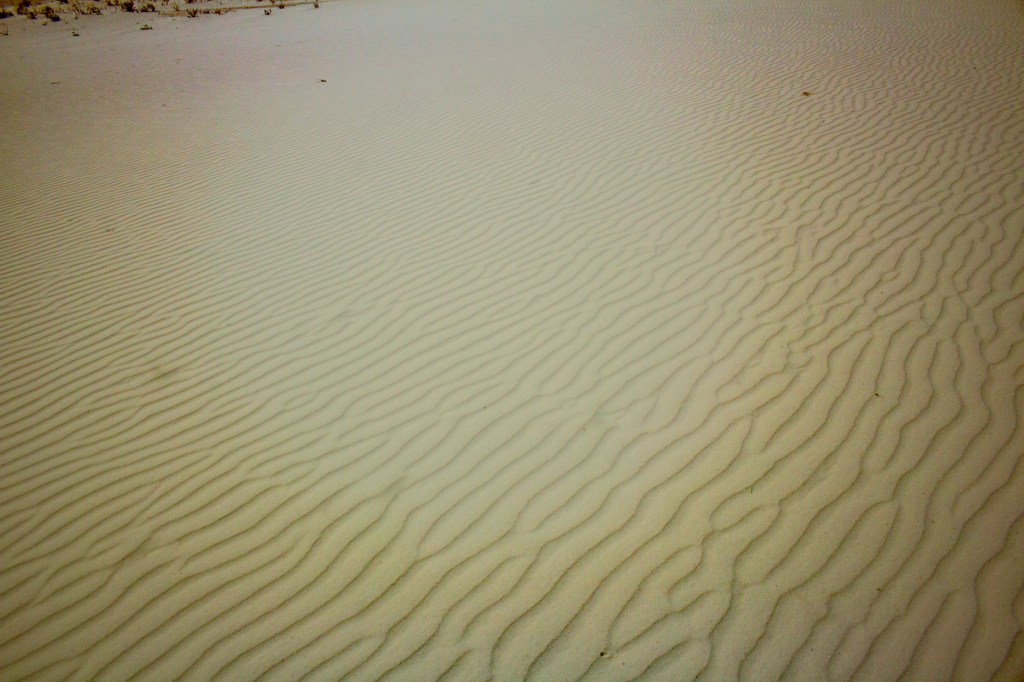
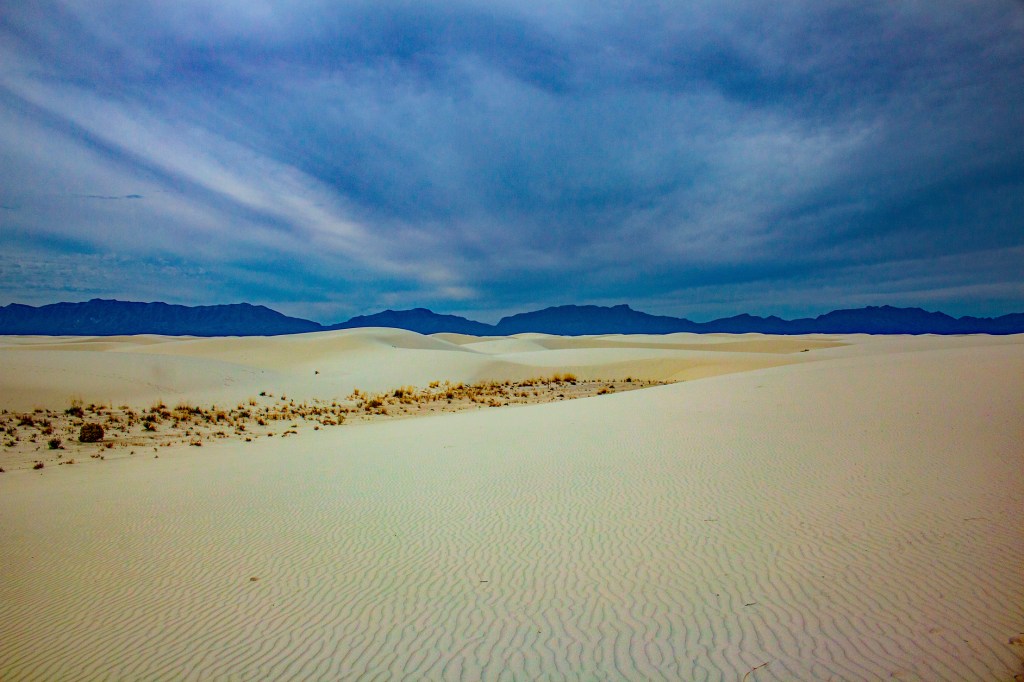
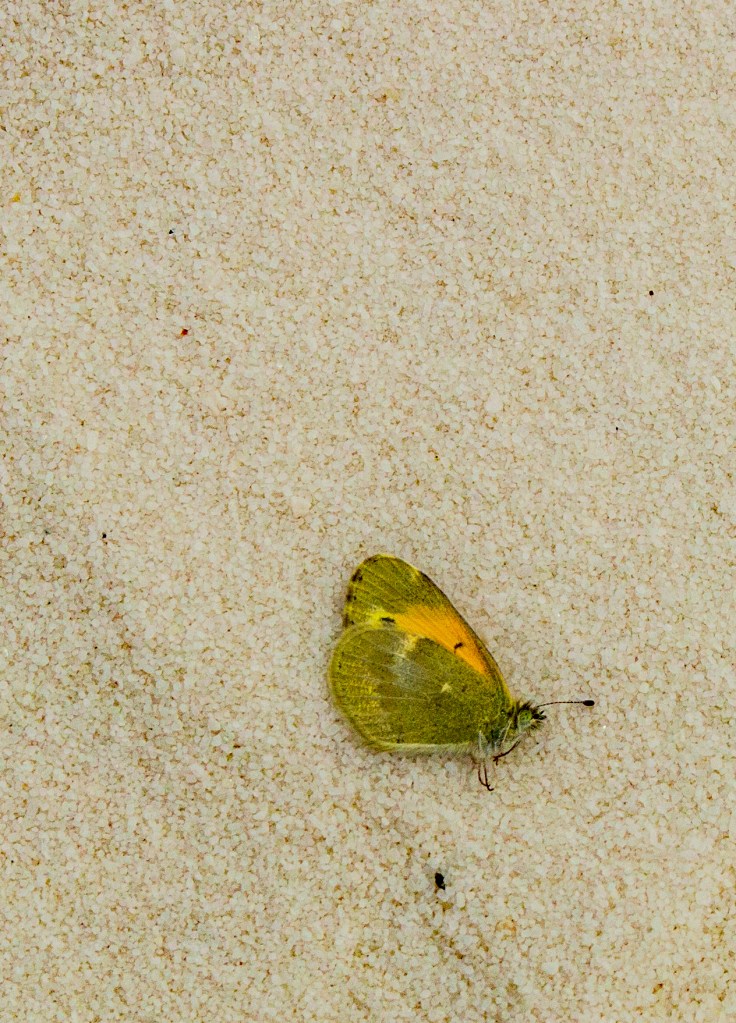
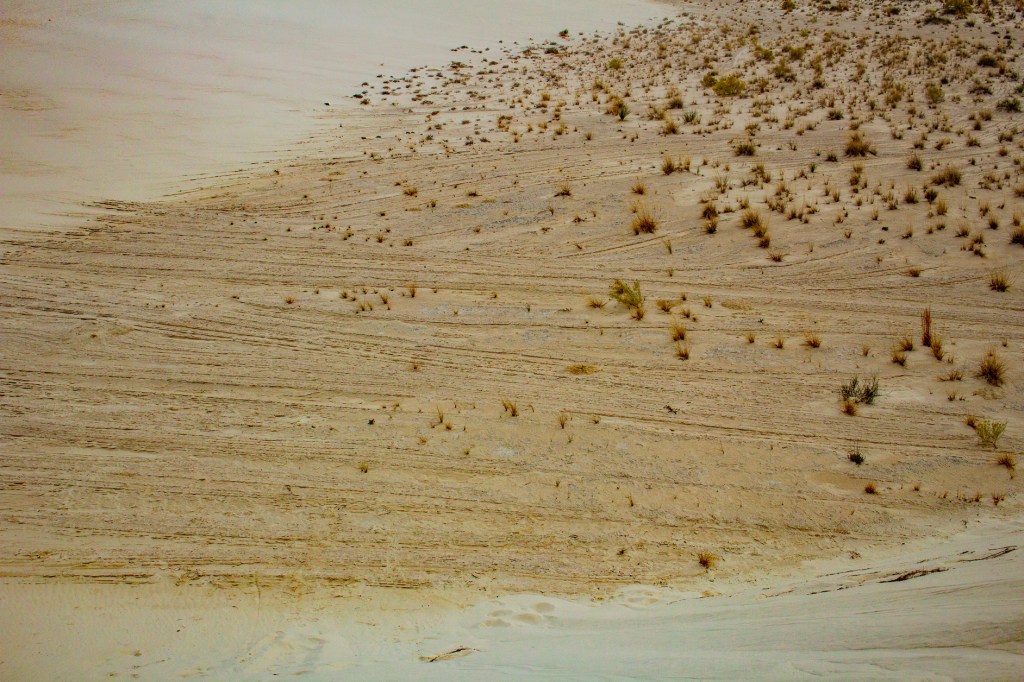
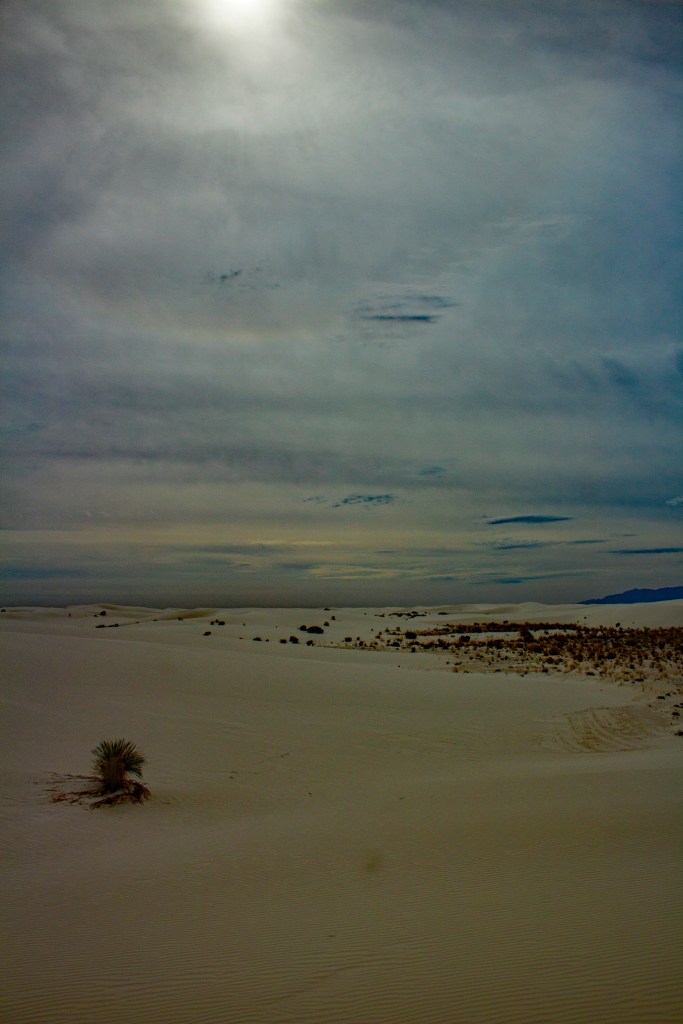
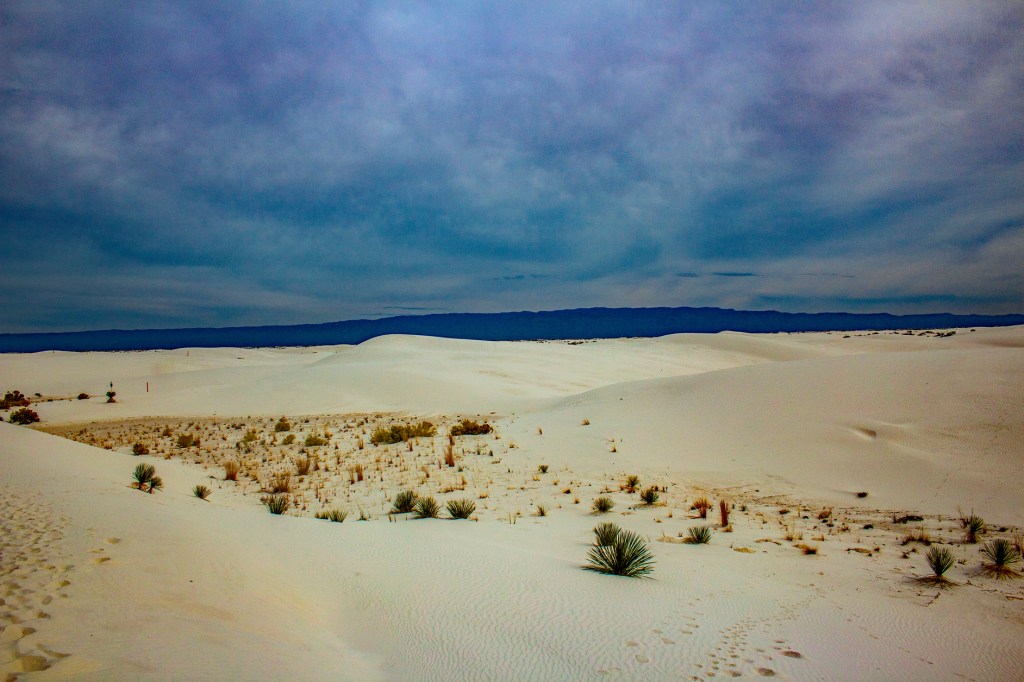
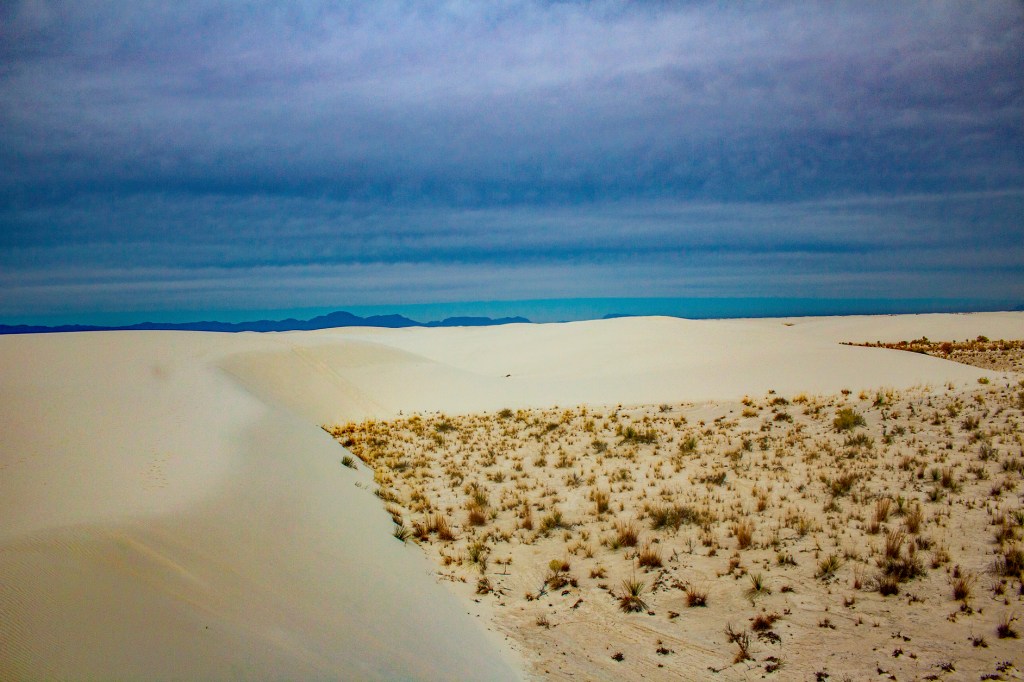
This morning Barbara and I traveled to the White Sands National Park. This park was created for the purpose of protecting 275 square miles of dunes made predominately of gypsum. On the Mohs hardness scale, which goes from 1, softest, to 10, hardest, gypsum is a 1. What makes these dunes different from other dunes is the gypsum. Most dunes are made up of quartz sand where these dunes are made up of gypsum sand, and White Sands National Park is the largest collection of gypsum dunes anywhere on earth. In fact, this collection of dunes is visible from the International Space Station.
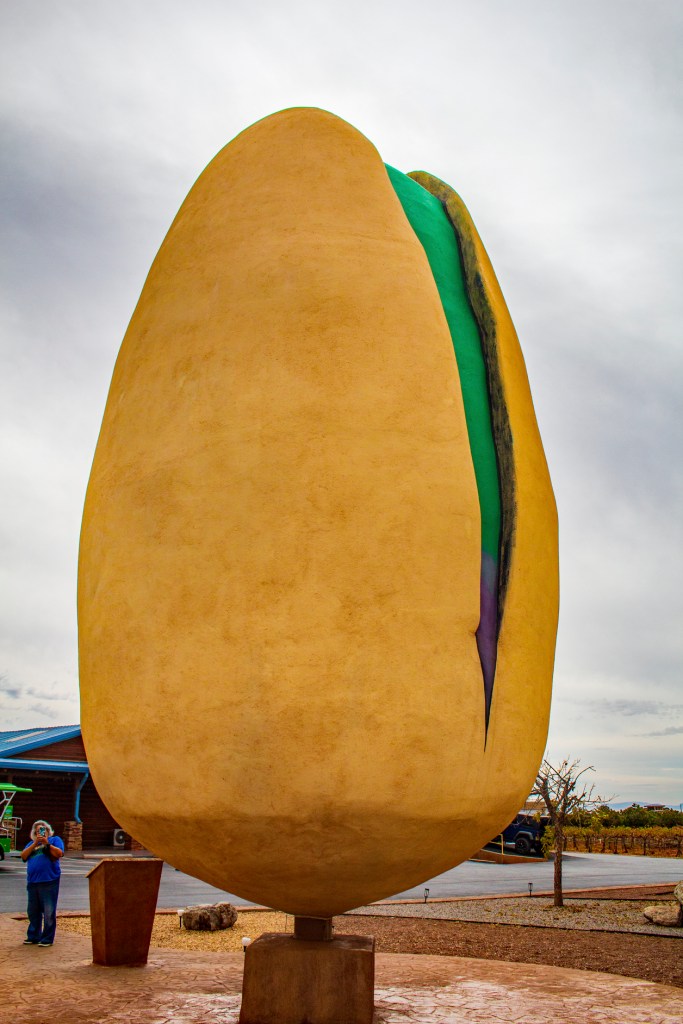
After we left the national park we drove to McGinn’s Pistachio World to see the worlds largest pistachio.
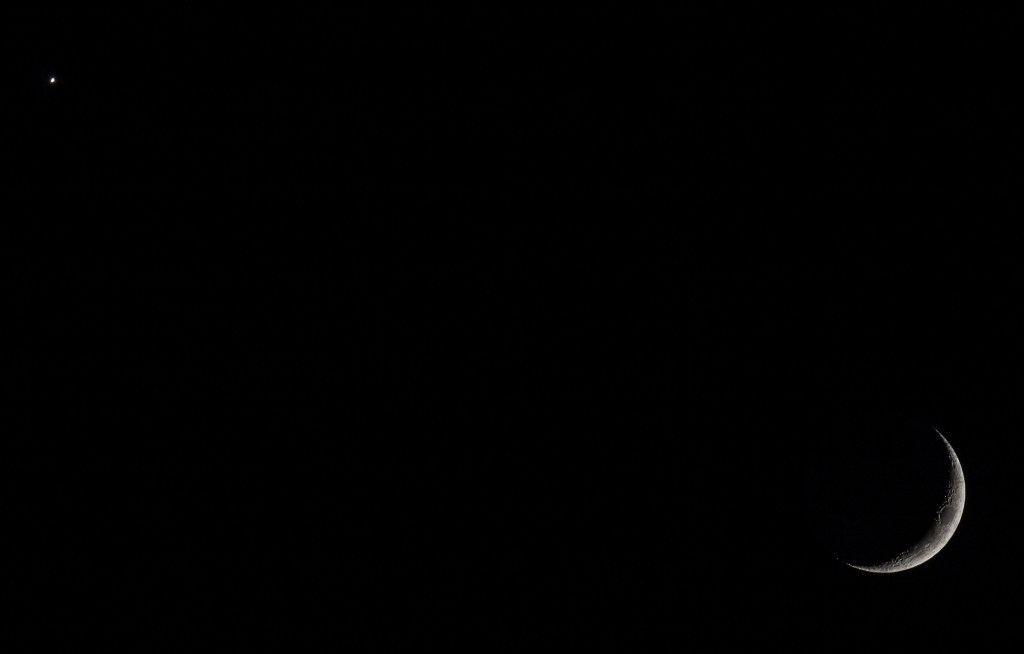
Last evening after we arrived in the town of Alamogordo, New Mexico, where we are currently staying, I stepped outside to view the moon and Venus low in the western sky. It was a great view. I tried taking photos of the two, but they just don’t do it justice. I did get a nice shot of the waxing crescent moon.

 RV There Yet?