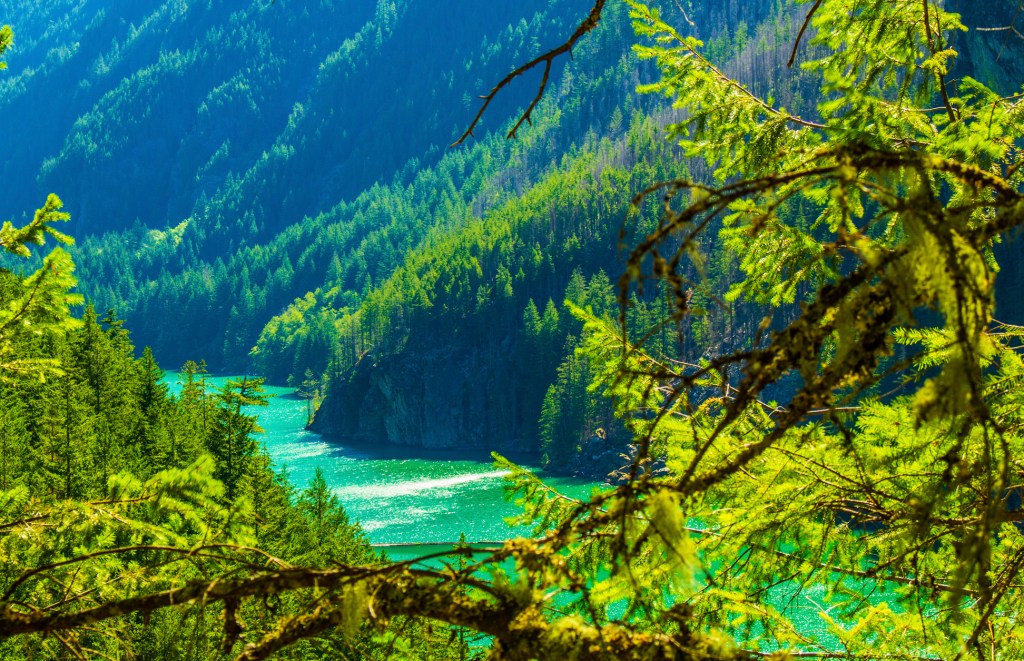
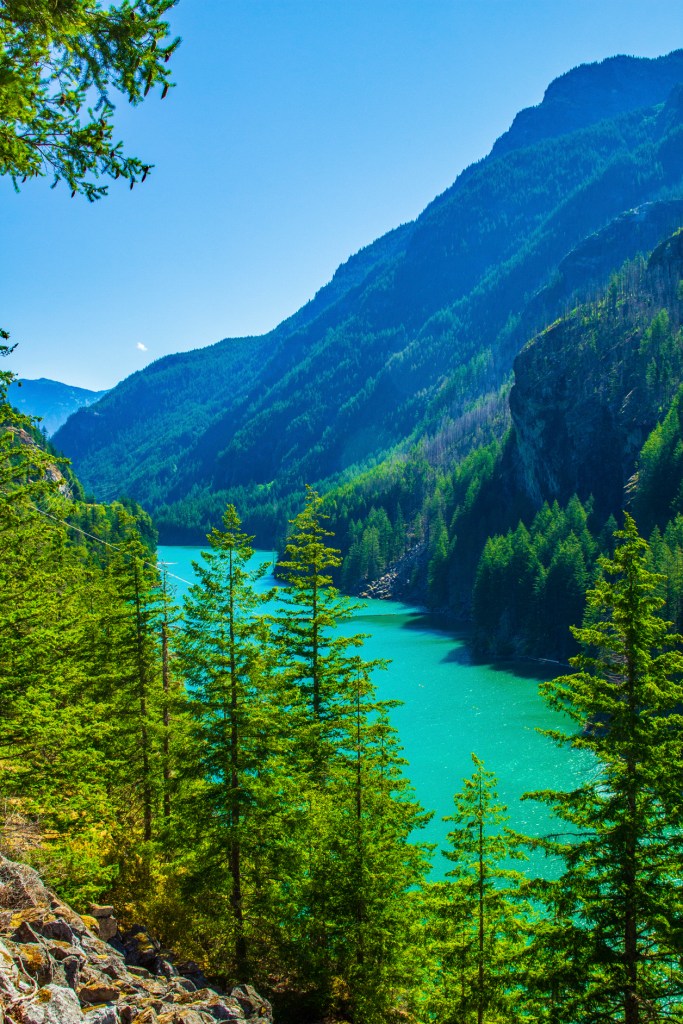
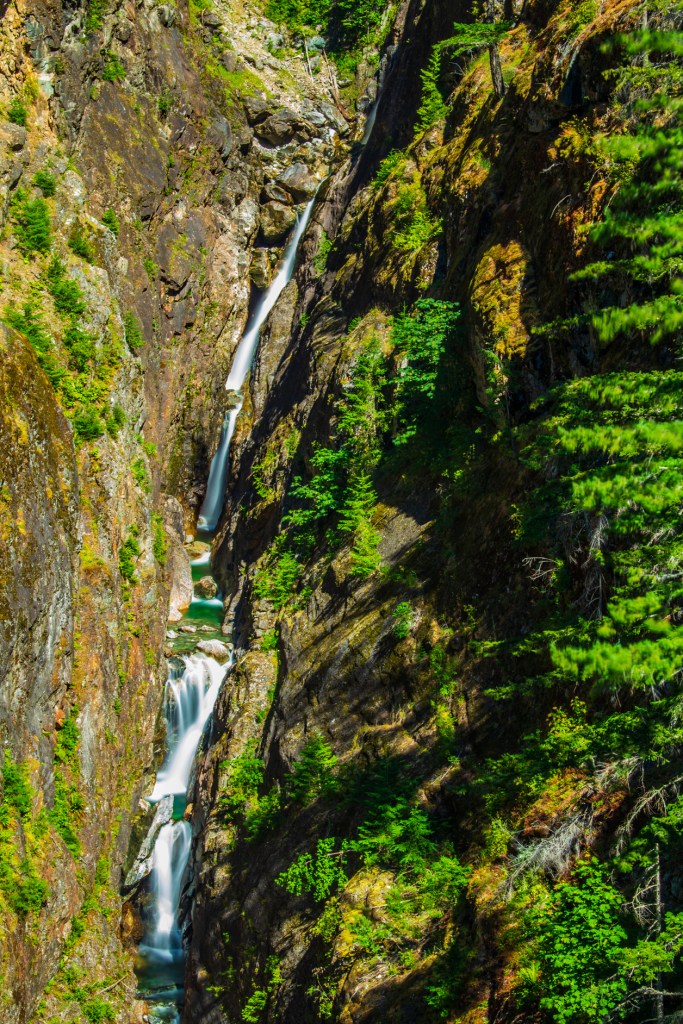
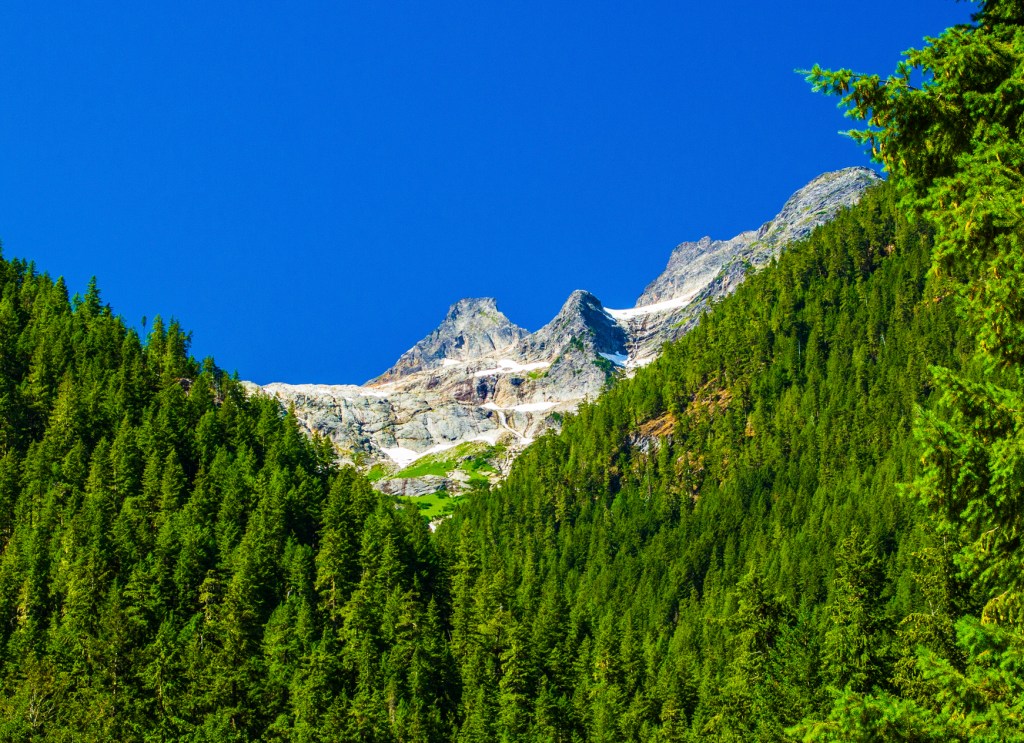
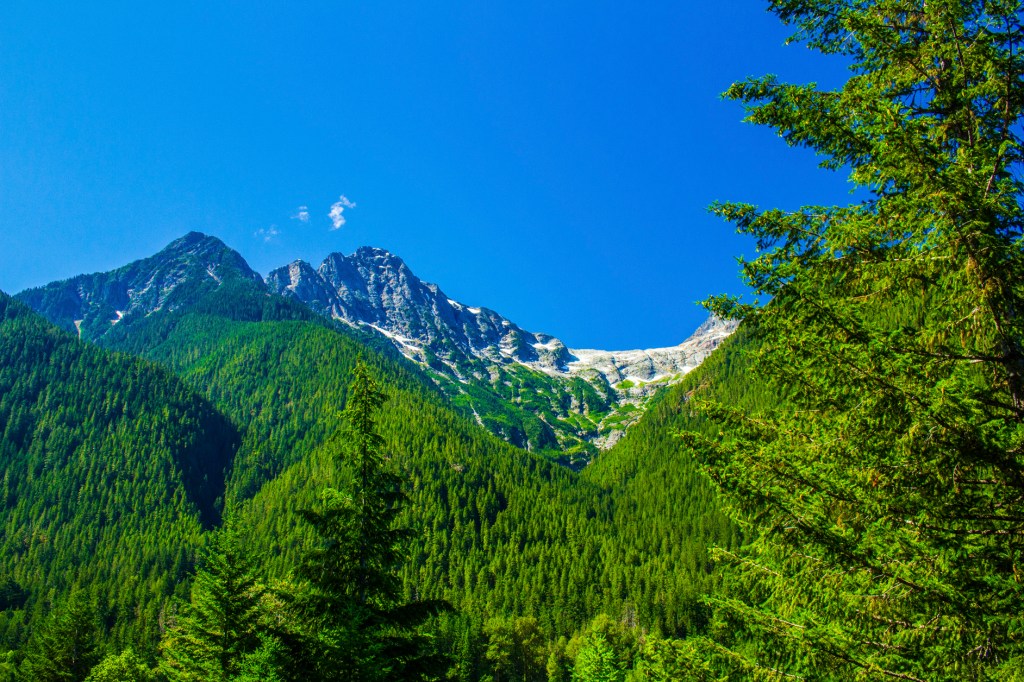
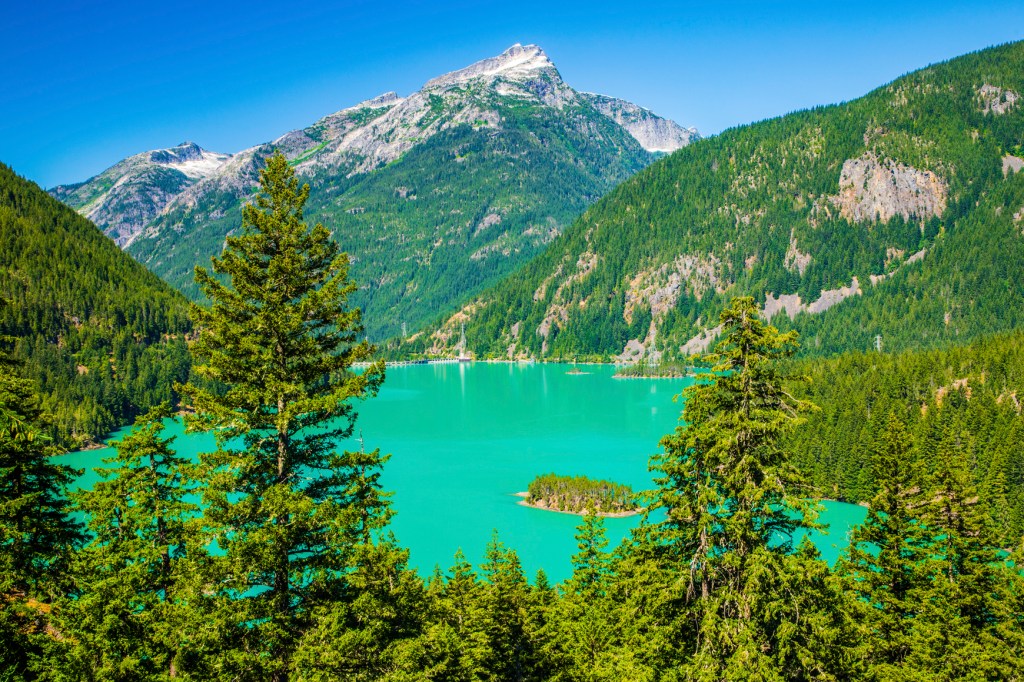
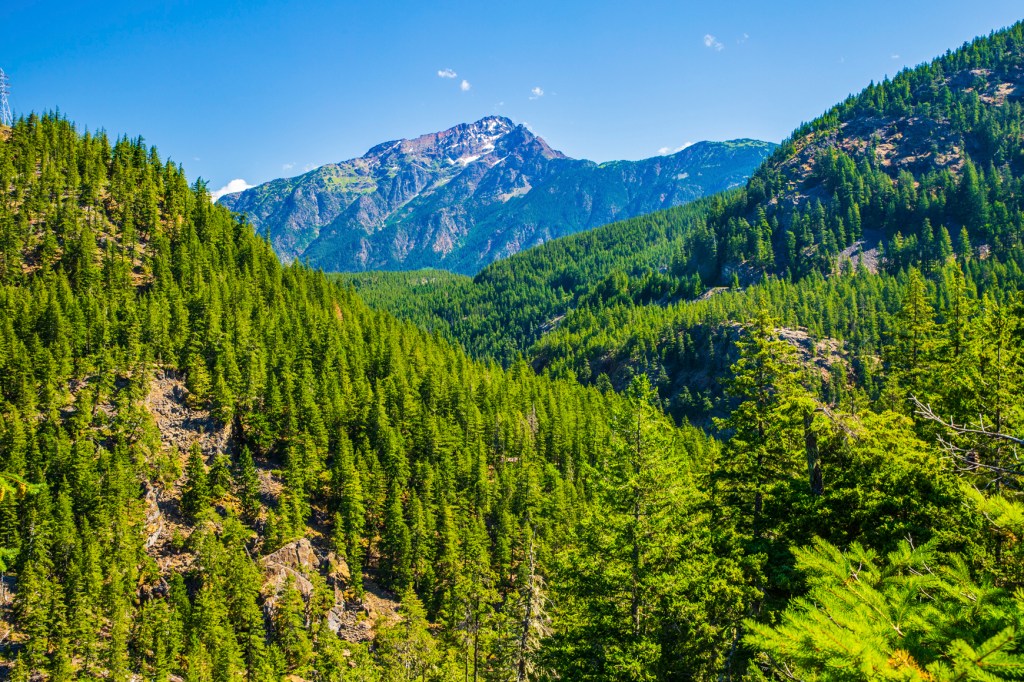
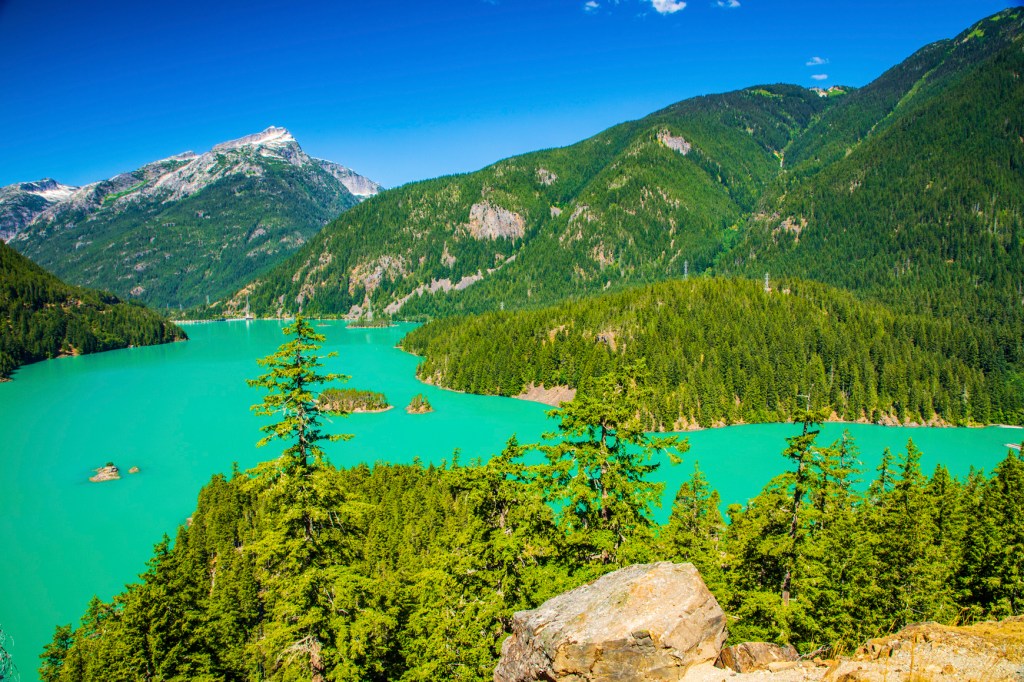
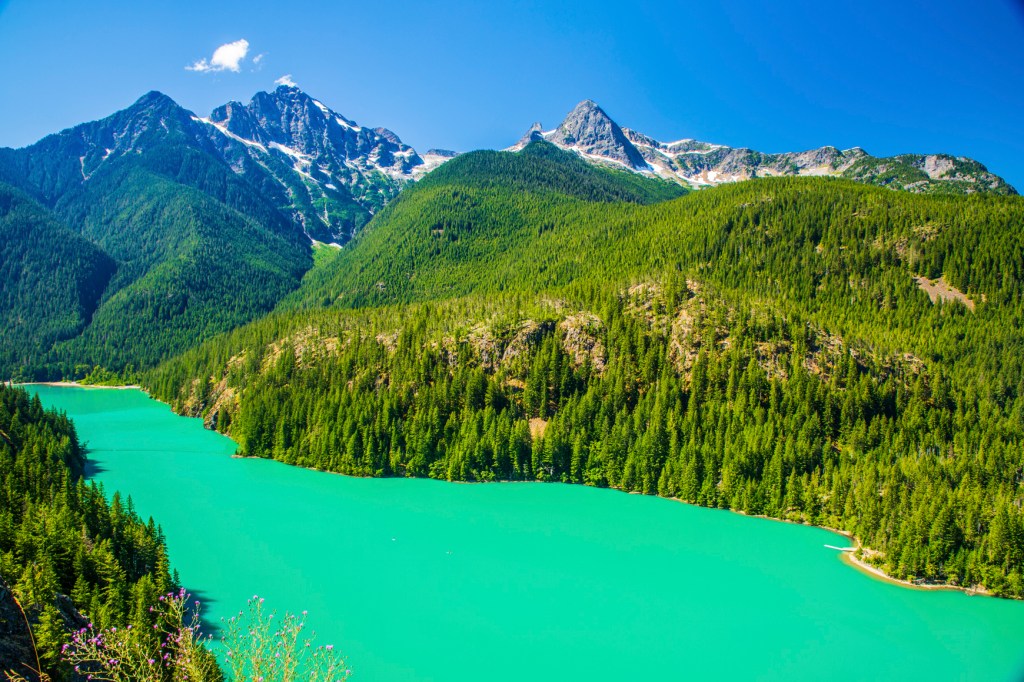
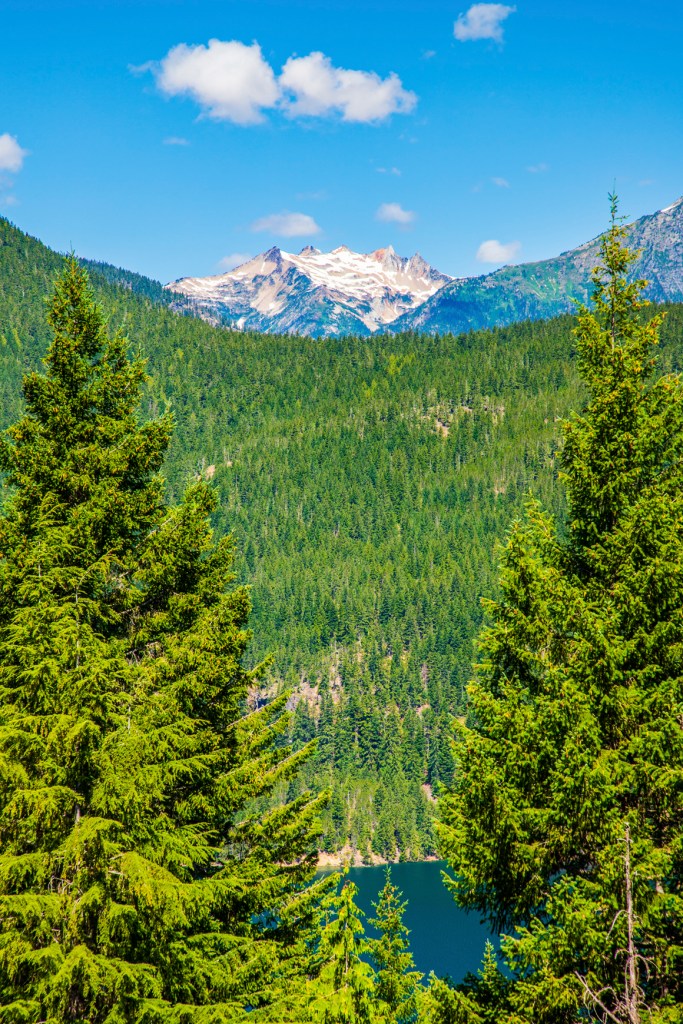
This morning Barbara and I headed east to North Cascades National Park. Even though the park is named North Cascades National Park none of the many peaks within the park are Cascade volcanoes. This is a beautiful park with its jagged peaks, forest land, and many lakes and rivers.
The geologic story of the park is anything but simple. However, there is one driver that is responsible for most of the parks amazing geology. As the Pacific plate slides beneath the North American plate, just off shore of Washington state, pieces of granite, seafloor basalts, seafloor sediments, ancient volcanic islands and fractured slabs of broken continent are deposited along the leading, western, edge of the North American plate. In addition, as the Pacific plate melts beneath the North American plate it reappears in the form of the two Cascade volcanoes that sit just outside the parks boundary; Mount Baker and Glacier Peak. This process has been going on for millions of years and continues today. Glaciation within the park reached its peak during the Pleistocene Epoch, aka the Ice Ages, but continues today. North Cascades Nation Park is home to the most active glaciers in the US outside of Alaska. There are more than 300 active glaciers within the park. It is this glaciation that helped sculpt the many jagged peaks and create the many river valleys and the over 300 lakes seen today within the park today.

 RV There Yet?