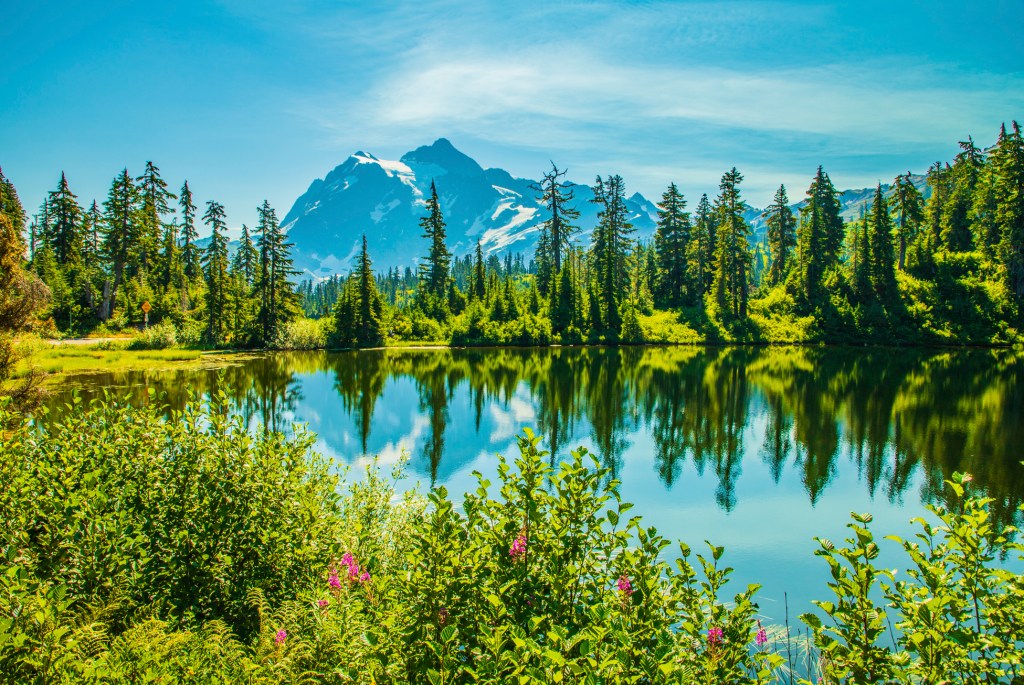
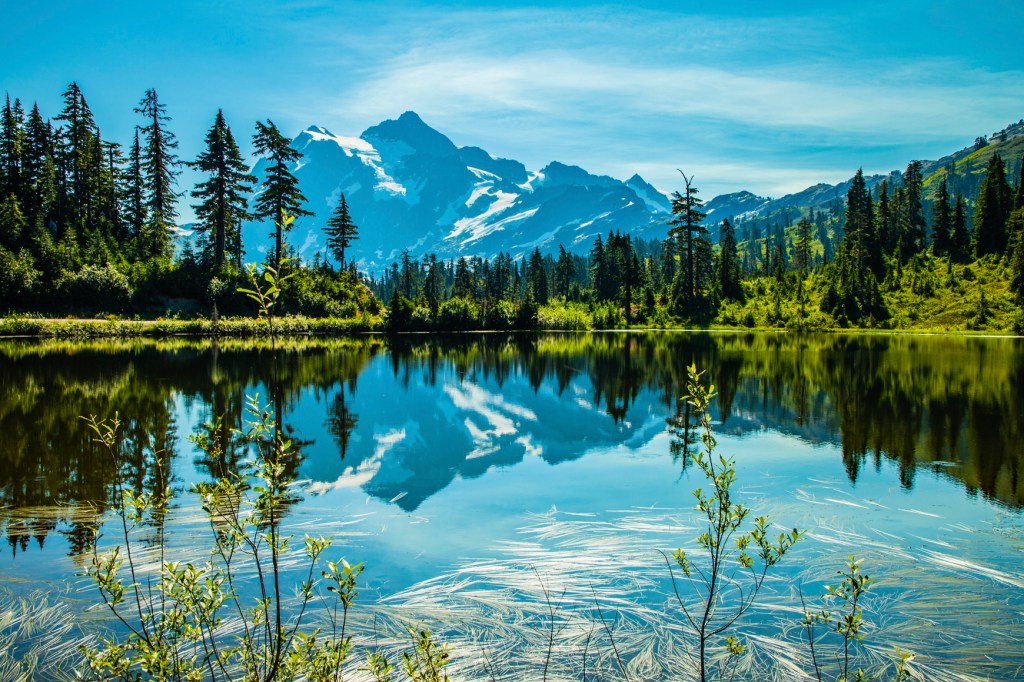
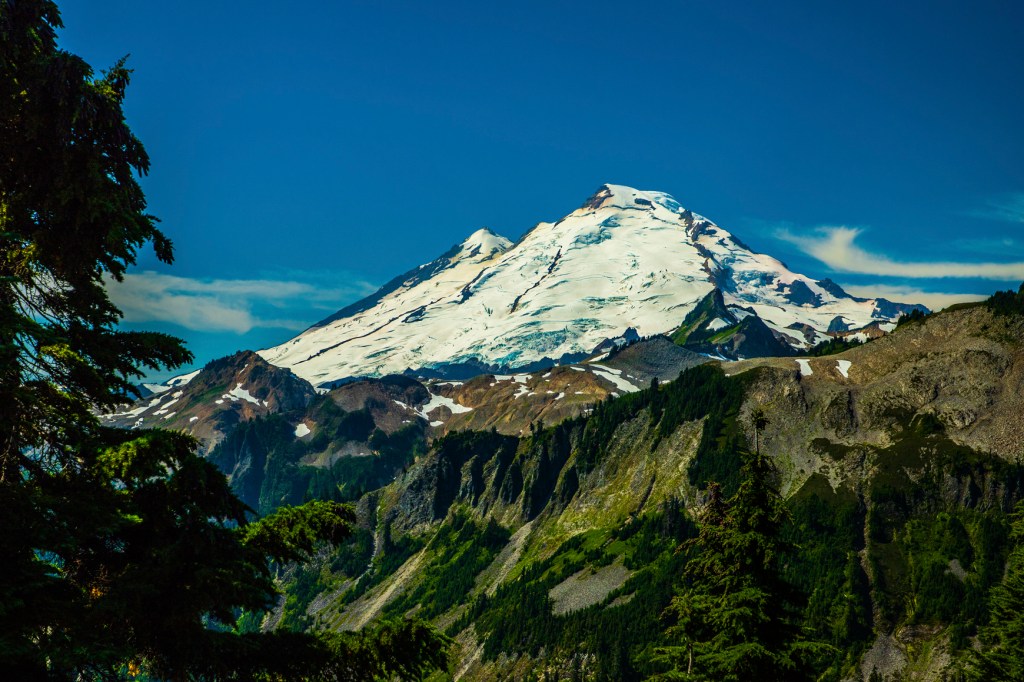
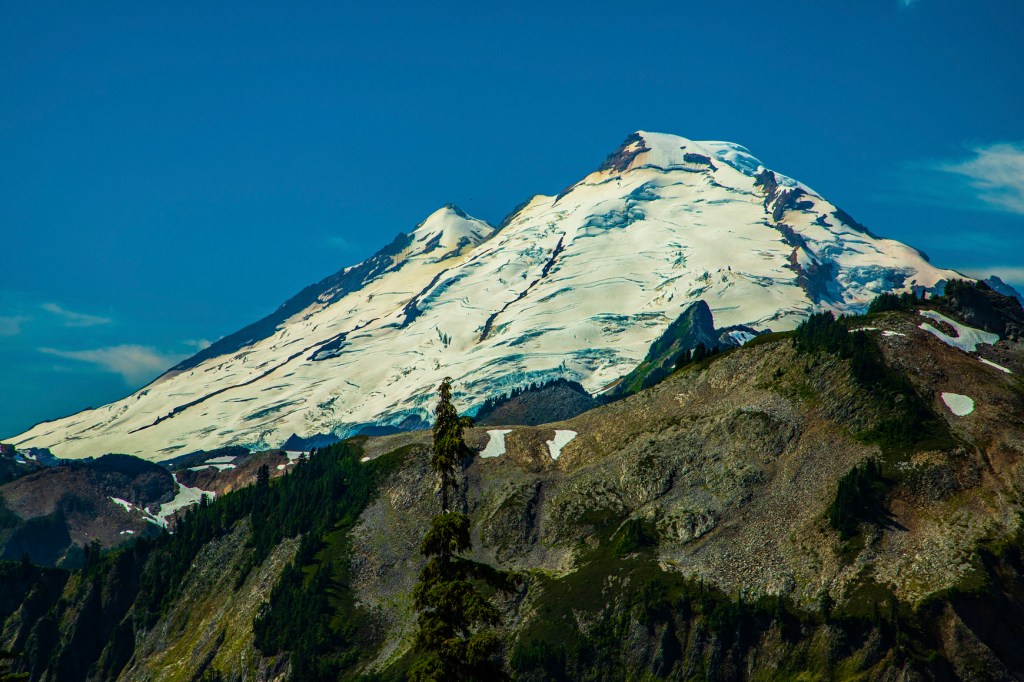
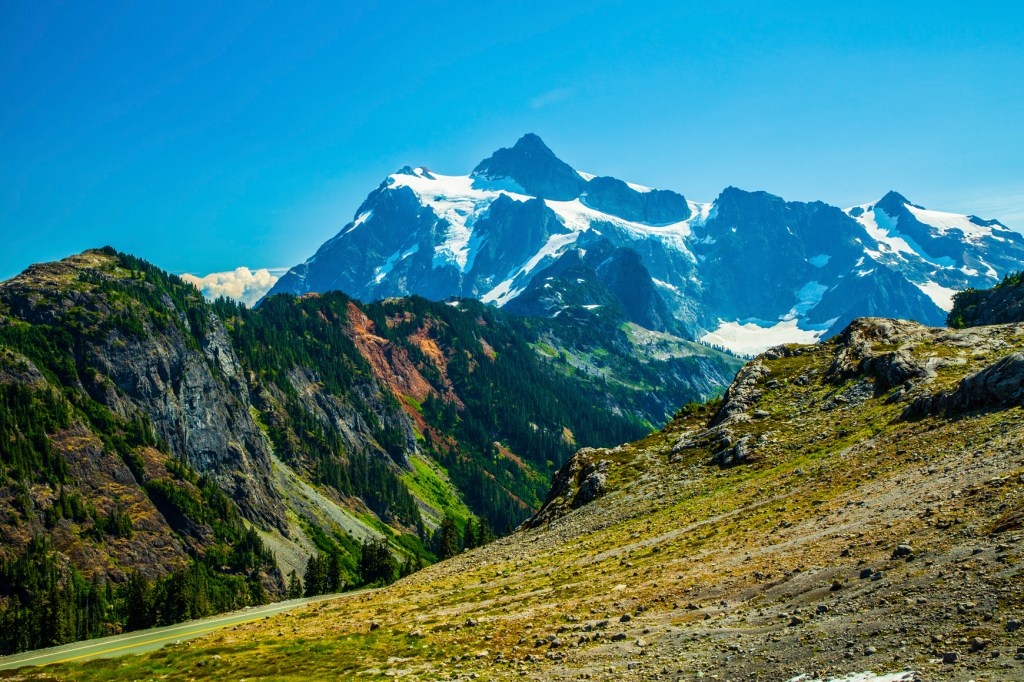
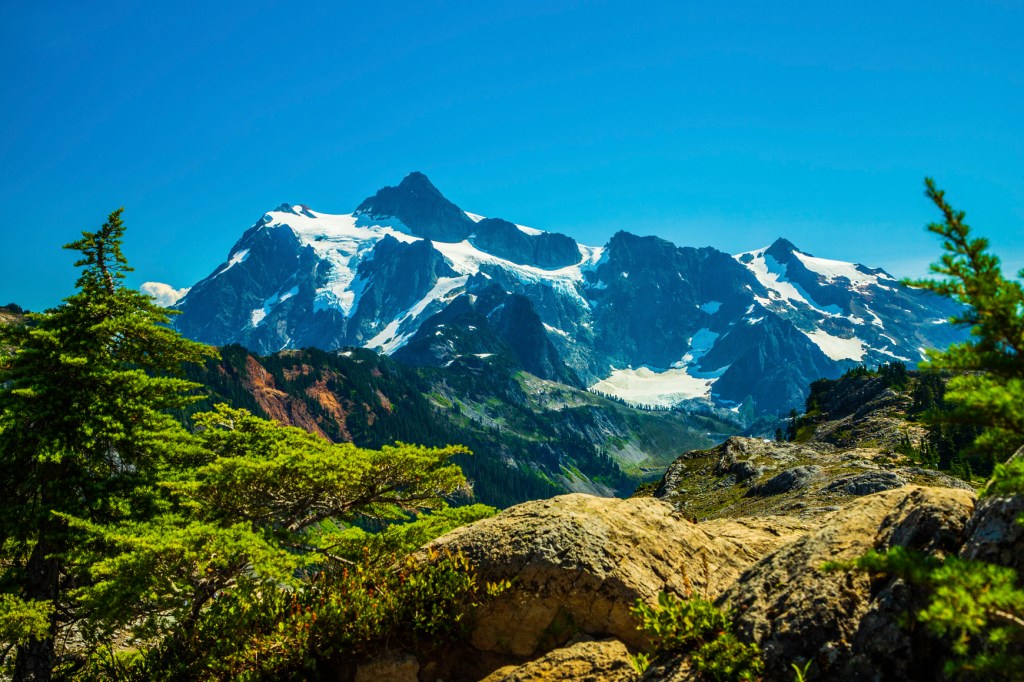
Yesterday Barbara and I traveled east along the Mount Baker Scenic Highway to Mount Baker at Artist Point. This is a 70 mile very scenic drive and the vistas at the end of the road are awesome. Also here is 9,127 foot tall Mount Shuksan to the east. Mount Shuksan is not a Cascade volcano like its neighbor to the west, Mount Baker, the mountain is composed of Shuksan greenschist, oceanic basalt that was metamorphosed when the Easton terrane collided with the west coast of North America, approximately 120 million years ago. As you can see from my photos it is heavily glaciated.
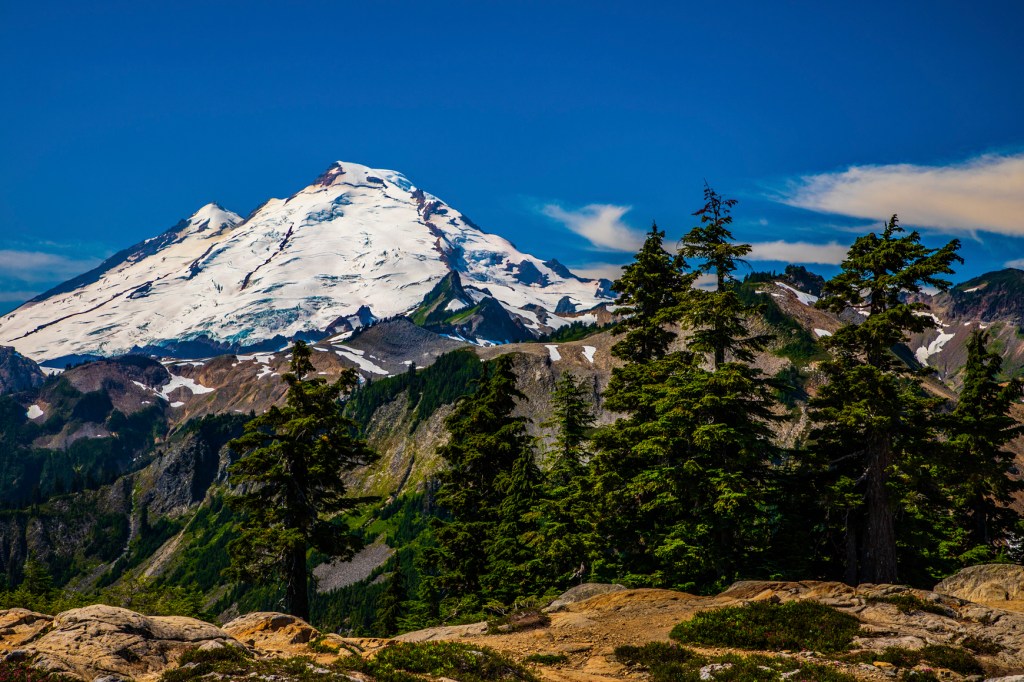
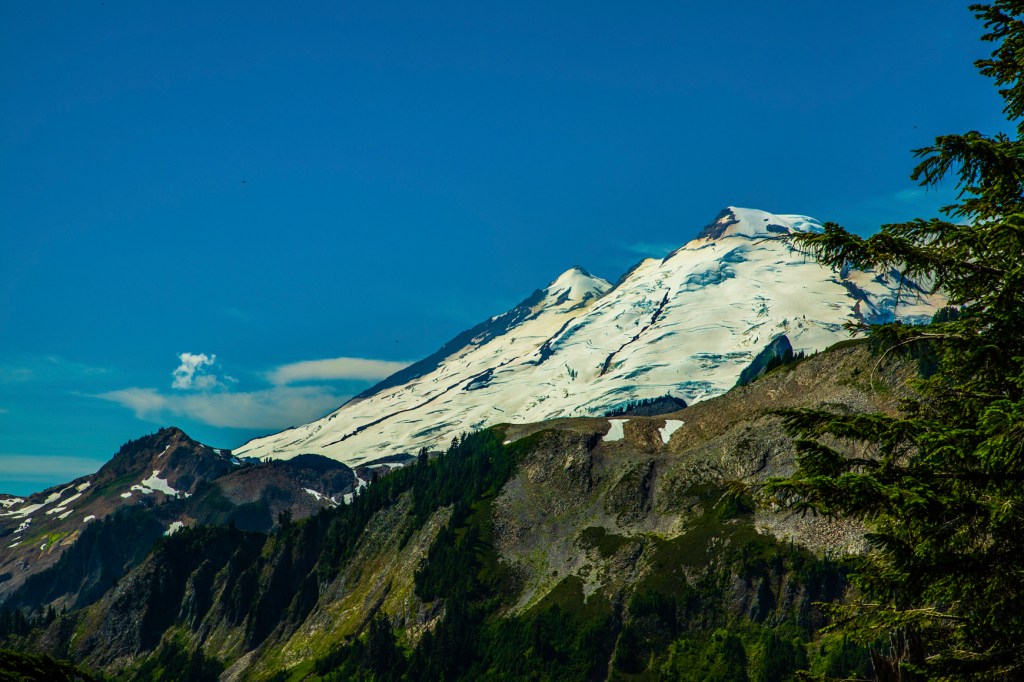
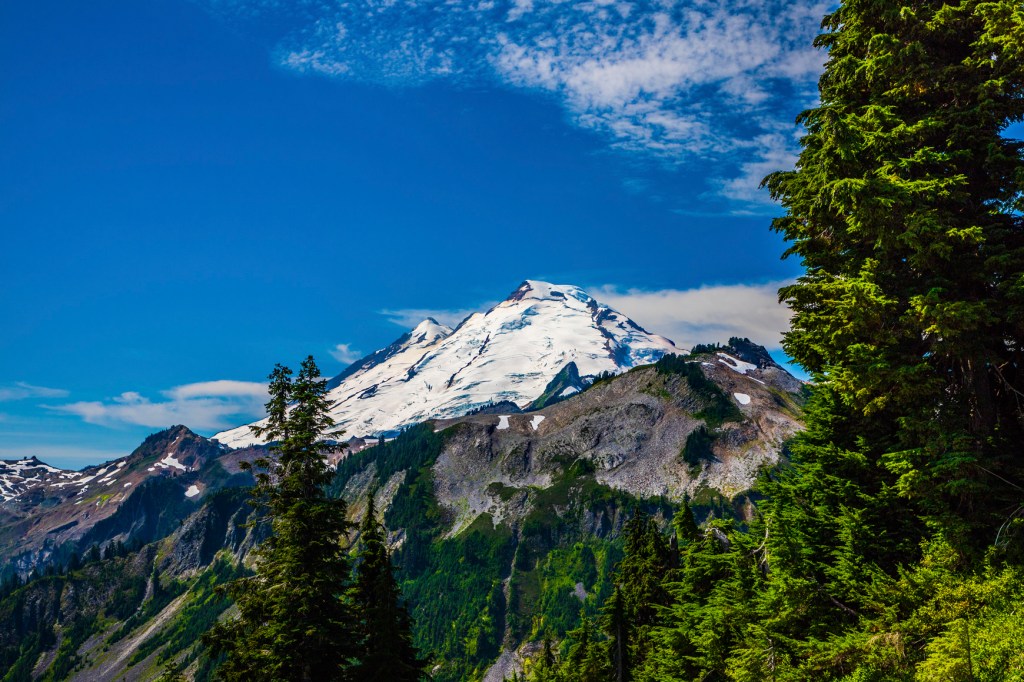
Mount Baker is a 10,781 foot tall active glacier covered andesitic stratovolcano in the Cascade Volcanic Arc and the North Cascades of Washington. Mount Baker has the second-most thermally active crater in the Cascade Range after Mount Saint Helens. About 30 miles east of the city of Bellingham, Washington, Mount Baker is the youngest volcano in the Mount Baker volcanic field. While volcanism has persisted here for some 1.5 million years, the current volcanic cone is likely no more than 140,000 years old, and possibly no older than 80,000 to 90,000 years. Older volcanic vents in the Mount Baker Volcanic Field have mostly eroded away due to glaciation.
After Mount Rainier, Mount Baker has the heaviest glacier cover of the Cascade Range volcanoes. The volume of snow and ice on Mount Baker, 0.43 cubic miles is greater than that of all the other Cascades volcanoes, except Rainier, combined. It is also one of the snowiest places in the world. In 1999, the Mount Baker Ski Area, located 9 mi to the northeast, set the world record for recorded snowfall in a single season at 1,140 inches (95 feet).



 RV There Yet?