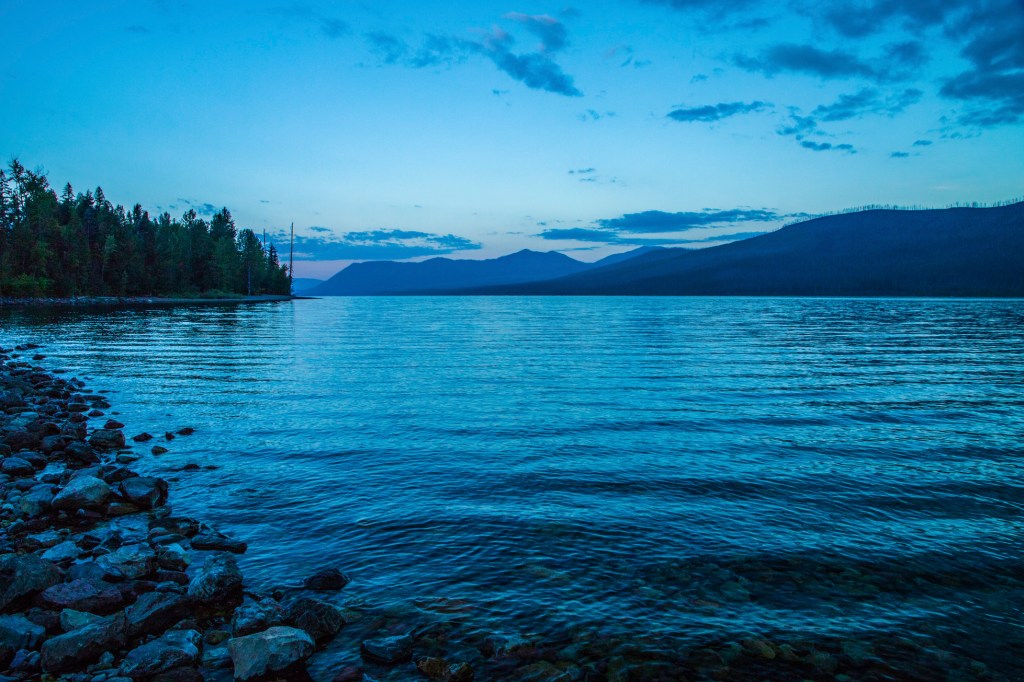
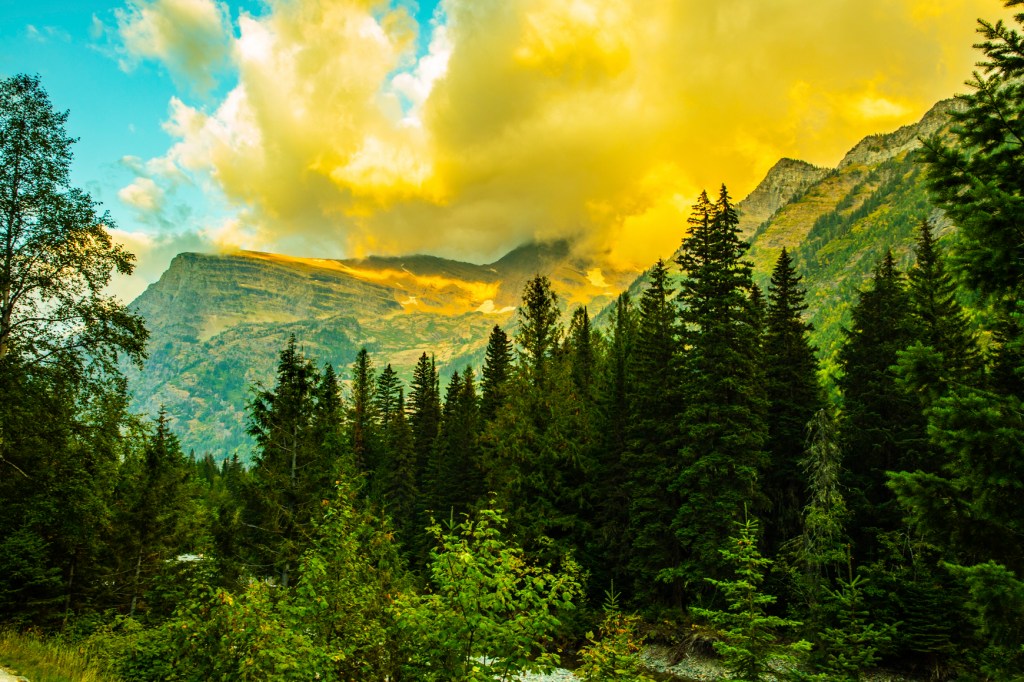
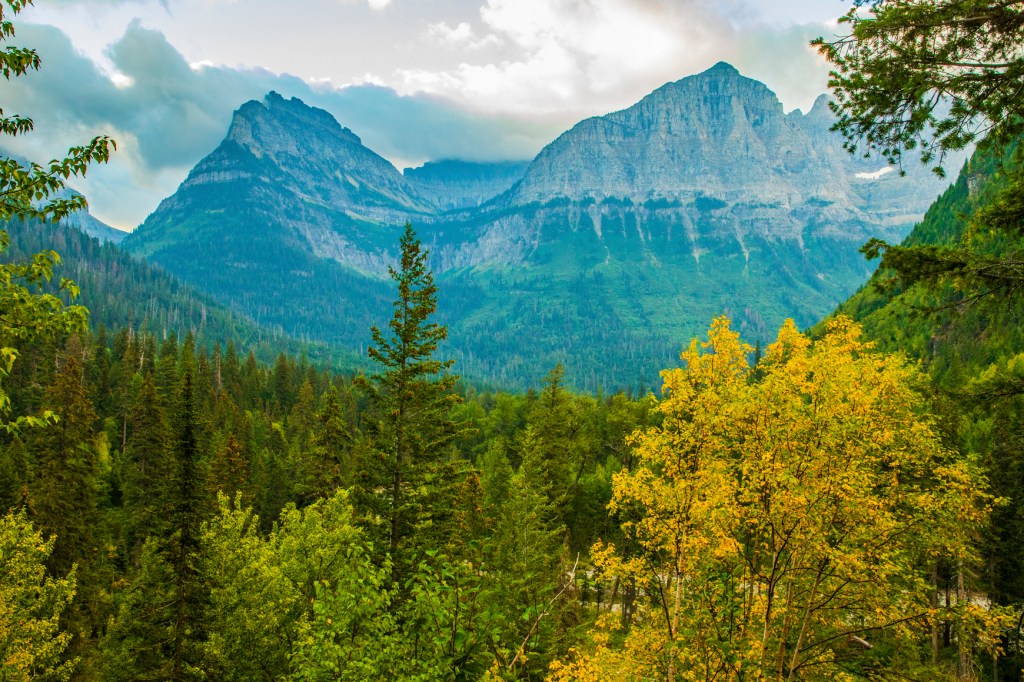
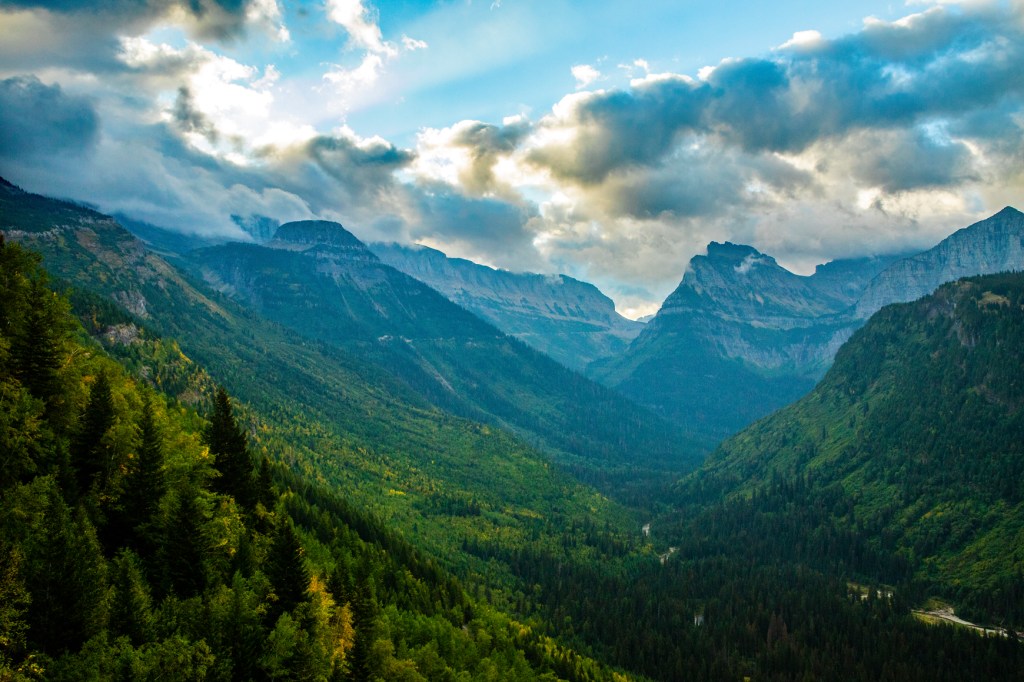
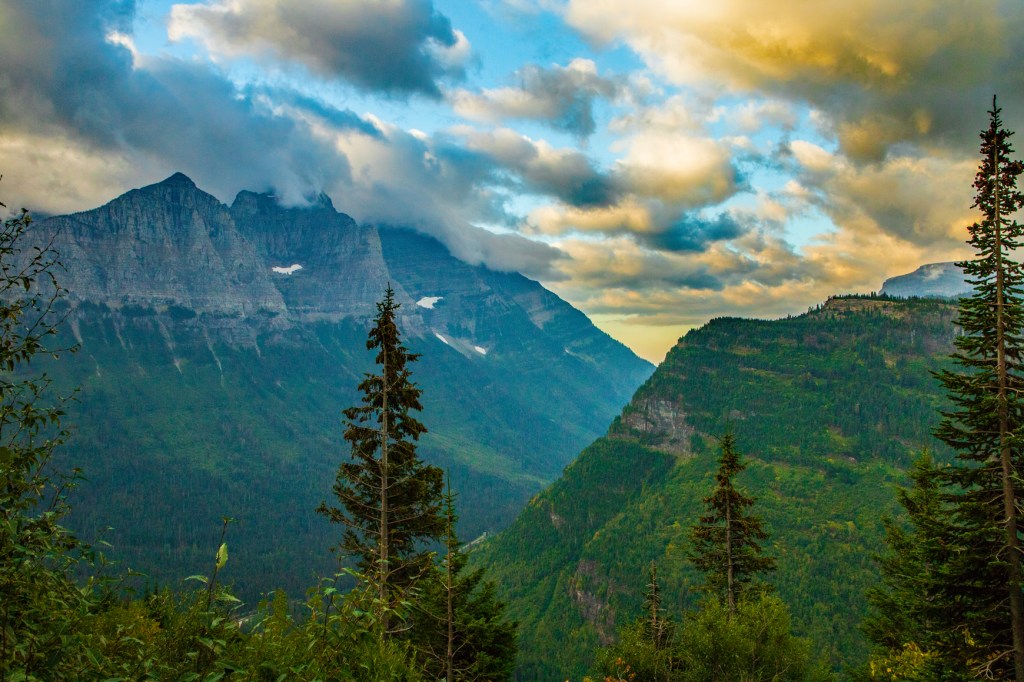
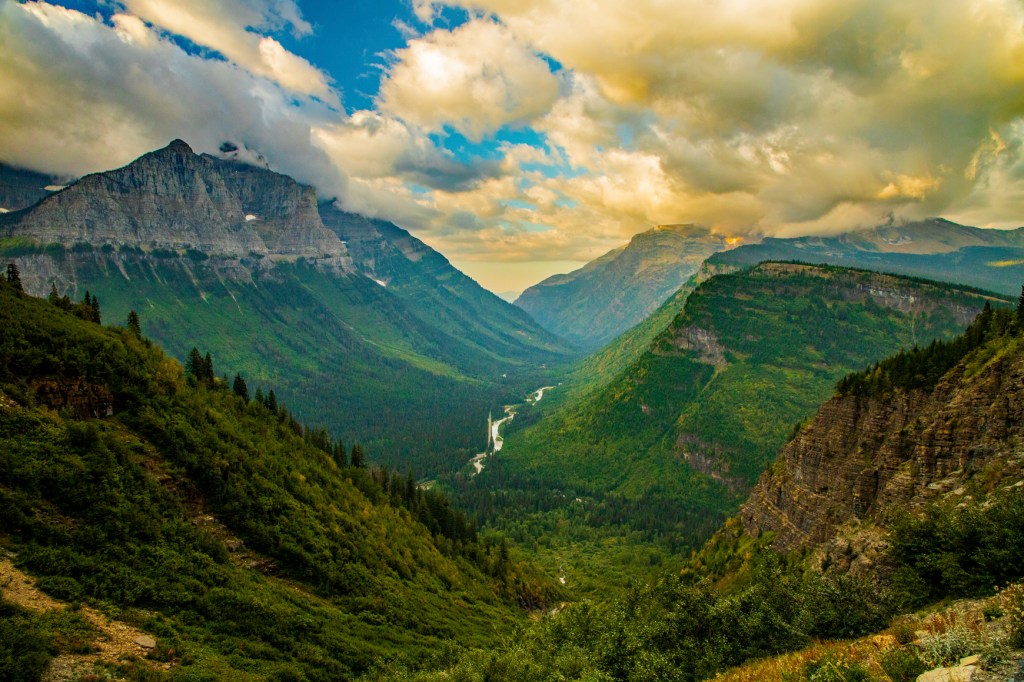
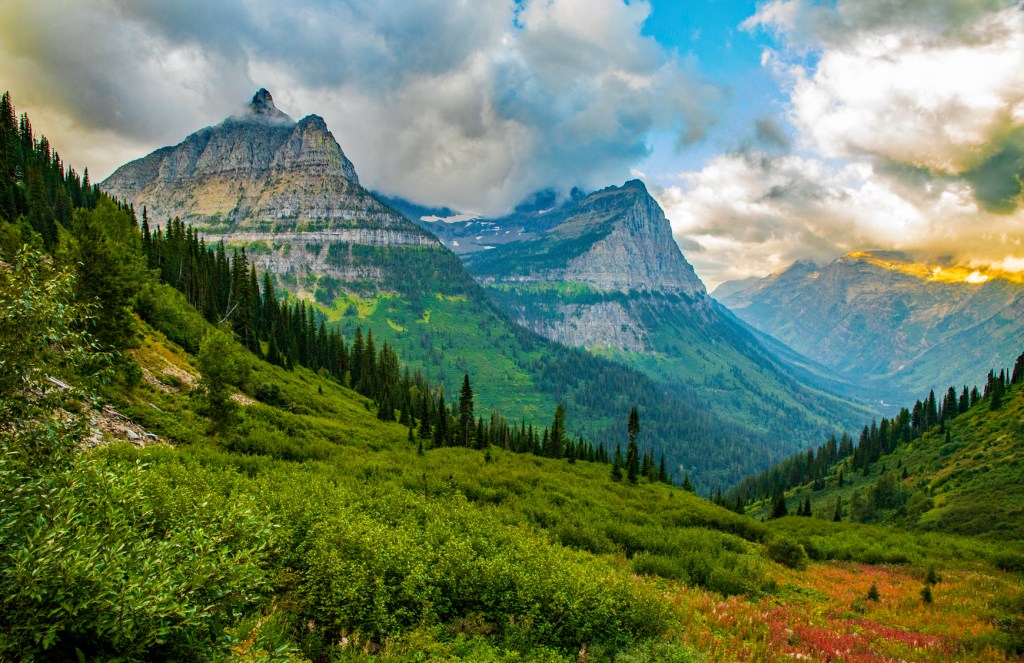
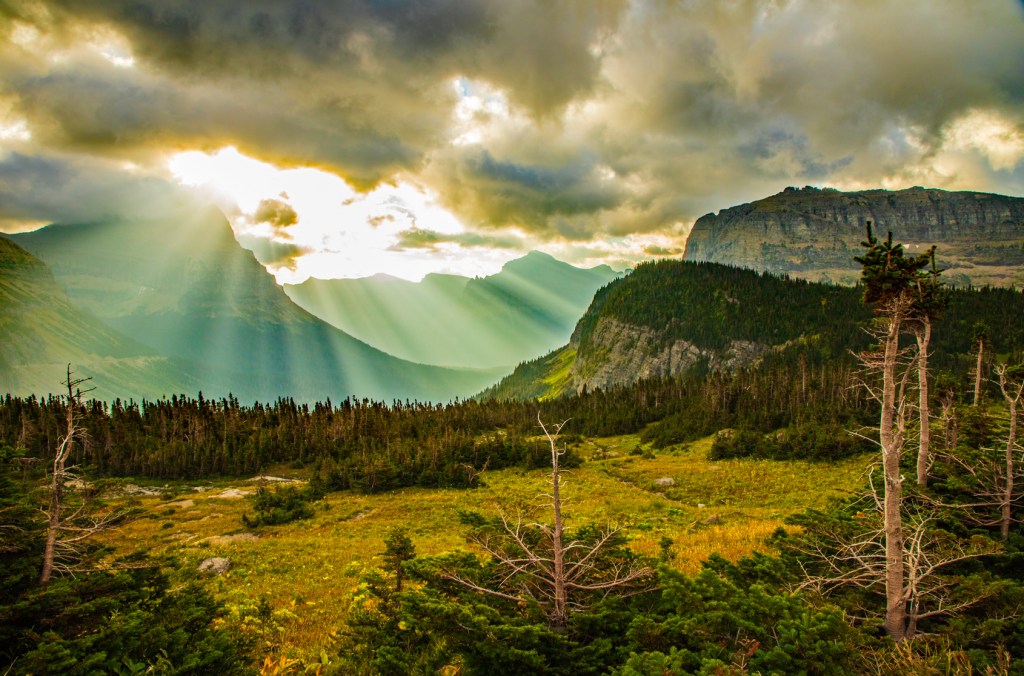
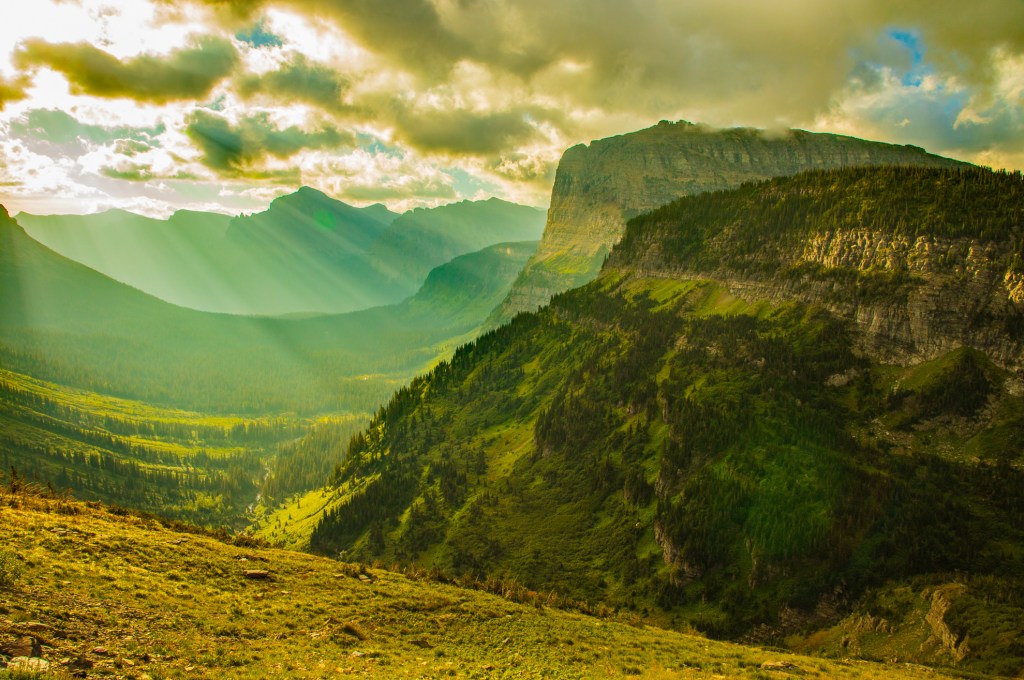
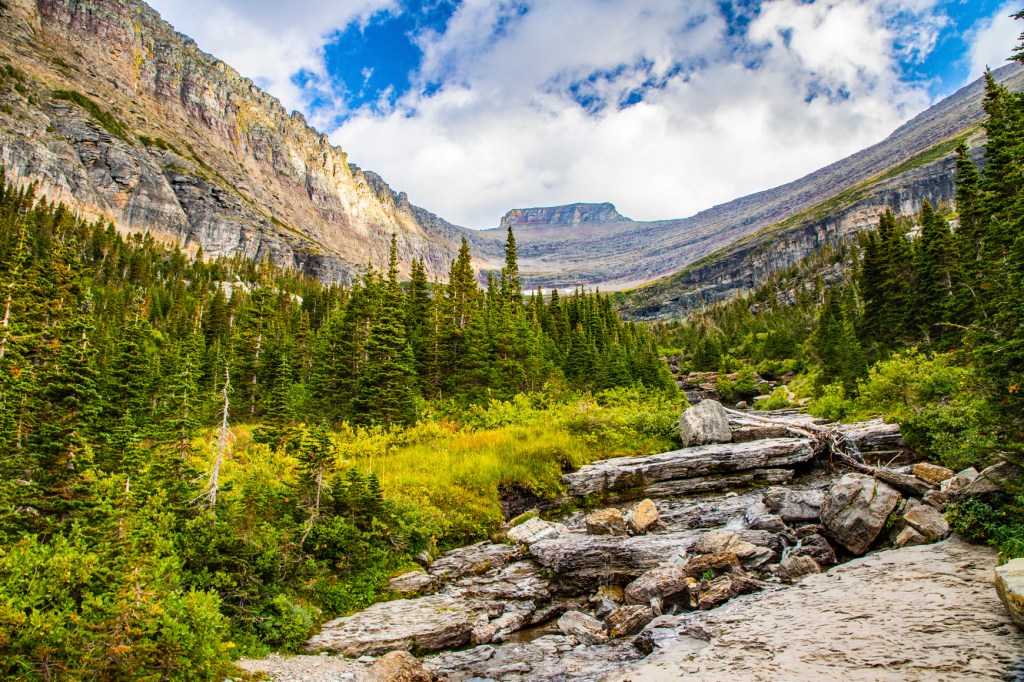
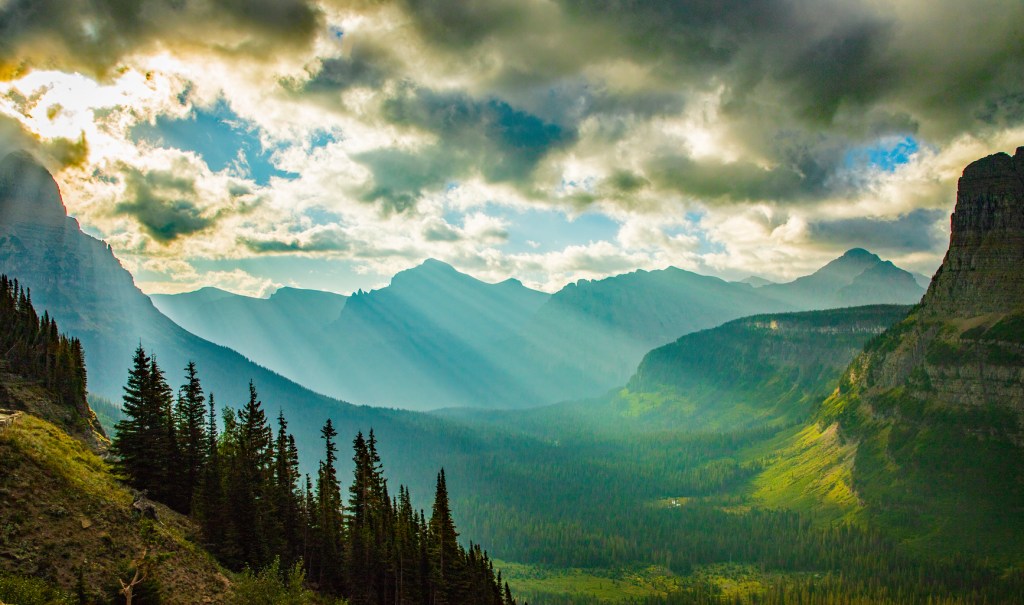
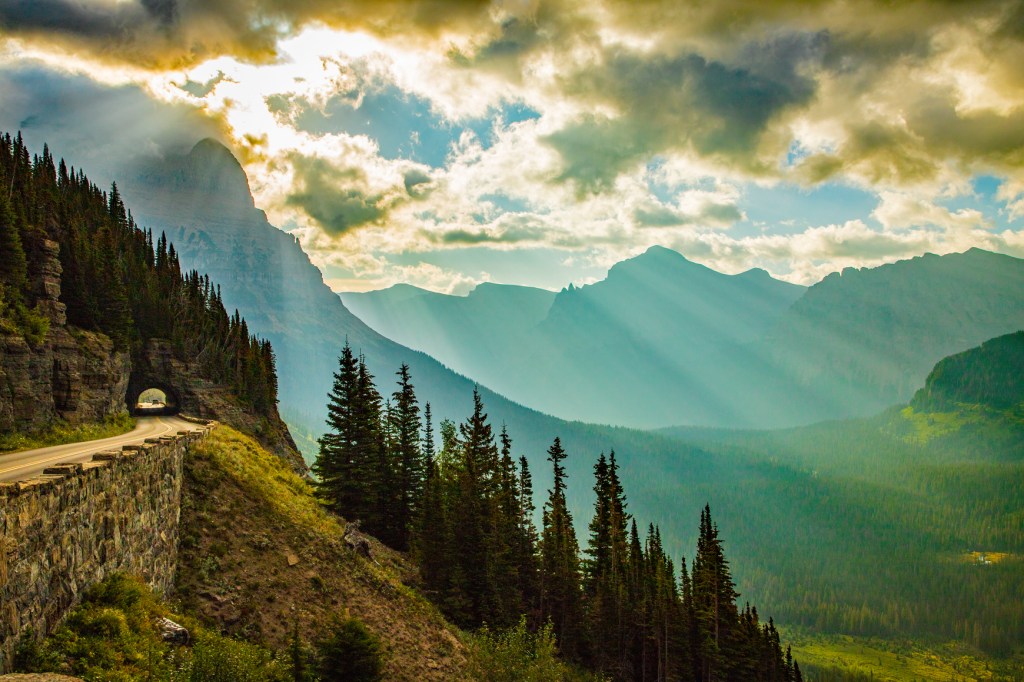
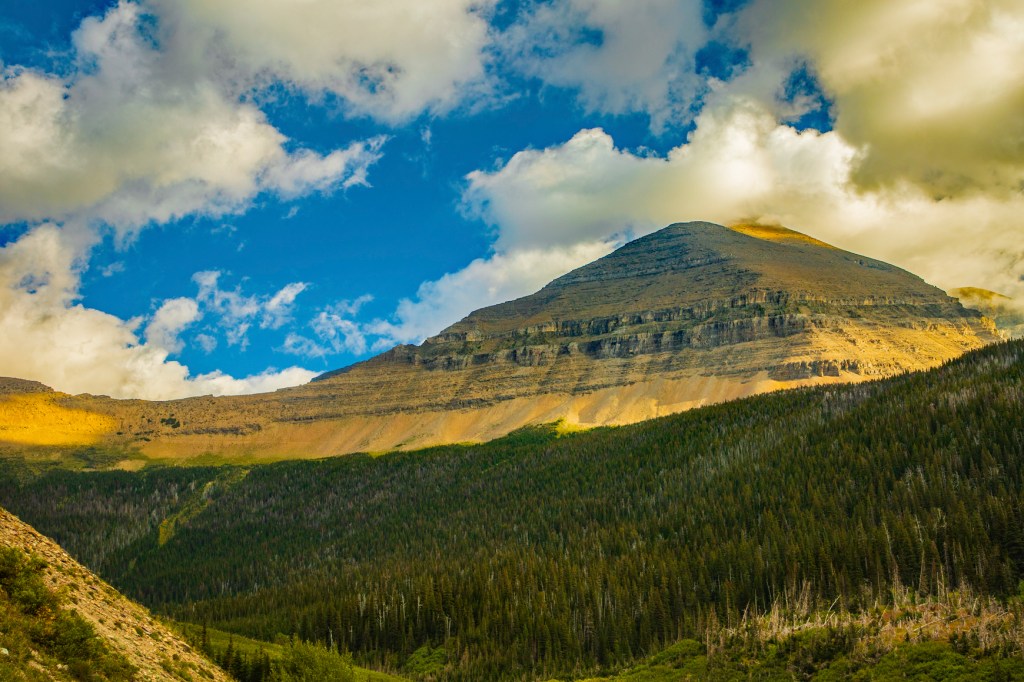
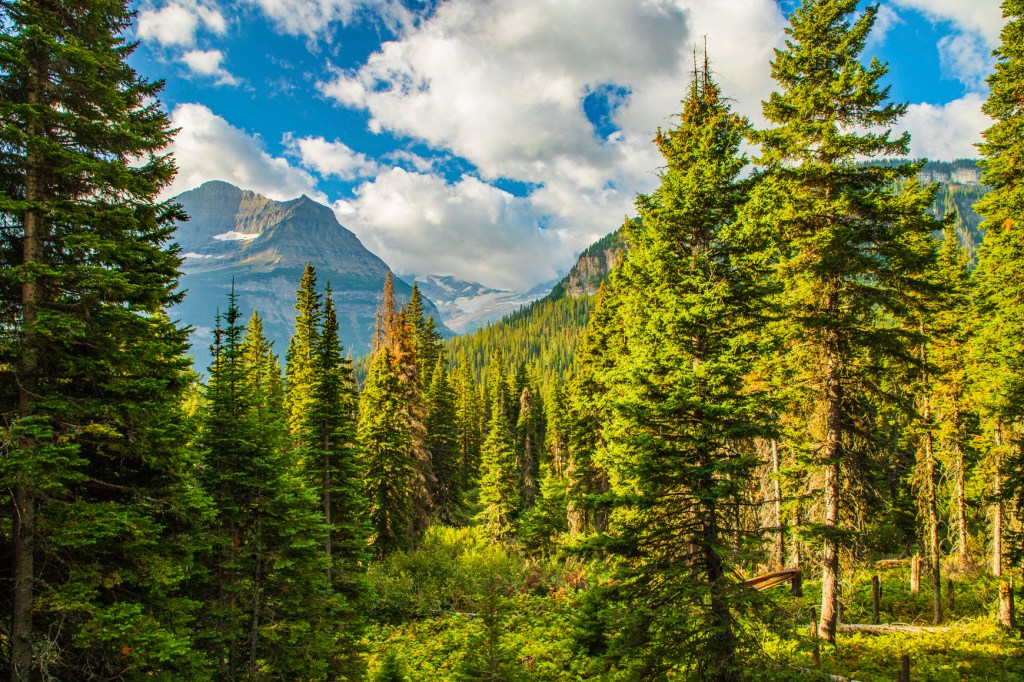
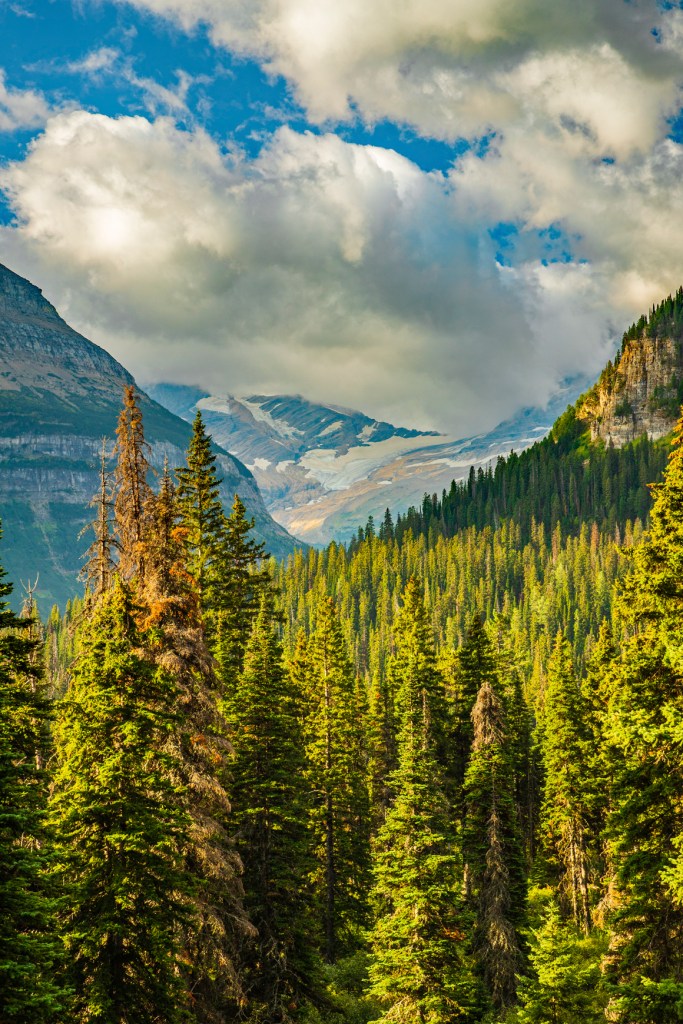
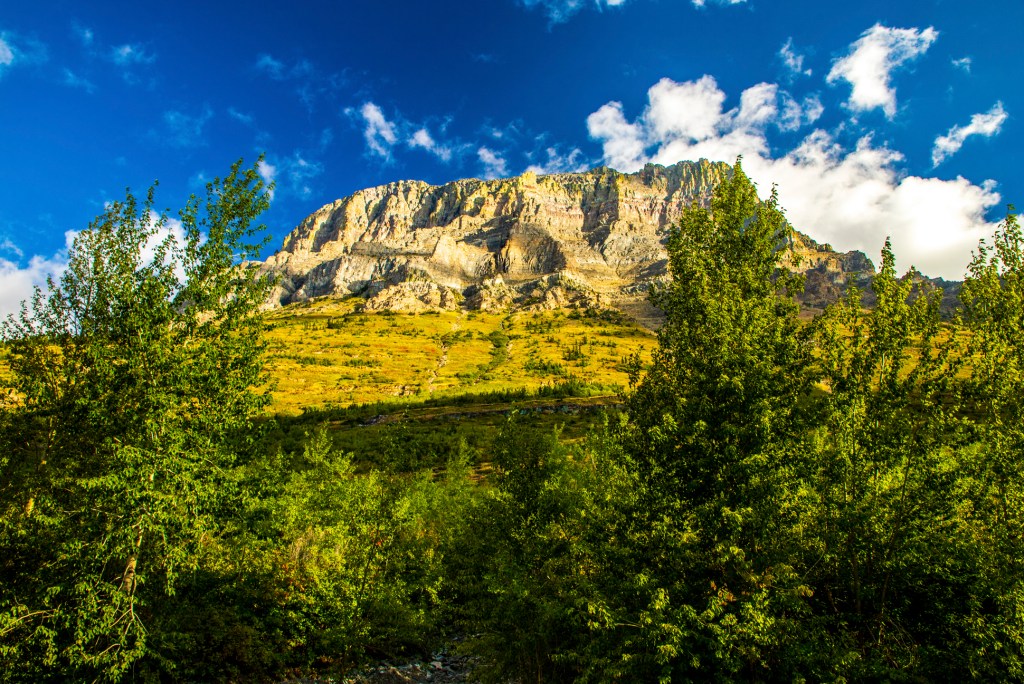
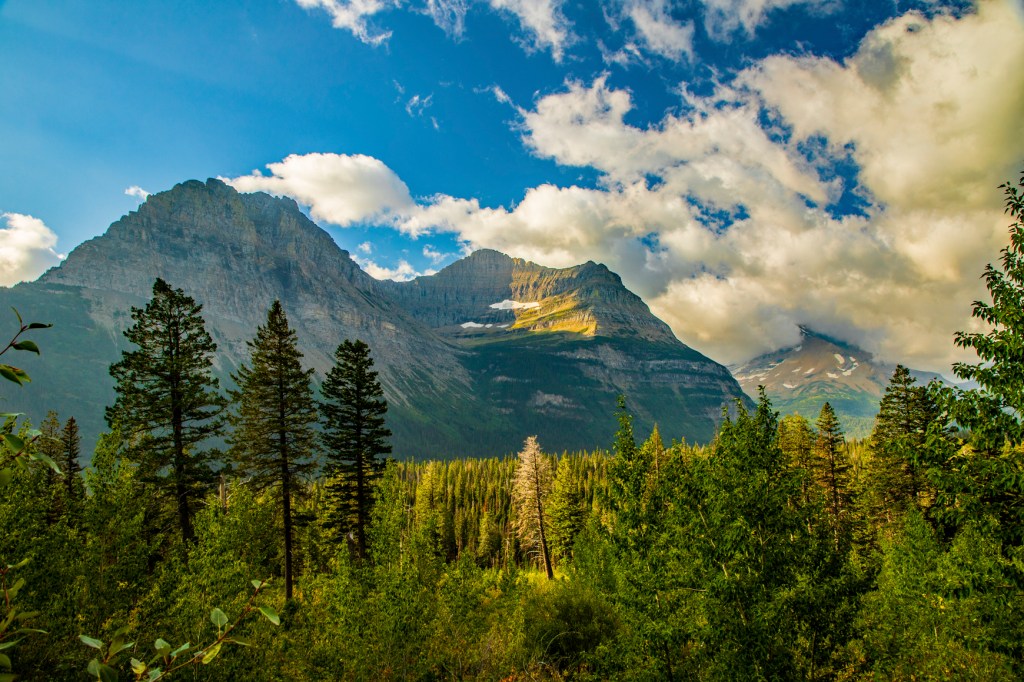
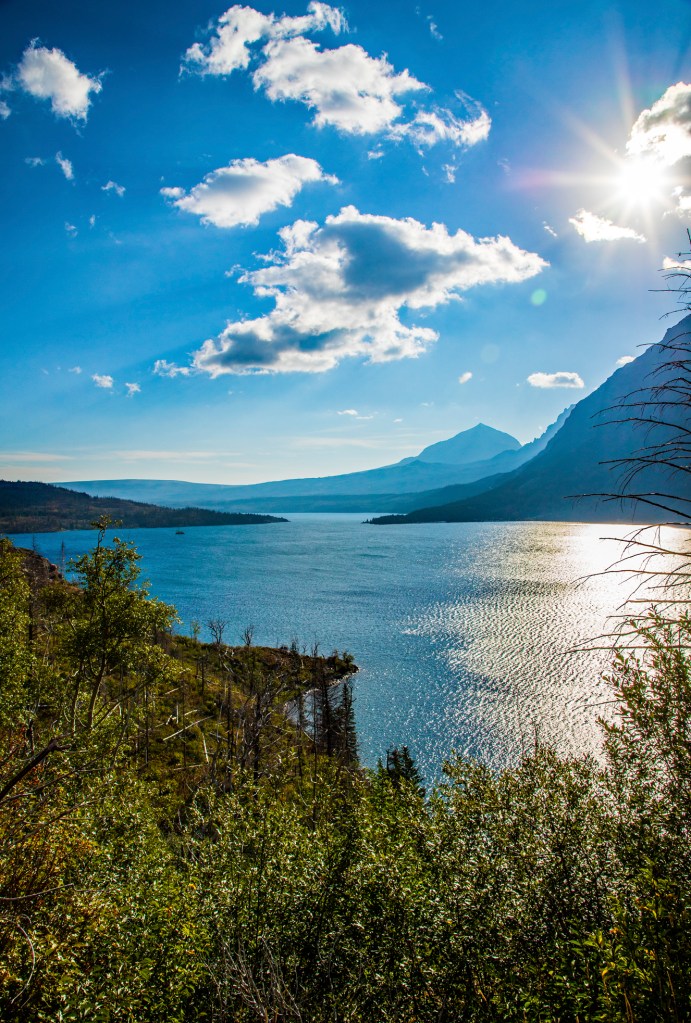
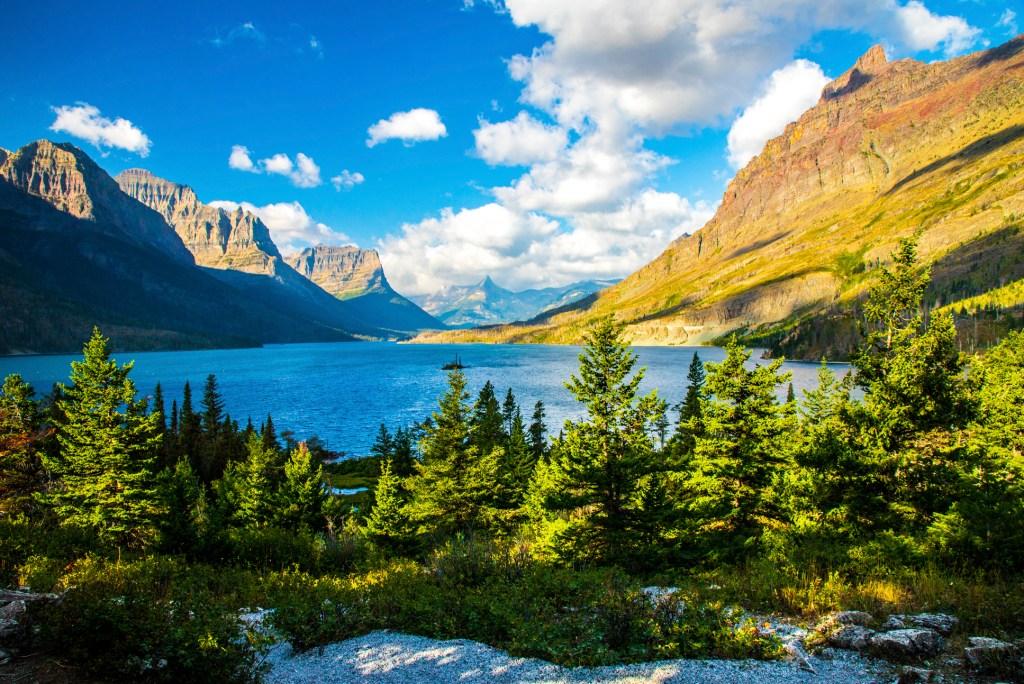
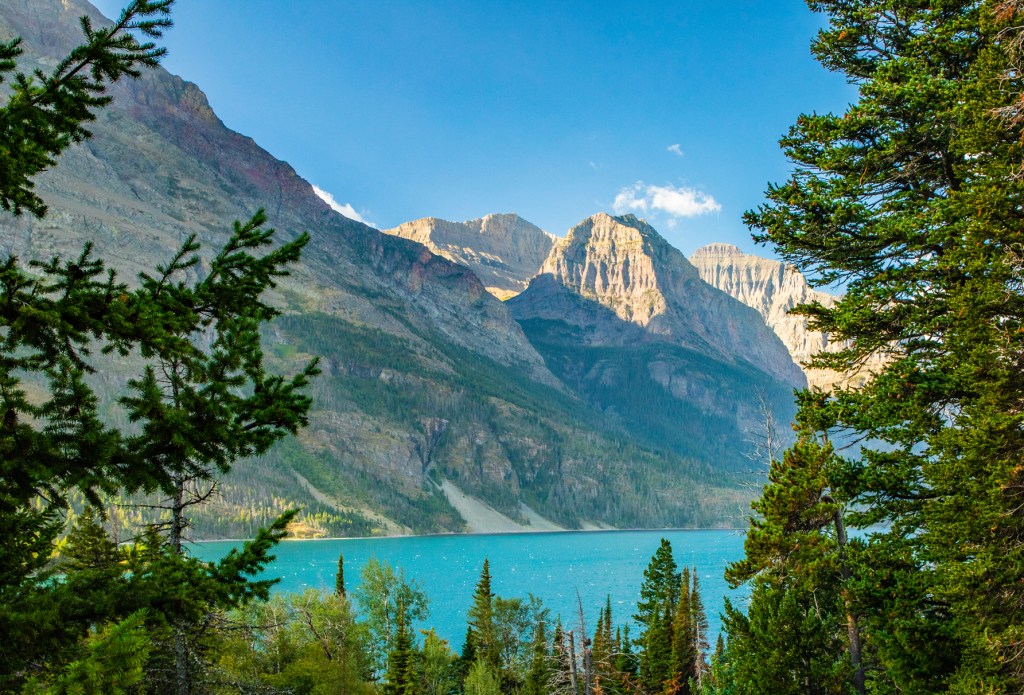
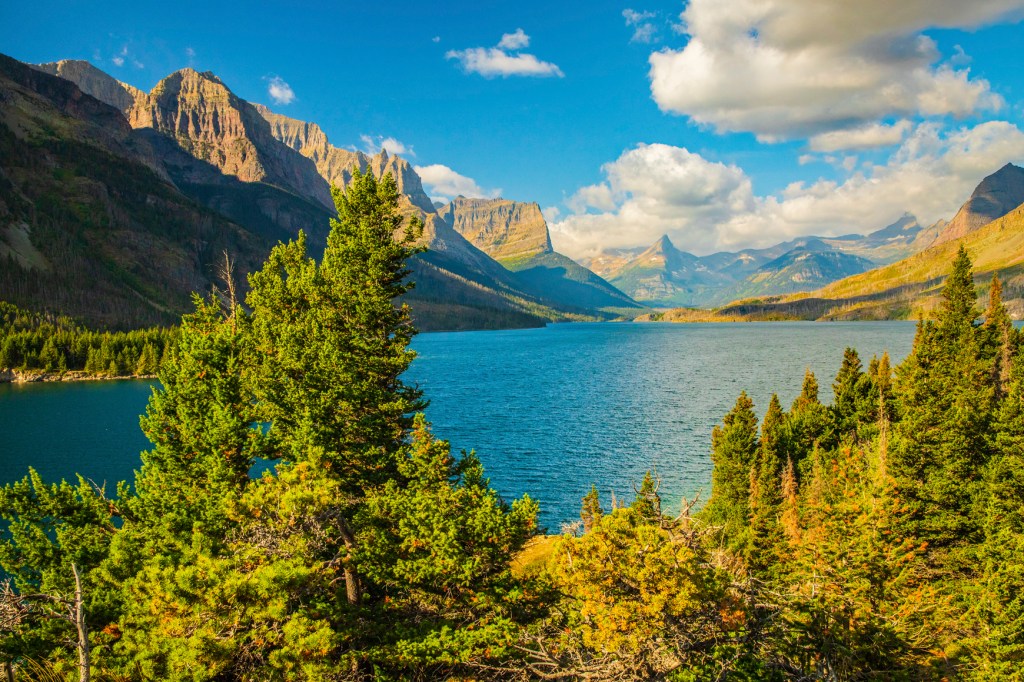
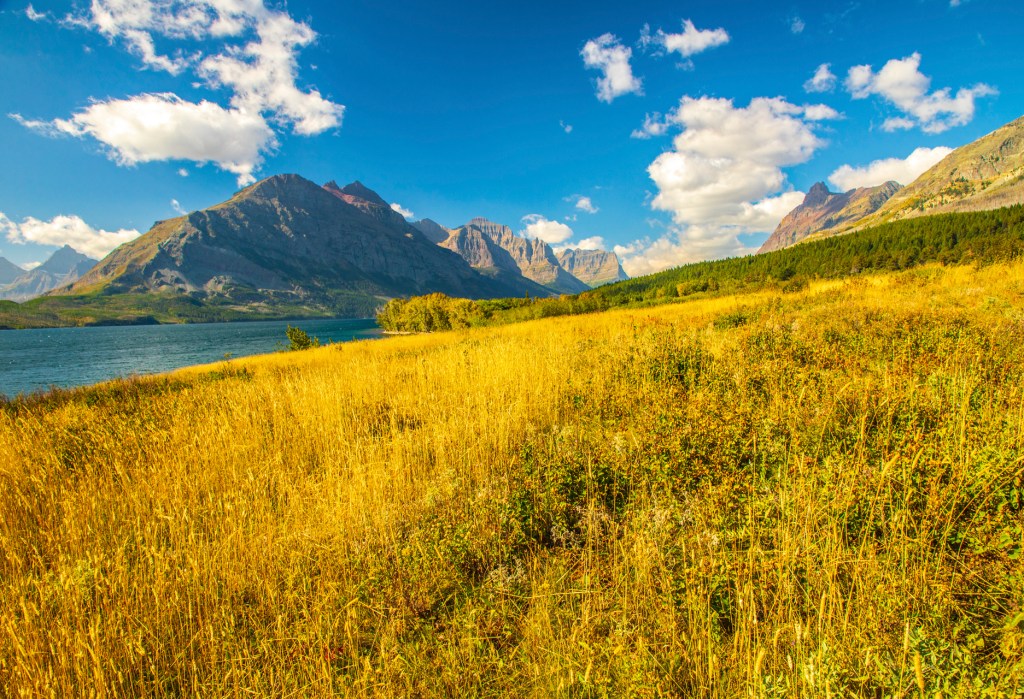
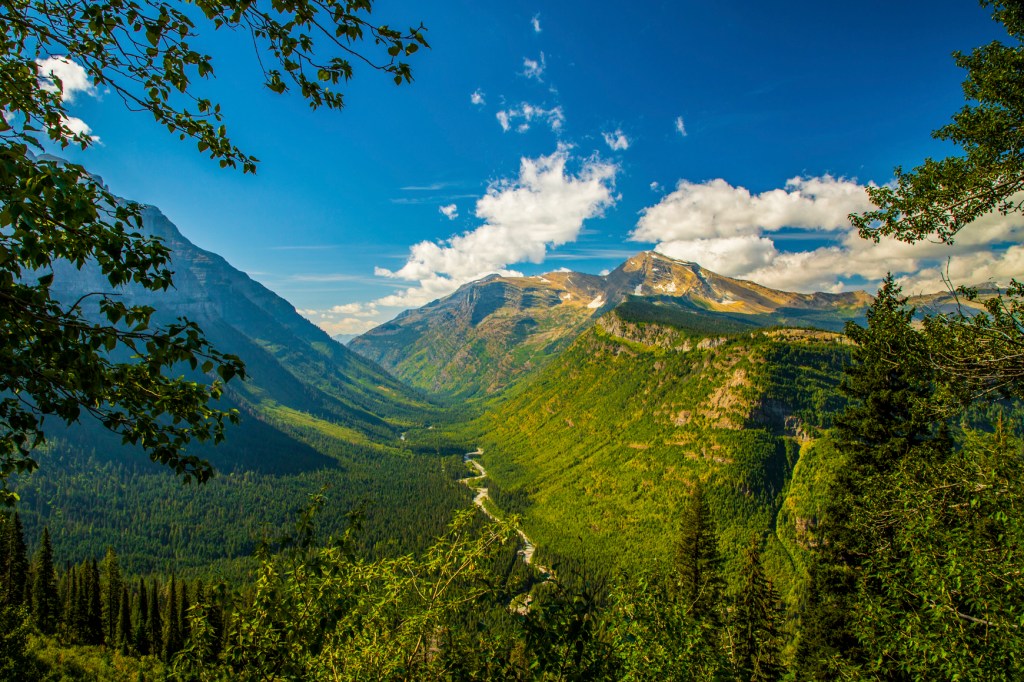
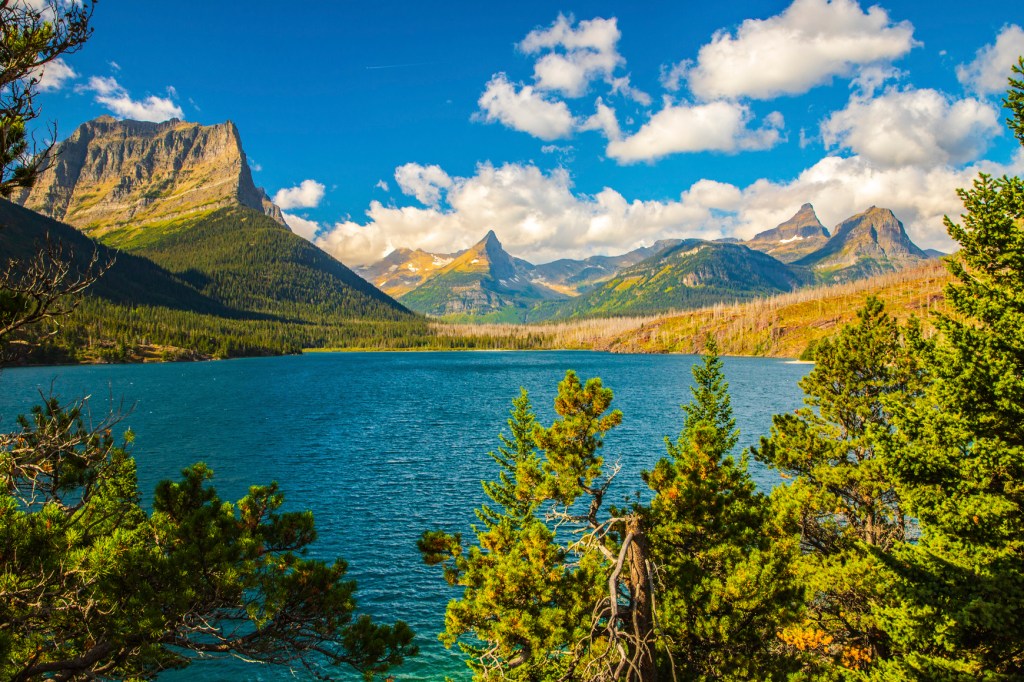
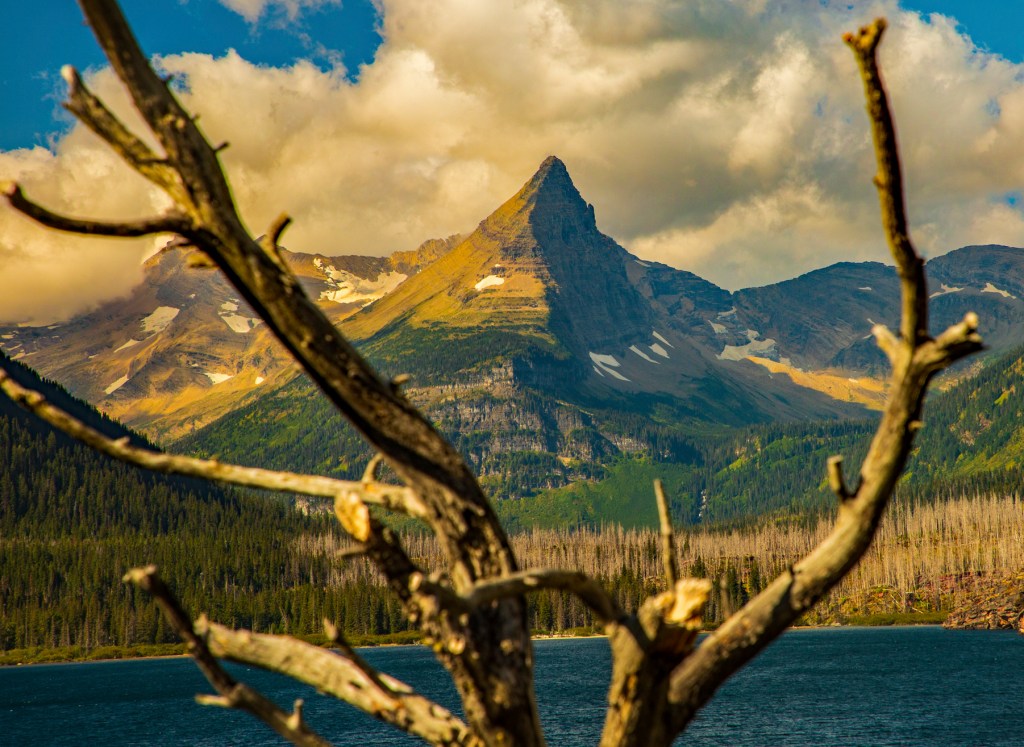
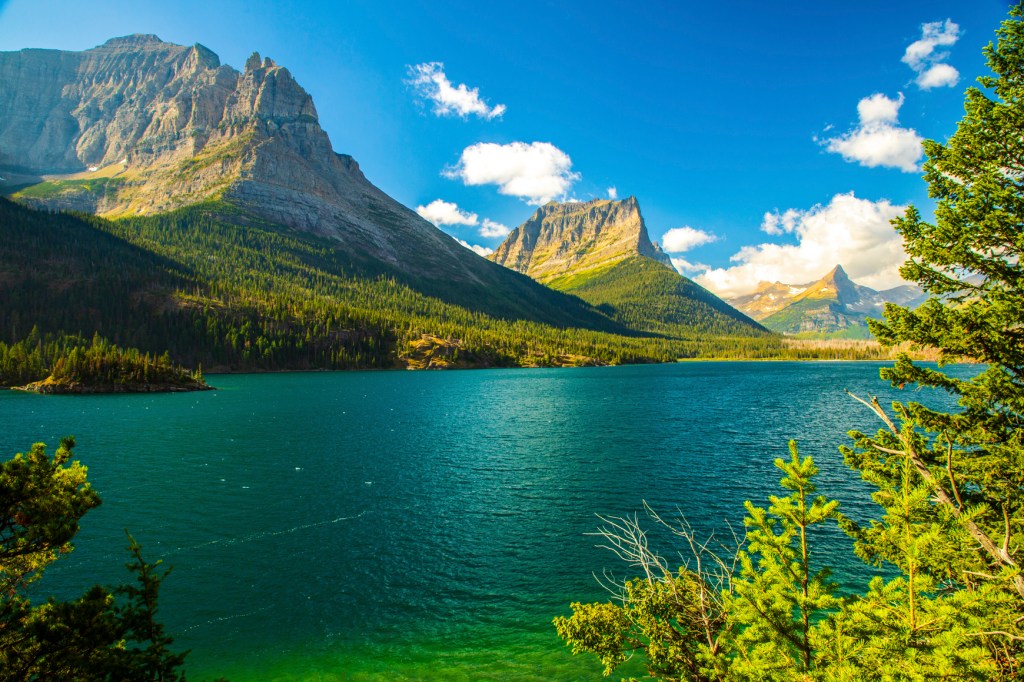
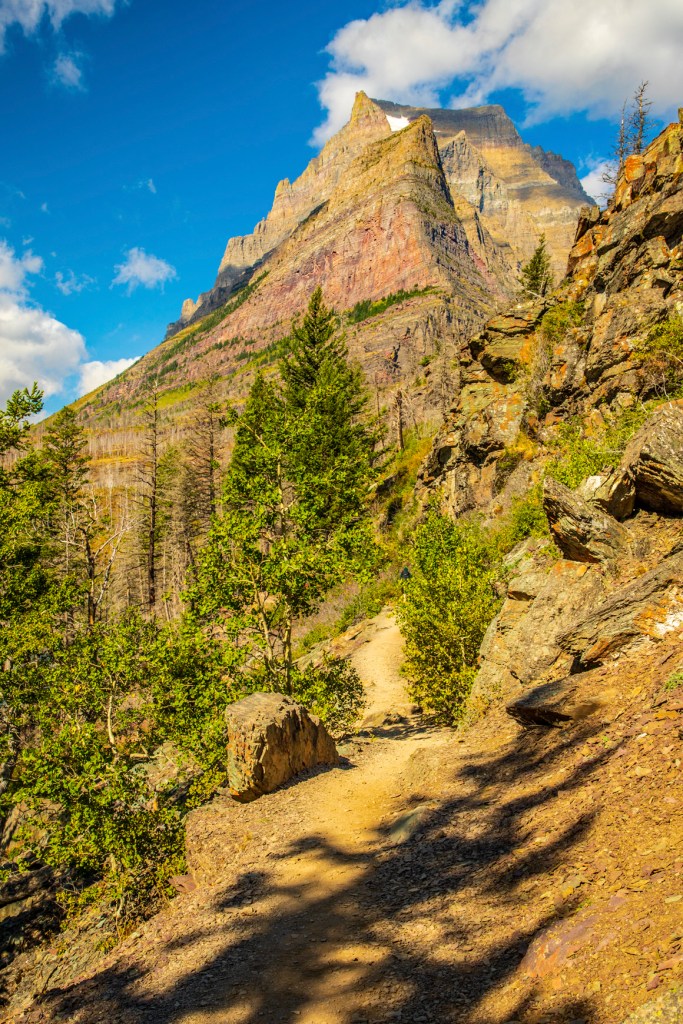
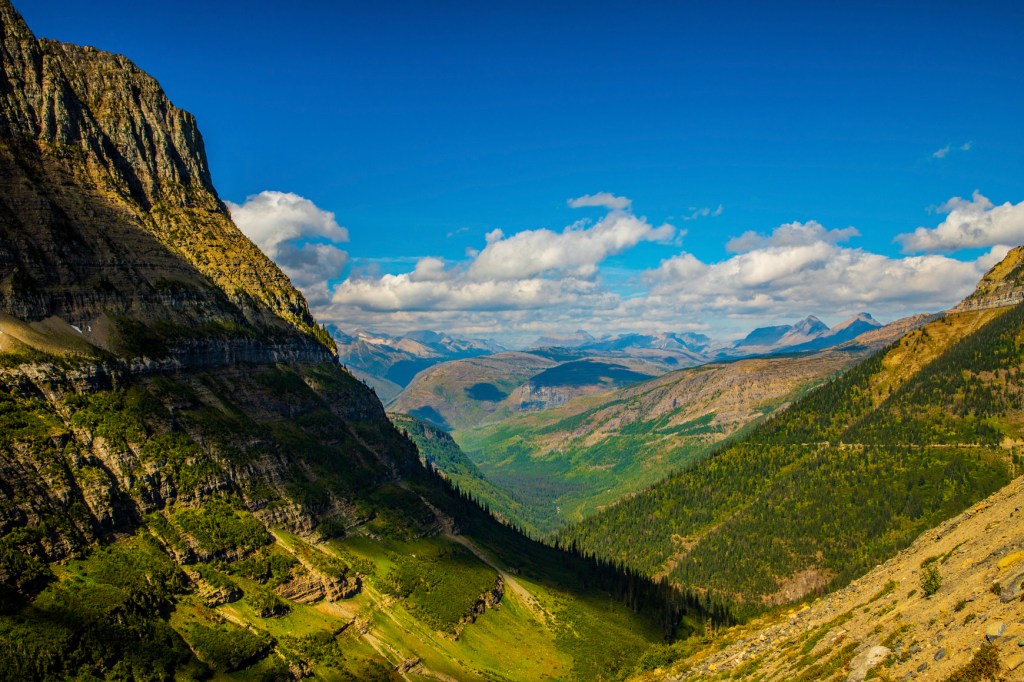
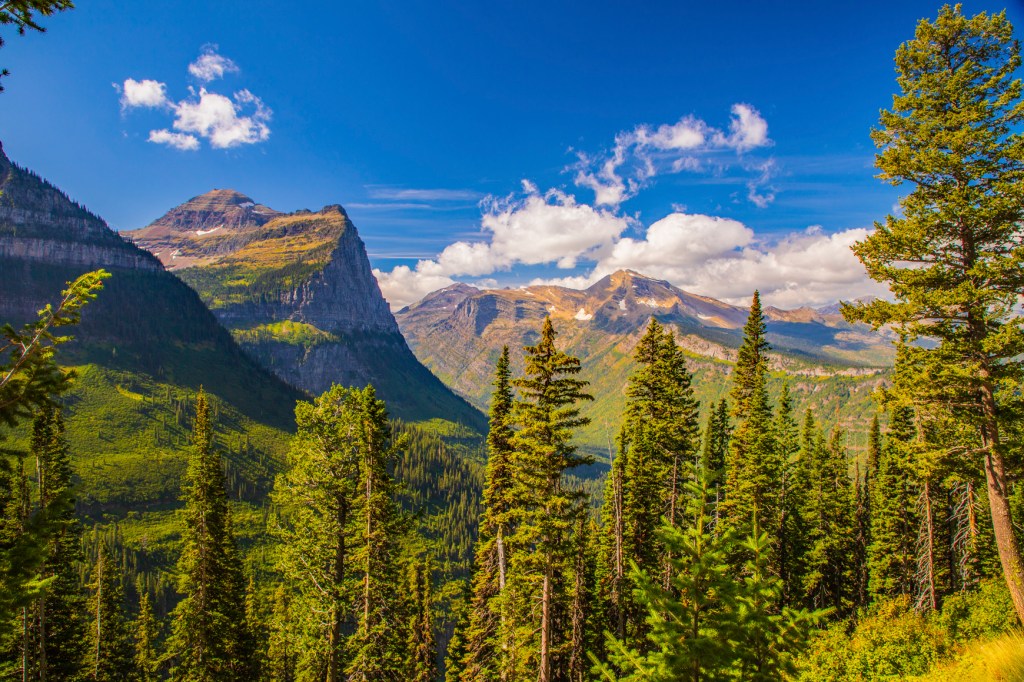
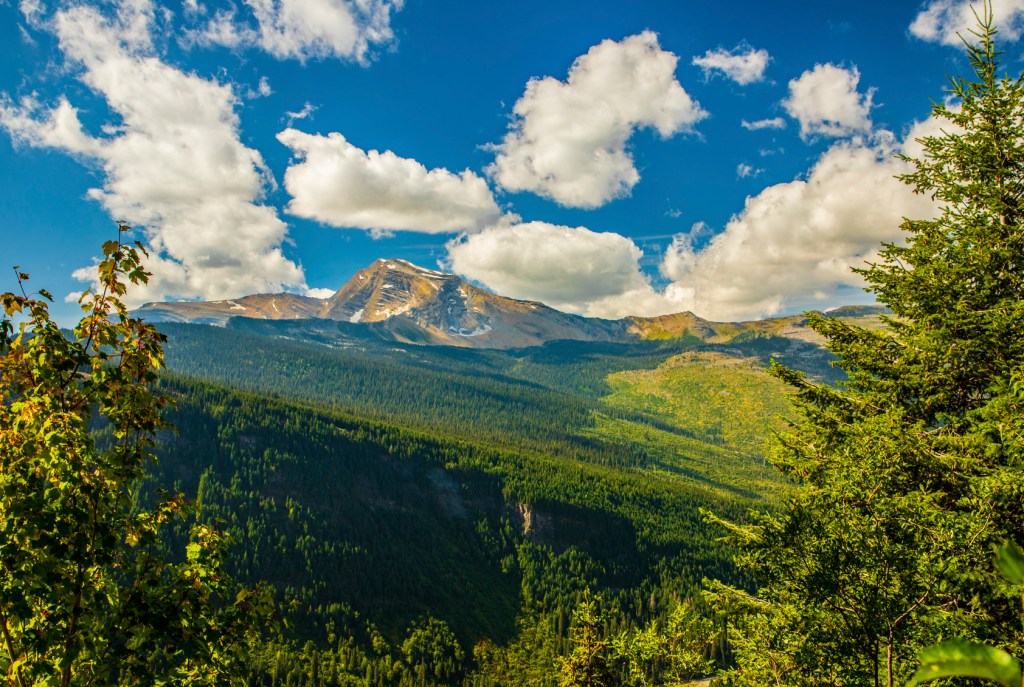
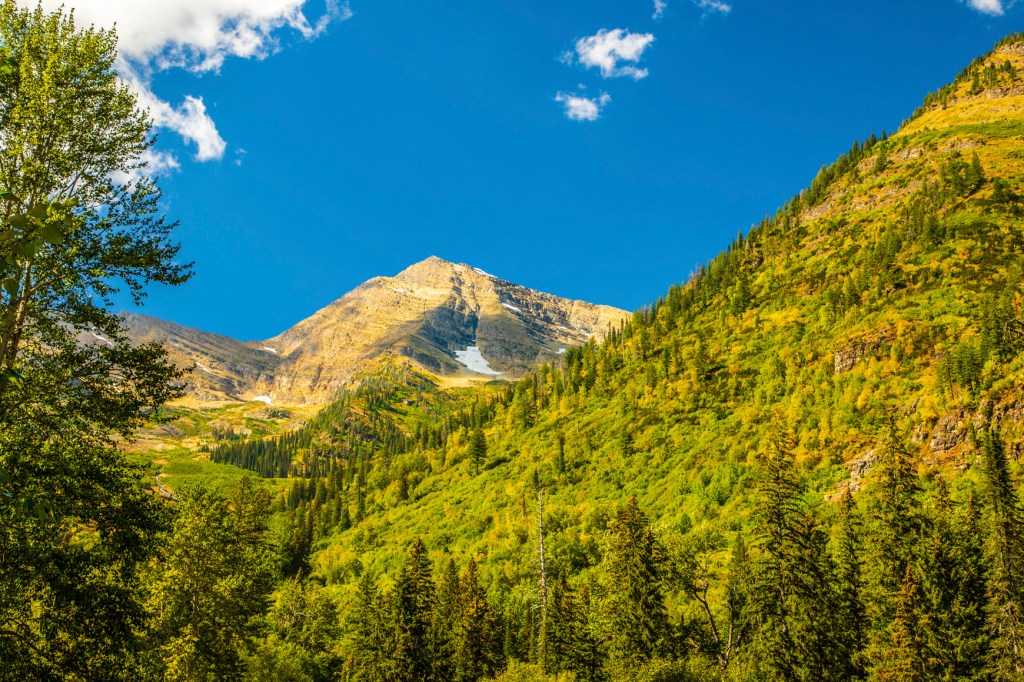
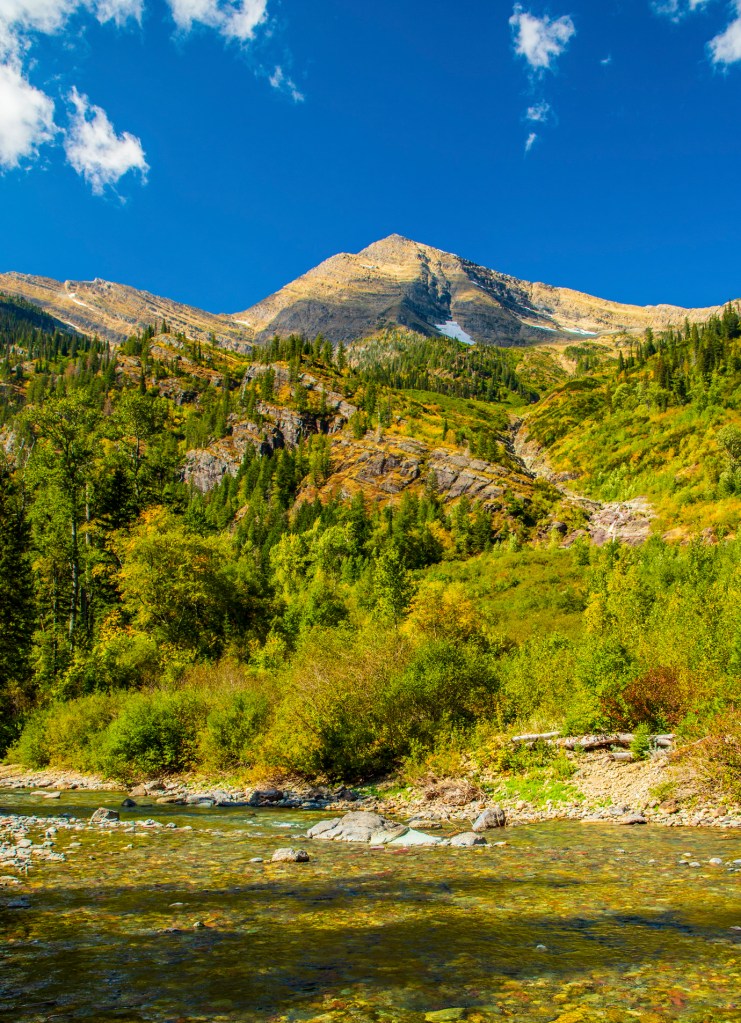
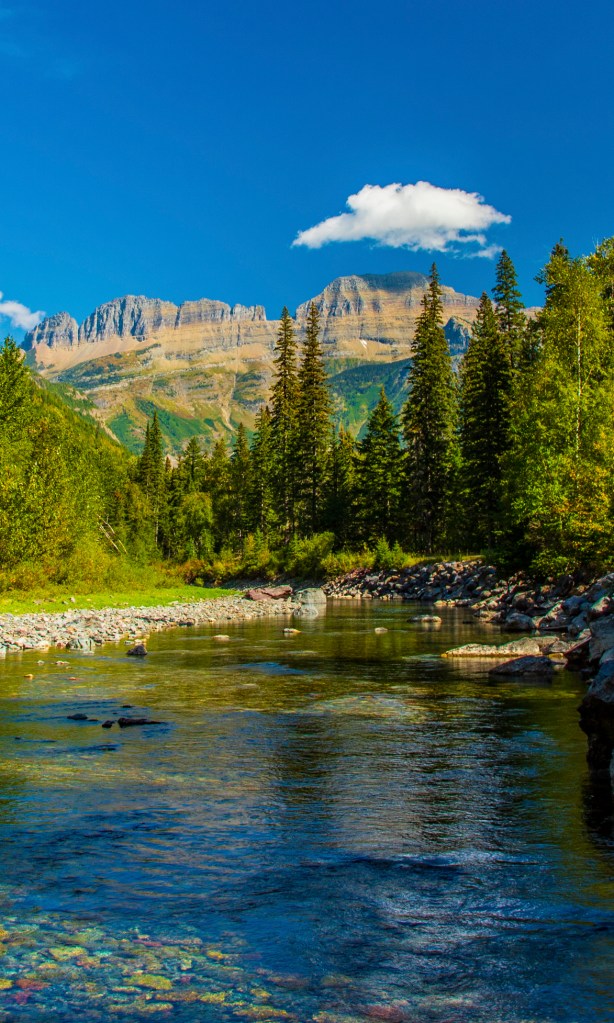
Yesterday Barbara and I got up early and drove into Glacier National Park for the day. The last time we were here, almost 14 years ago, the Road to the Sun was closed due to road construction. This time road construction is being conducted at night, so the road was open. In my opinion, this is one of the most beautiful national parks in North America. To top it off we were able to view the park during the blue hour, one hour before sunrise, the golden hour, one hour after sunrise and then watched the changes in cloud cover as the day progressed. Add this to being in one of the most beautiful places around, this is a photographers dream.
When we reached the summit of the Road to the Sun, at Logan Pass, we saw a grizzly bear walking through the woods. Unfortunately, he or she disappeared before I could grab my camera.
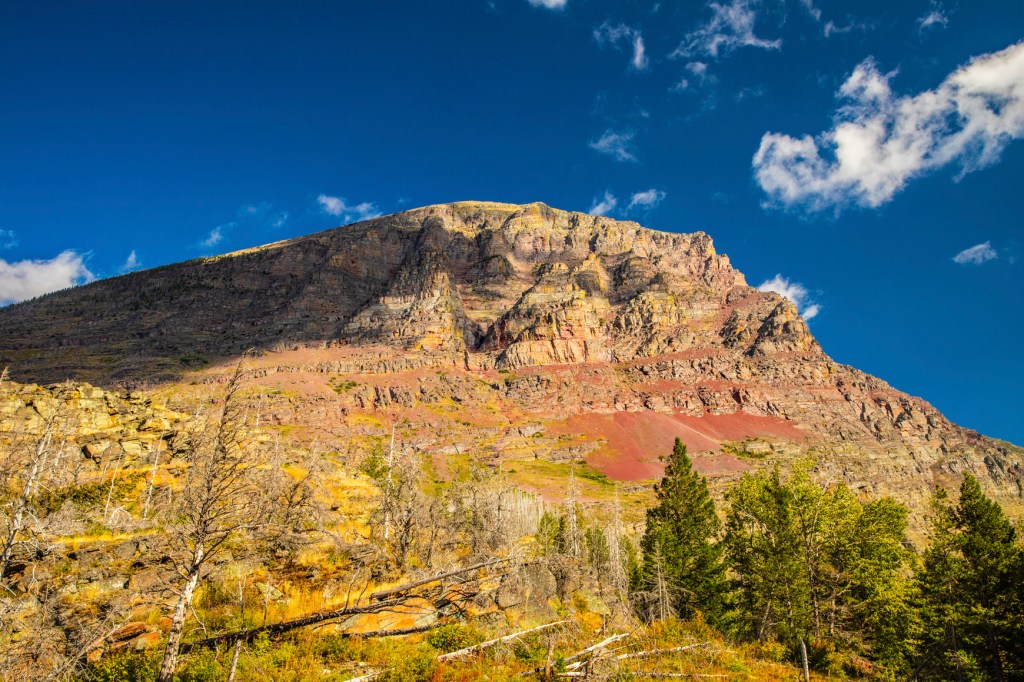
The rocks found in the park are primarily sedimentary rocks of the Belt Supergroup. They were deposited in shallow seas over 1.6 billion to 800 million years ago. During the formation of the Rocky Mountains 170 million years ago, one region of rocks now known as the Lewis Overthrust was forced eastward 50 miles. This overthrust was several miles thick and hundreds of miles long. This resulted in older rocks being displaced over younger ones, so the overlying Proterozoic rocks are between 1.4 and 1.5 billion years older than Cretaceous age rocks they rest on.
One of the most dramatic evidences of this overthrust is visible in the form of Chief Mountain, an isolated peak on the edge of the eastern boundary of the park rising 2,500 feet above the Great Plains. There are six mountains in the park over 10,000 feet in elevation, with Mount Cleveland at 10,466 feet being the tallest. Appropriately named Triple Divide Peak sends waters towards the Pacific Ocean, Hudson Bay, and Gulf of Mexico watersheds. This peak can effectively be considered to be the apex of the North American continent, although the mountain is only 8,020 feet above sea level.
The rocks in Glacier National Park are the best preserved Proterozoic sedimentary rocks in the world, with some of the world’s most fruitful sources for records of early life. Sedimentary rocks of similar age located in other regions have been greatly altered by mountain building and other metamorphic changes; consequently, fossils are less common and more difficult to observe. The rocks in the park preserve such features as millimeter-scale lamination, ripple marks, mud cracks, salt-crystal casts, raindrop impressions, oolites, and other sedimentary structures. Six fossilized species of stromatolites, early organisms consisting of primarily blue-green algae, have been documented and dated at about 1 billion years. The discovery of the Appekunny Formation, a well-preserved rock stratum in the park, pushed back the established date for the origination of animal life a billion years. This rock formation has bedding structures which are believed to be the remains of the earliest identified metazoan (animal) life on Earth.
Glacier National Park is dominated by mountains which were carved into their present shapes by the huge glaciers of the last ice age. These glaciers have largely disappeared over the last 12,000 years. Evidence of widespread glacial action is found throughout the park in the form of U-shaped valleys, cirques, arêtes, and large outflow lakes radiating like fingers from the base of the highest peaks. Since the end of the ice ages, various warming and cooling trends have occurred. The last recent cooling trend was during the Little Ice Age, which took place approximately between 1550 and 1850. During the Little Ice Age, the glaciers in the park expanded and advanced, although to nowhere near as great an extent as they had during the Ice Age.

 RV There Yet?
Amazing photos as usual! Appears to have been a truly orogenetic event😜
LikeLike