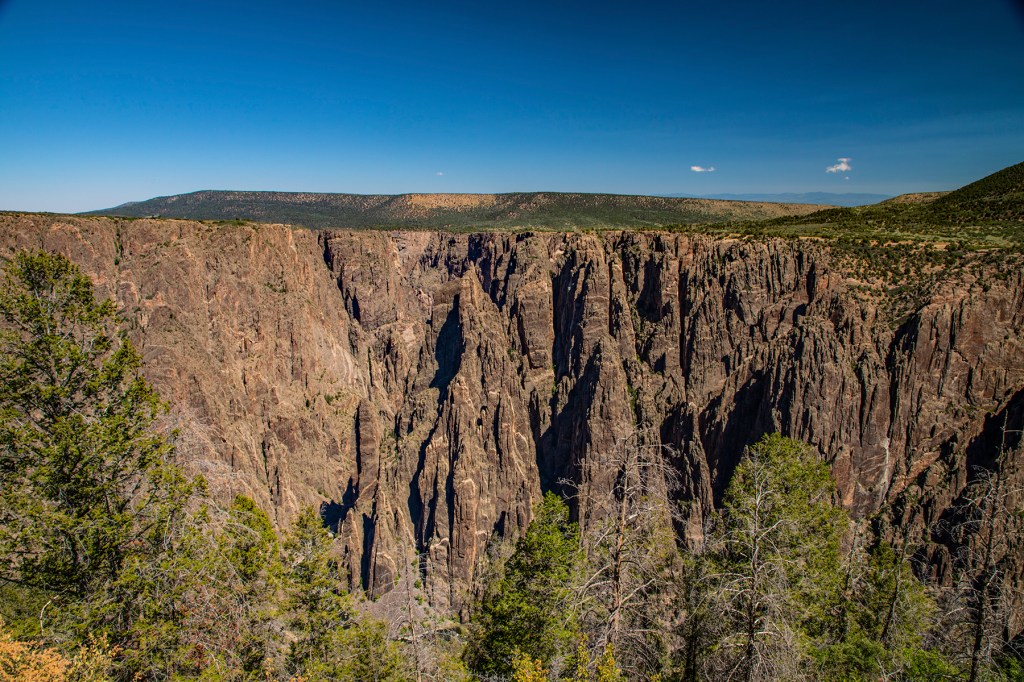
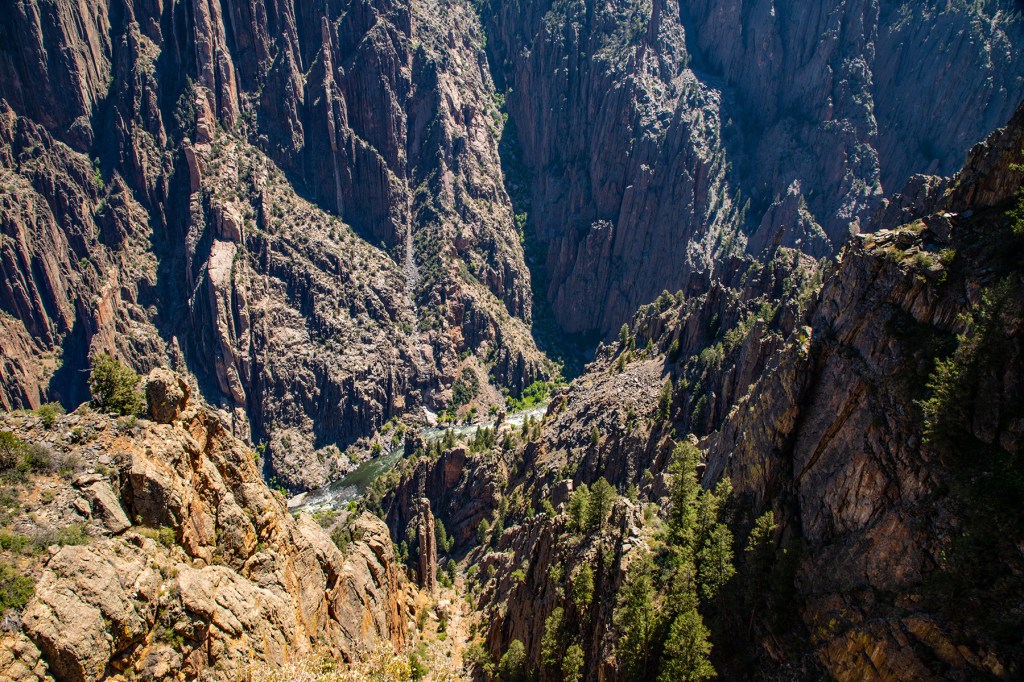
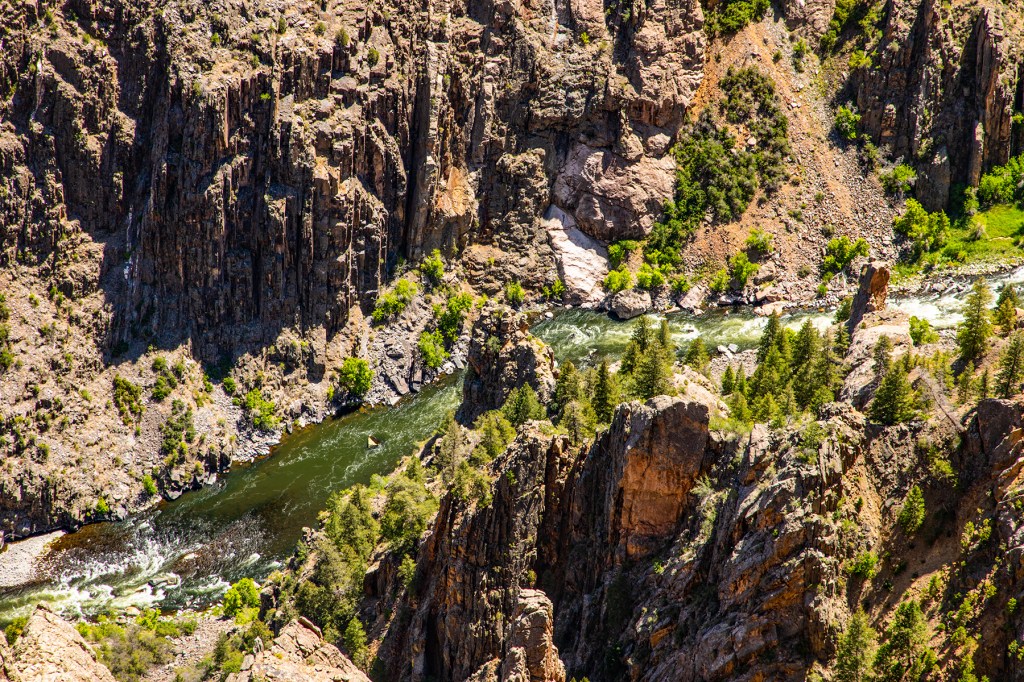
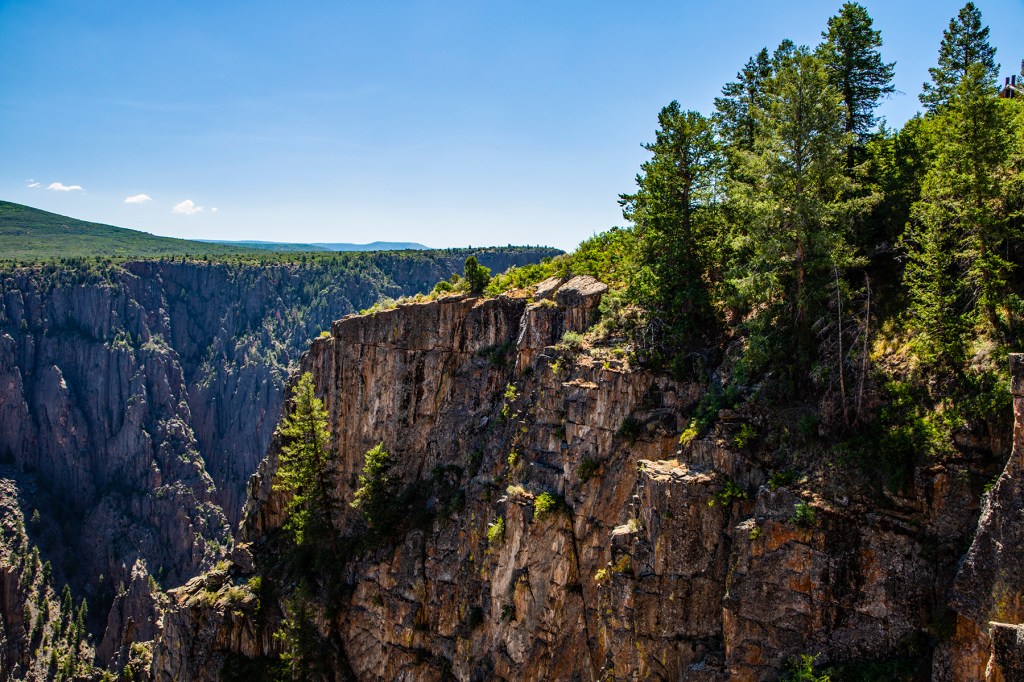
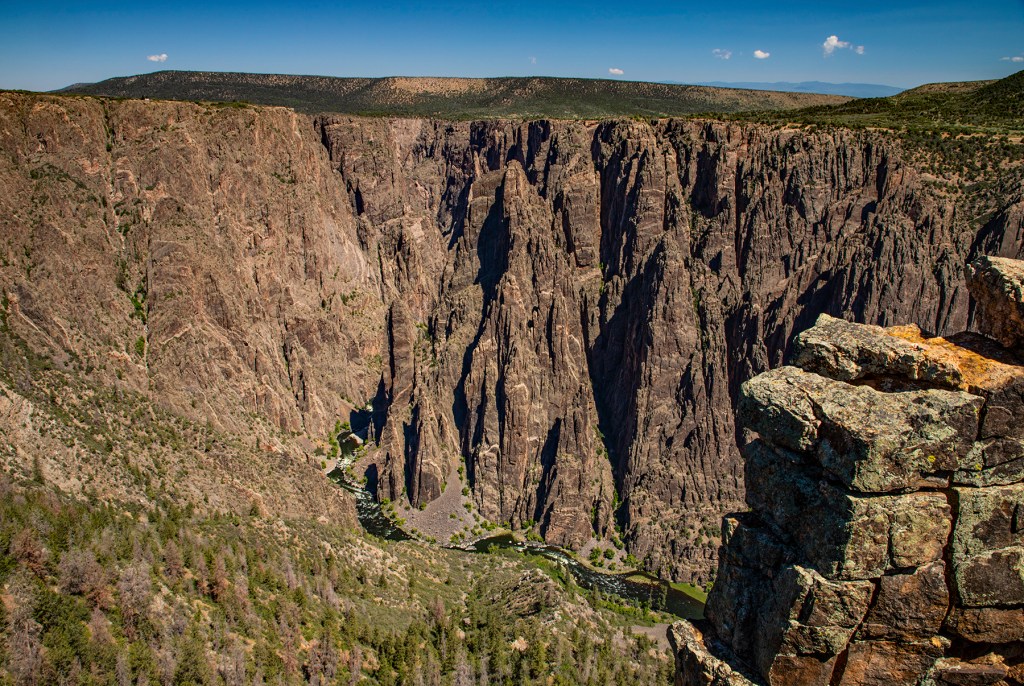
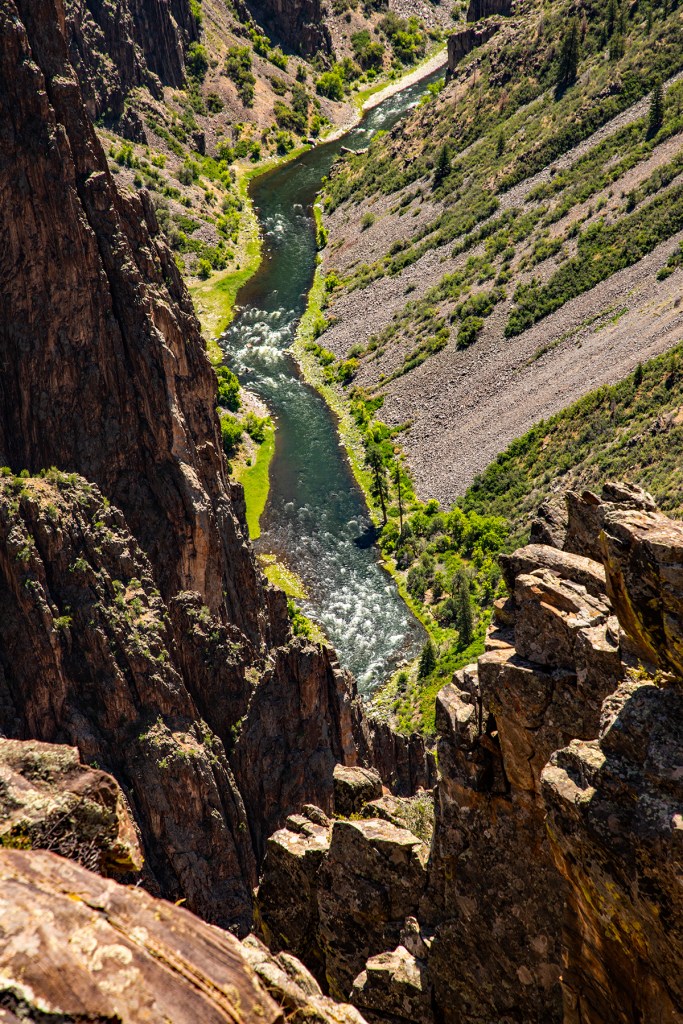
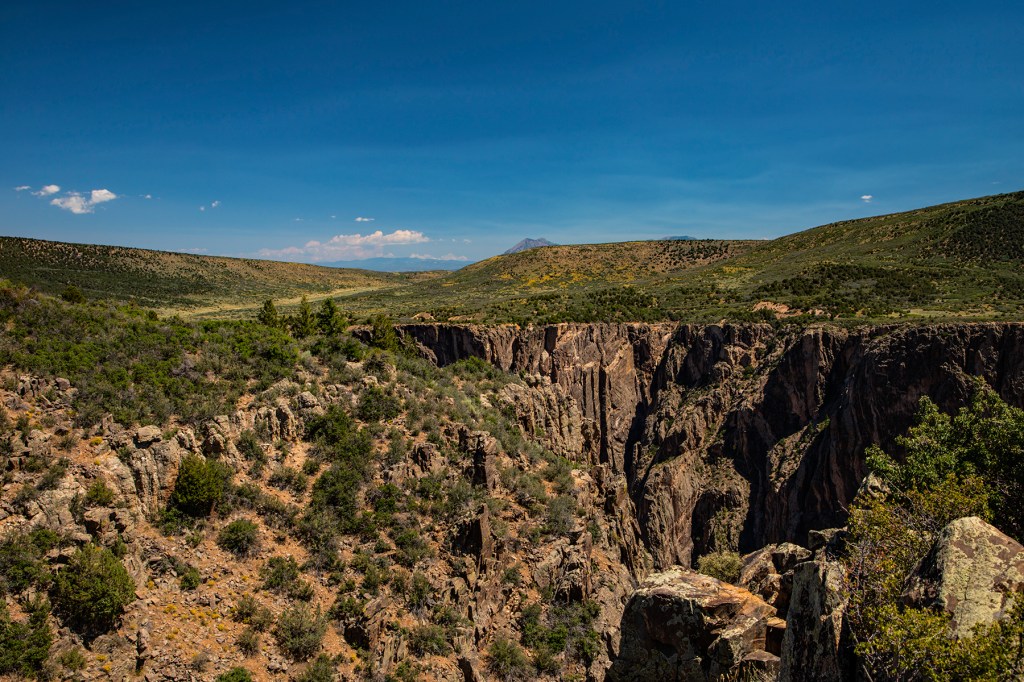
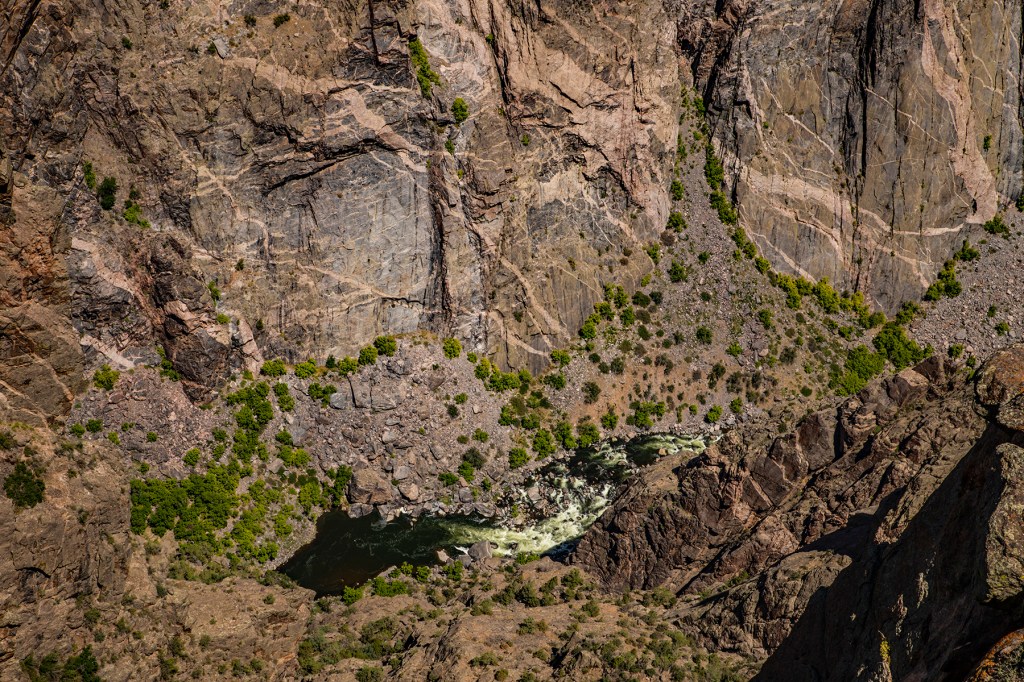
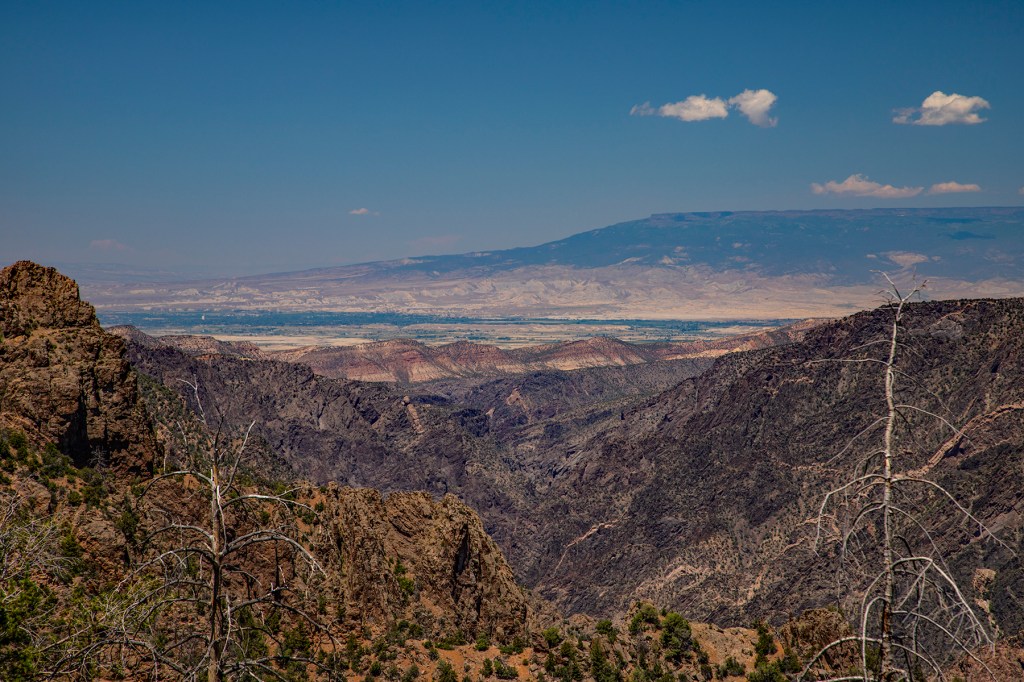
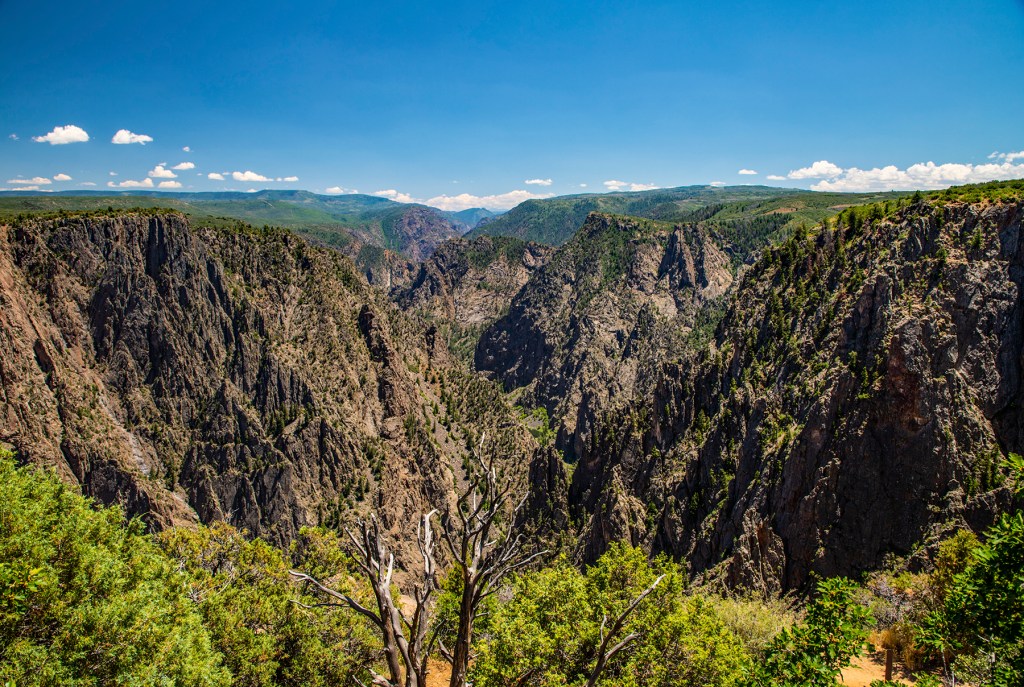
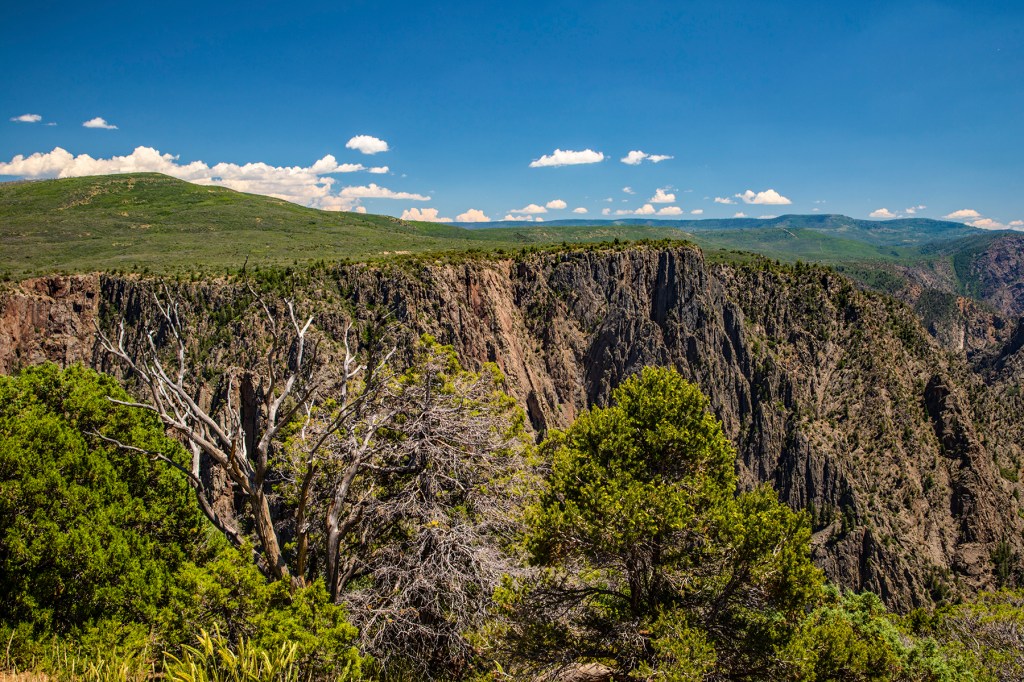
This past Friday, Barbara and I along with our friends Keith and Janice traveled to Black Canyon National Park (NP) in southwest Colorado. Black Canyon has an average depth of two thousand feet from the canyon rim to the Gunnison River below and is twelve miles in length.
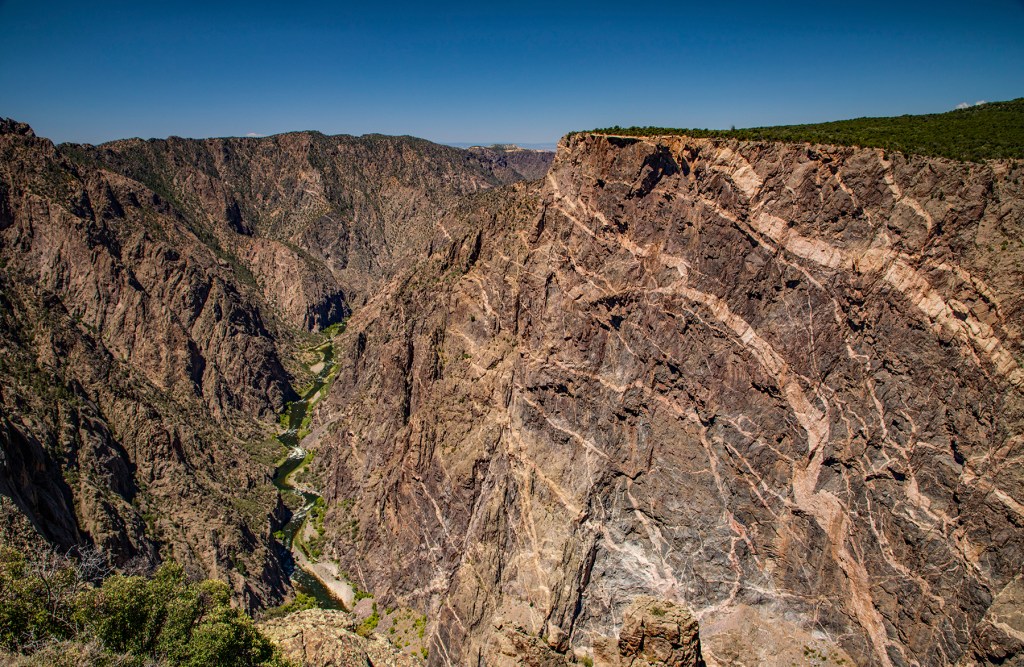
The dark rock that makes up the majority of Black Canyon is a gneiss, a metamorphic rock, formed from preexisting sedimentary and volcanic rocks that had been part of an island arc nearly two billion years ago. A plate collision brought these rocks here approximately 1.7 billion years ago. These rocks were buried here for tens of millions of years at a depth of approximately 10 miles where they experienced the high pressure and temperatures that triggered their metamorphic transformation. A few hundred million years later these fractured rocks were intruded by the granitic magma that is visible as light colored pegmatites seen in the Painted Wall. Approximately 60 million years ago this area was uplifted, during the Laramide Orogeny, and were later exposed at the surface. Approximately two million years ago the Gunnison River began carving out the canyon that we see today.
If you’re ever in southwestern Colorado stop by and visit the Black Canyon. It’s an amazing canyon that you can see, most of it, in less than a day.



 RV There Yet?