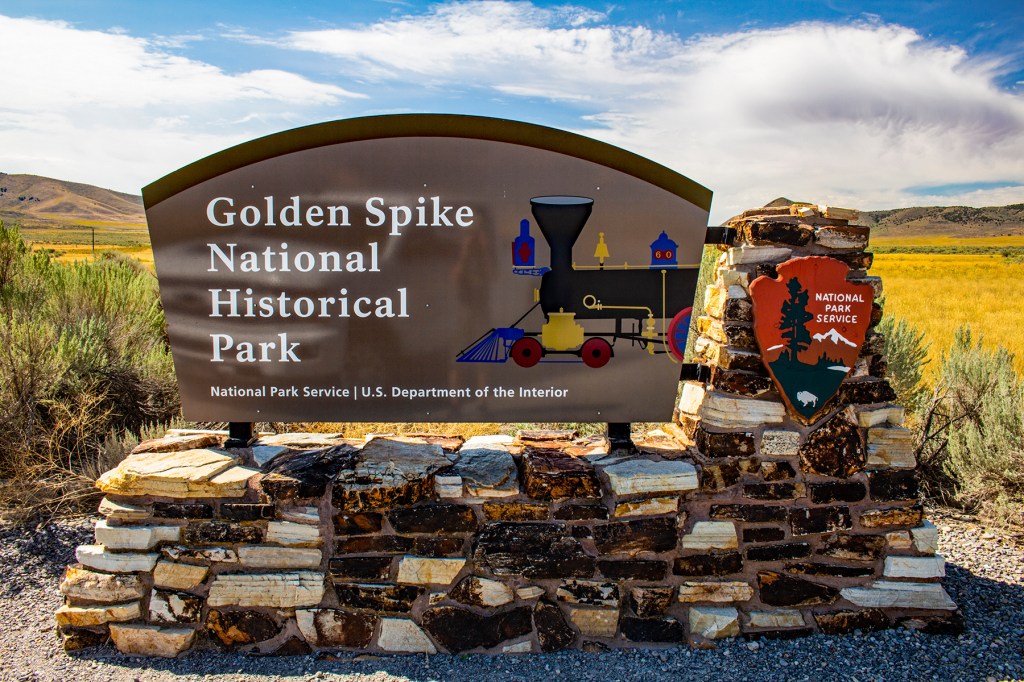
In 1972 my parents packed up the family pickup and camper and took my one brother and I on a four-week coast to coast trip. My other brother had just graduated from high school and was working, so unfortunately he had to stay home. On our way home we stopped at a rest stop on I-80 just east of Salt Lake City. At this rest stop they were giving away posters of the Golden Spike, located approximately 100 miles north of the rest stop. That poster hung on my bedroom wall until I moved out of my parents’ house years later. Since that time, I have wanted to visit the Golden Spike, the place where the transcontinental railroad was completed in 1869. Yesterday, 52 years after that day in 1972, I was finally able to visit this historic site.
In the early 1860’s talk began concerning a transcontinental railroad but at that time the Civil War was going on and all necessary materials and men were needed for the war effort. At that time tracks had been laid from the east coast as far west as Omaha Nebraska. So, to complete the transcontinental railroad tracks needed to be laid from the west coast to Omaha. In 1862 a young engineer by the name of Theodore Judah surveyed a route over the Sierra Nevada Mountains and persuaded wealthy Sacramento merchants to form the Central Pacific Railroad. That year Congress authorized the Central Pacific to build a railroad east from Sacramento and chartered Union Pacific Railroad in New York.
One mile of track required eight flat cars of materials. Union Pacific’s work parties were frequently raided by the Sioux and Cheyenne Indians. Central Pacific had a larger hurdle to overcome as their supplies had to be shipped 15,000 miles to the west coast around Cape Horn.
The work force for the Union Pacific consisted of unemployed Irish, German and Italian immigrants, Civil War veterans, formally enslaved people and Indians. Due to the ongoing gold rush and the silver boom, the Central Pacific hired over 10,000 Chinese.
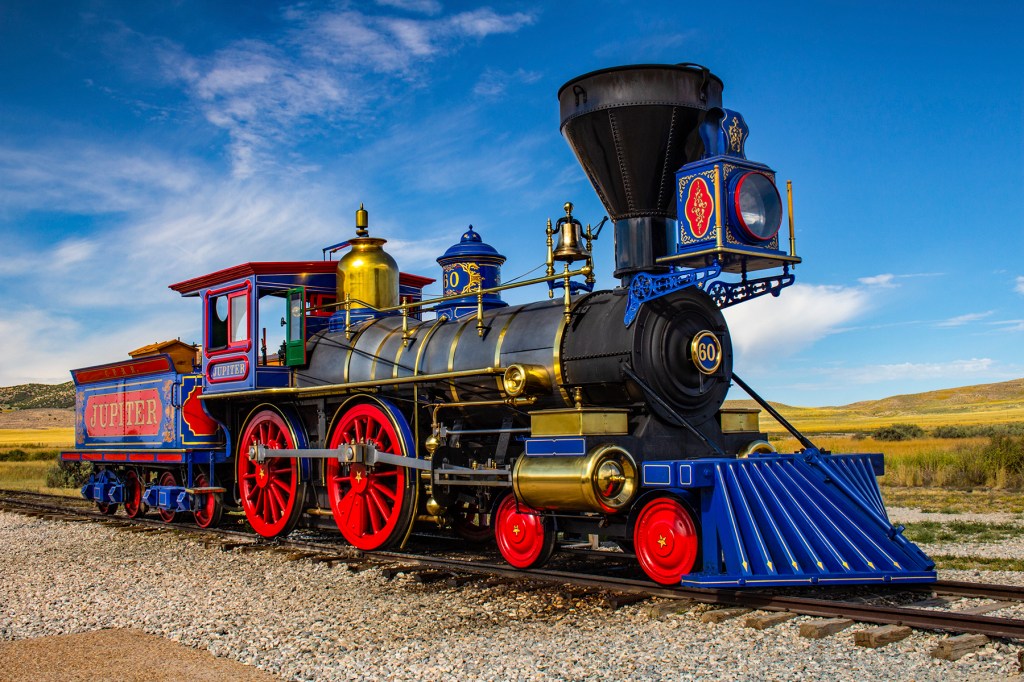
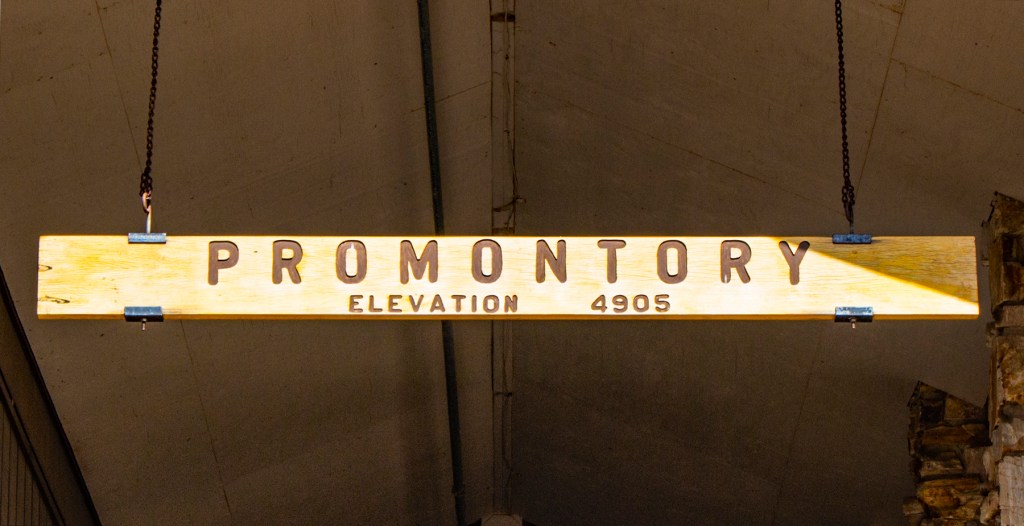
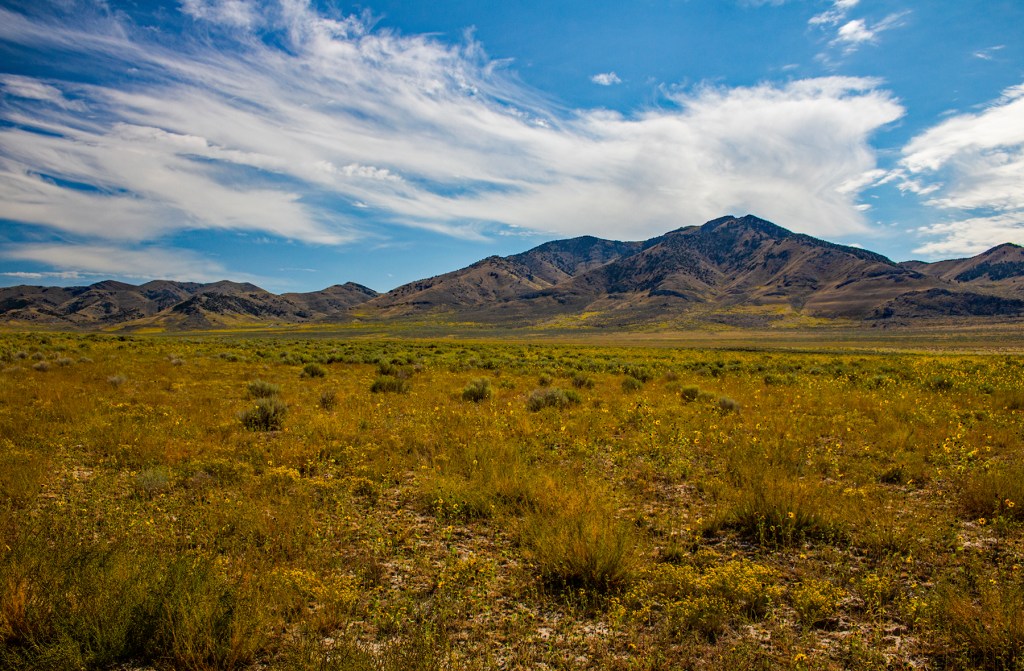
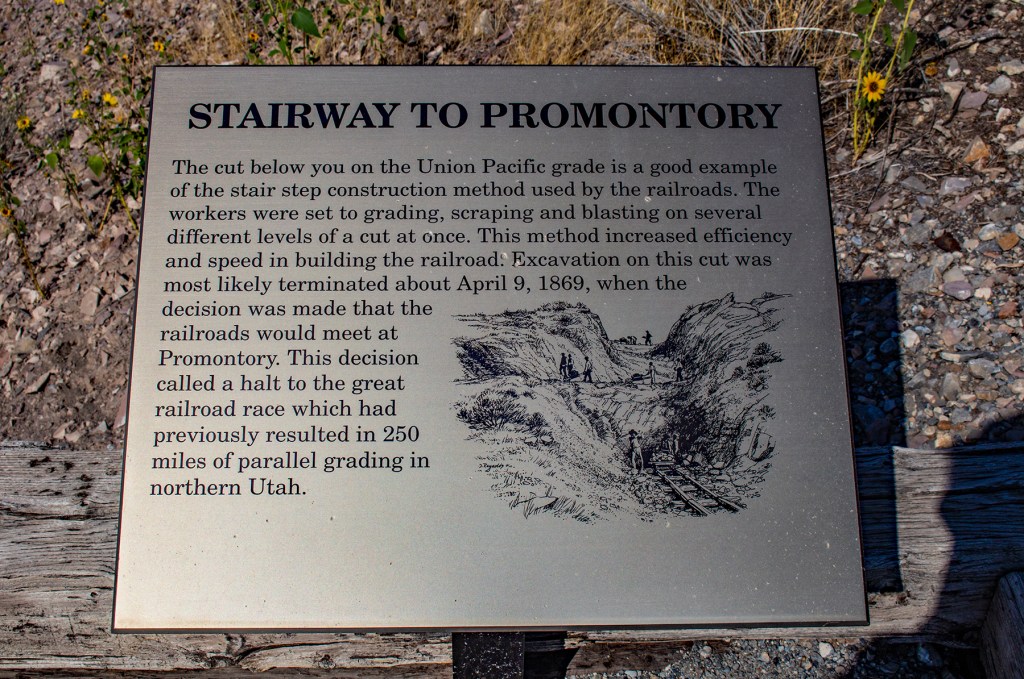
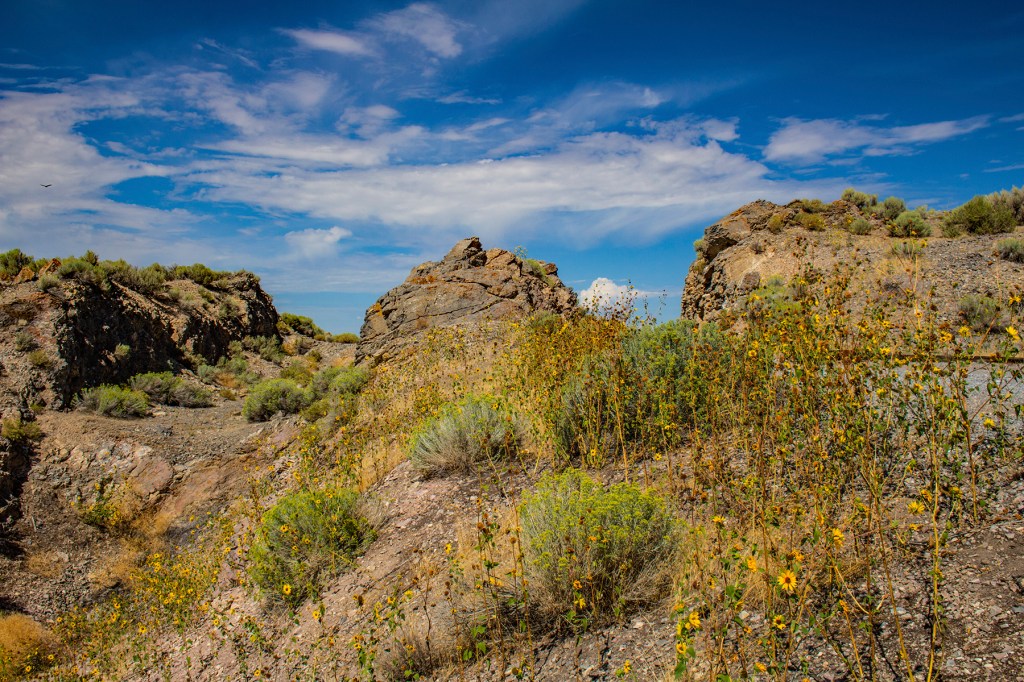
By mid 1868 Central Pacific had crossed the Sierra and laid over 200 miles of track while the Union Pacific had laid over 700 miles of track across the plains. Both pushed so far past their railheads that they passed each other, and for approximately 250 miles competing graders laid parallel tracks. Congress finally declared that Promontory Summit would be the final meeting place and on May 10, 1869, two locomotives, the Central Pacific Jupitar and Union Pacific’s No. 119 came together at Promontory Summit. When the final spike was driven the Central Pacific had laid 690 miles of track and Union Pacific had laid 1,086 miles of track. They had crossed 1,776 miles of desert, rivers and mountains to bind together the east and west.
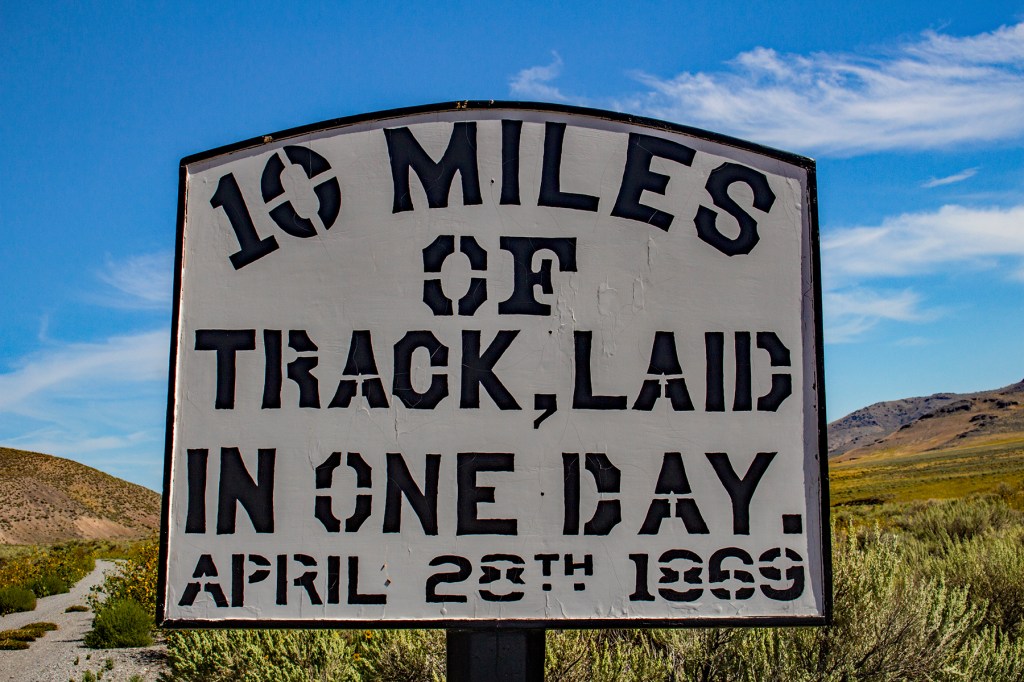
During the construction of the transcontinental railroad the Union Pacific workers had laid eight and a half miles of track in one day. At that time a record using just hand labor. So on April 28th, 1869, the Central Pacific workers said, “Hold my Beer and Watch This” and laid ten miles of track in one day, a record that still stands to this day for hand labor. The Golden Spike was never driven, for obvious reasons, and was eventually given to Leland Stanford, the owner of Central Pacific, at the time. It is currently on display at Stanford University in Palo Alto, California.


 RV There Yet?
Big fluffy cows taste Amazing!!
LikeLike