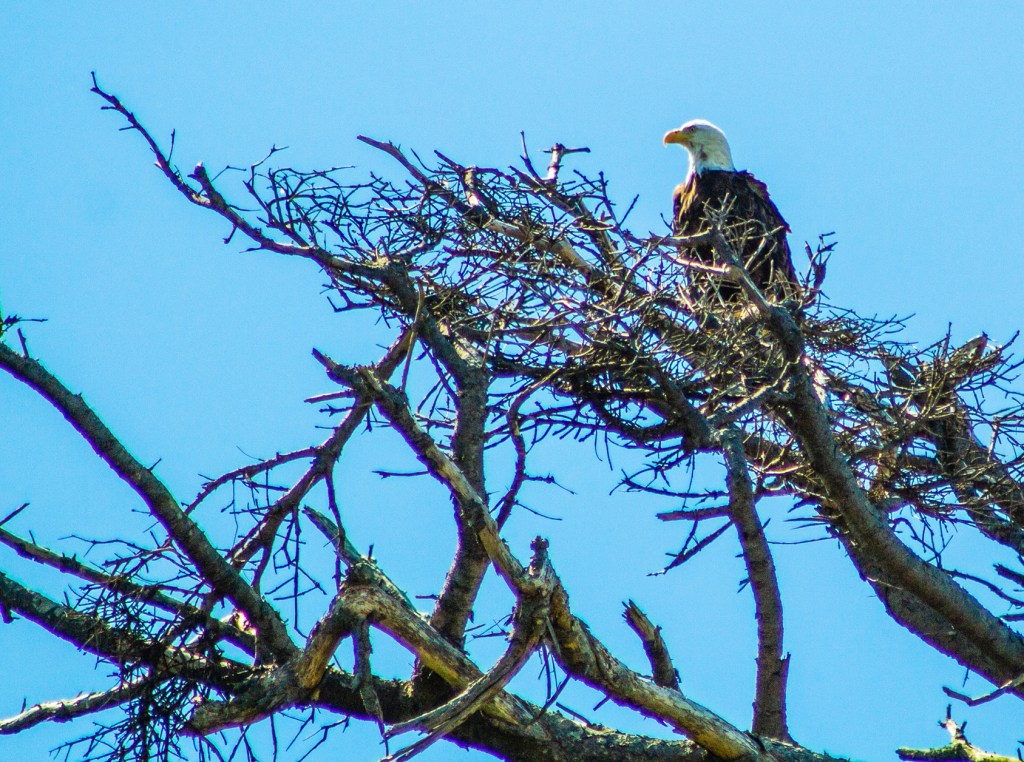
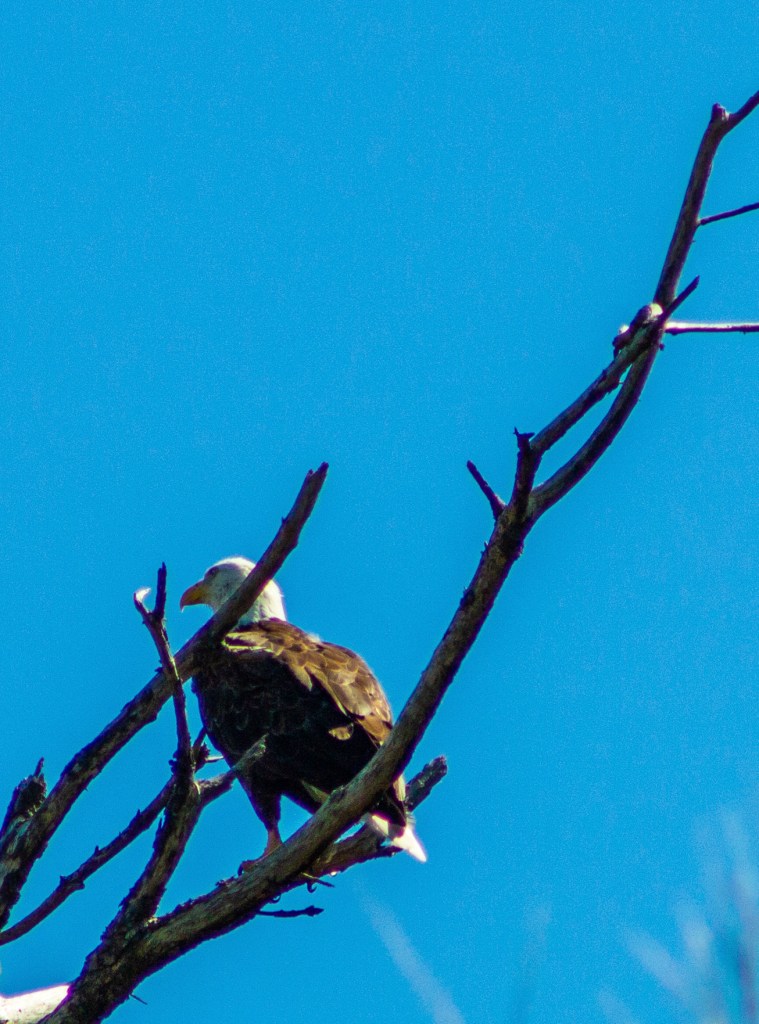
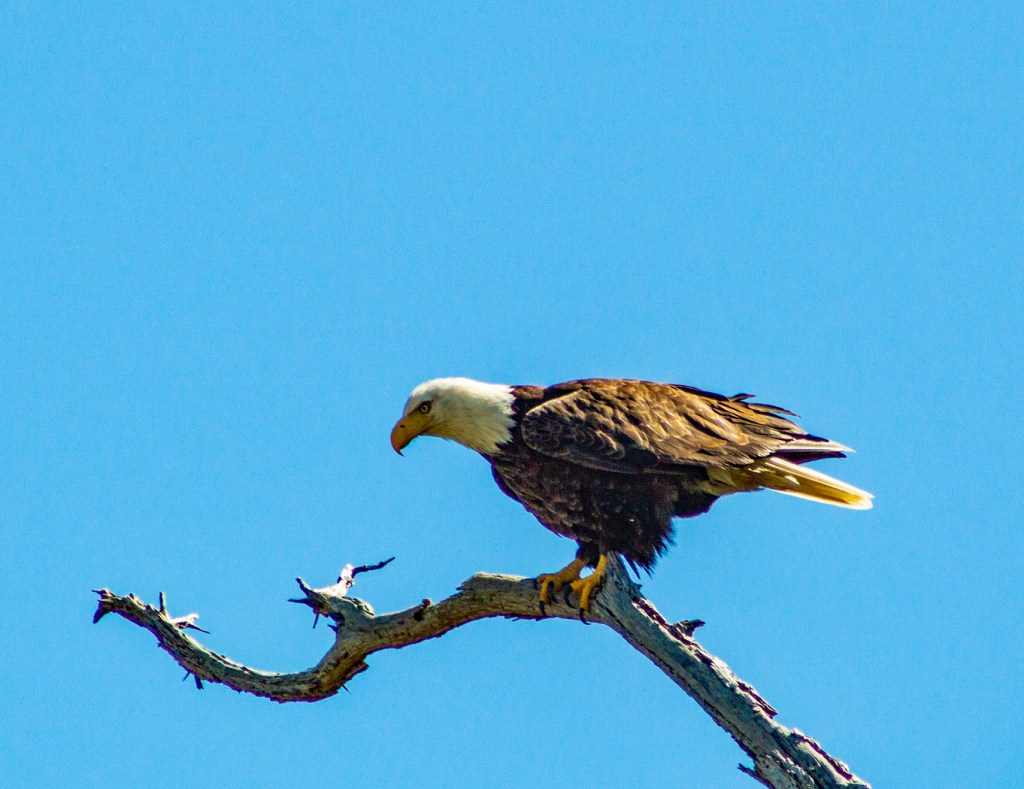
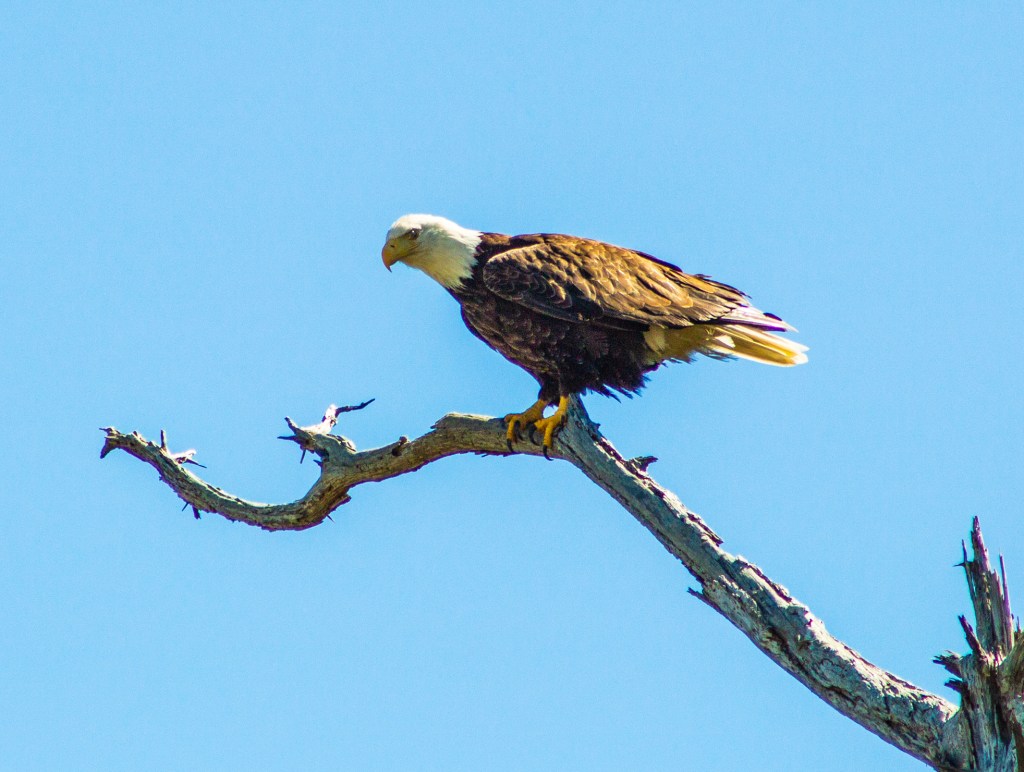
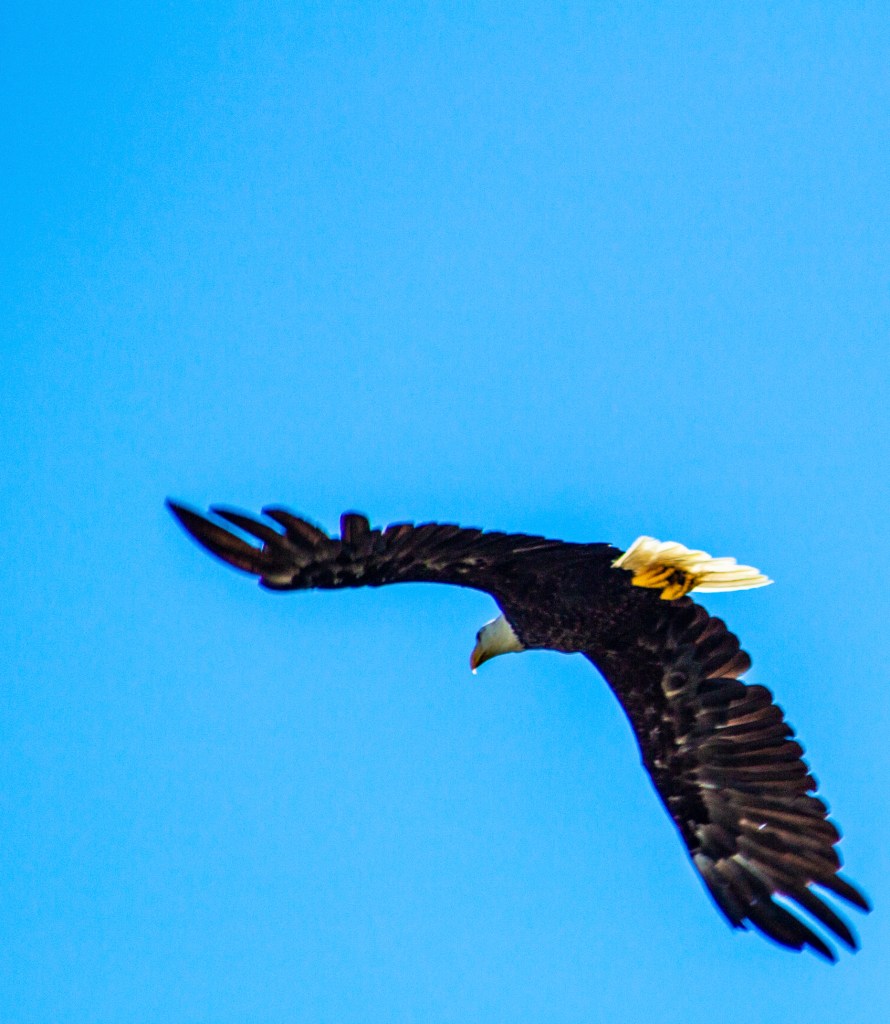
This morning I got up and took my usual hike on the beach, but this time instead of heading south I headed north. As I was walking along listening to and watching the waves I glanced up on the bluff, to my right, and saw a Bald Eagle sitting in a tree. I got as close as I could, took some photos and then moved to another vantage point in hopes of getting closer. After I finished taking photos, I turned to resume my hike and saw a second eagle about 100 yards away. I was able to get closer to the second eagle, but it didn’t stick around long. I took two photos before it flew off.
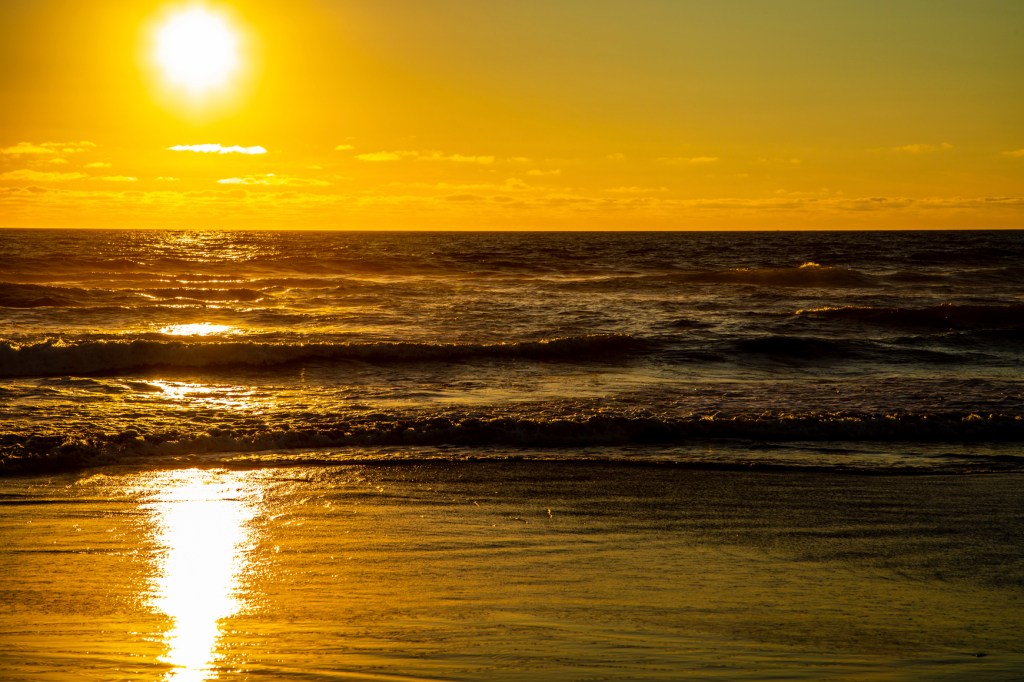
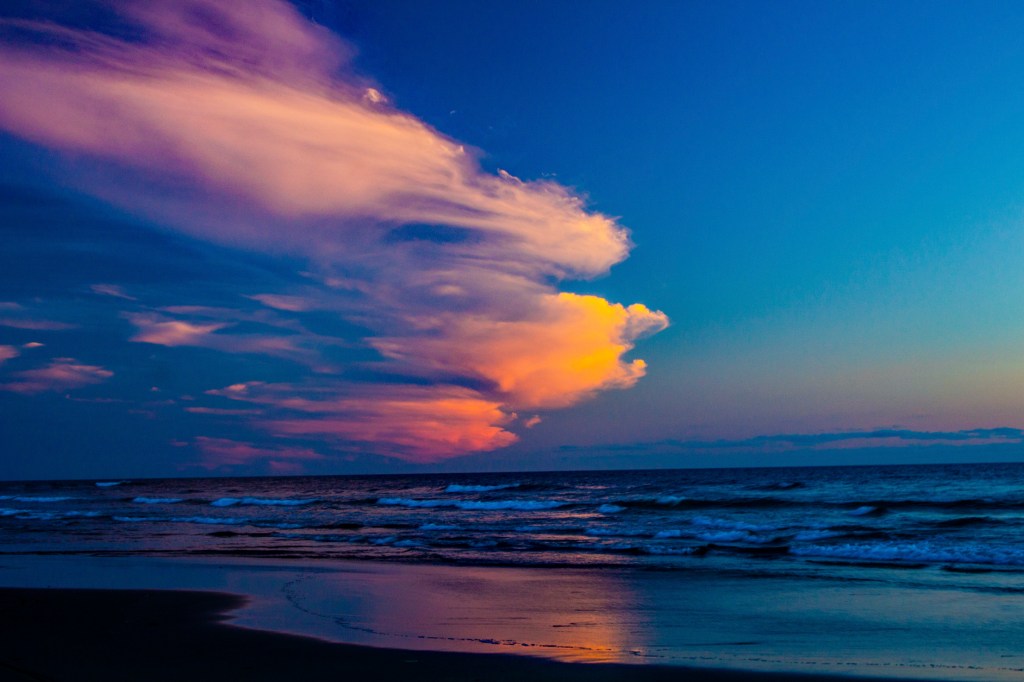
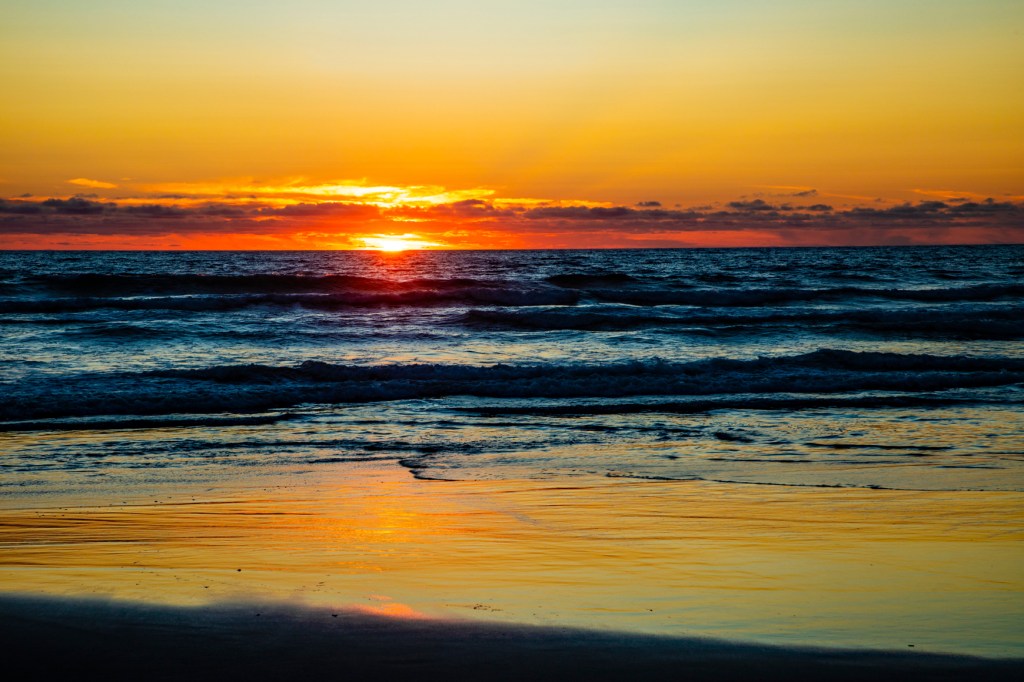
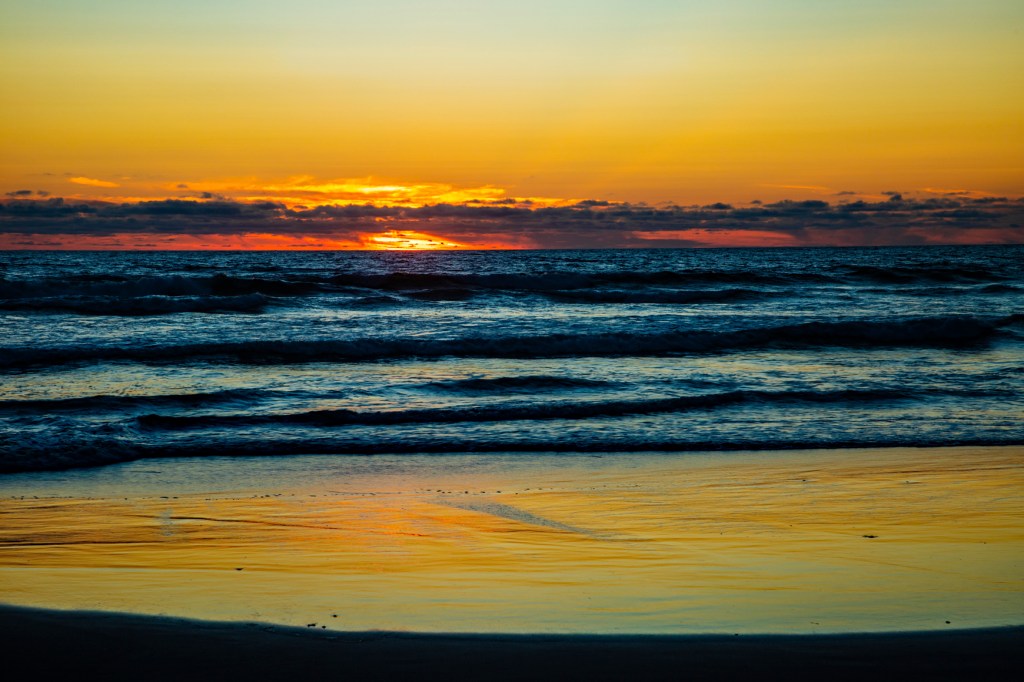
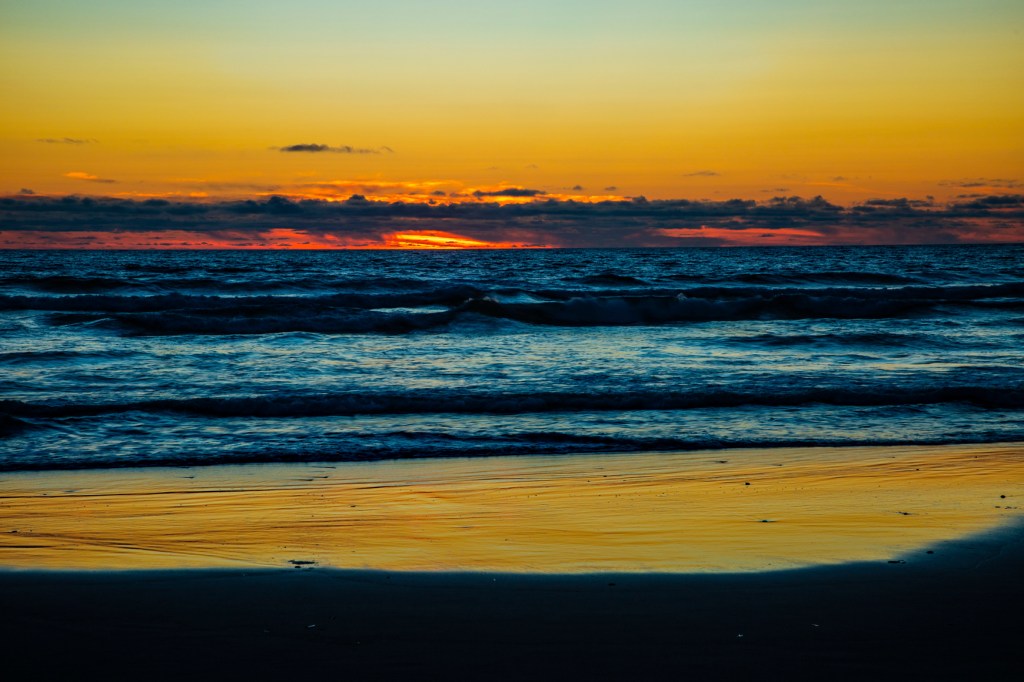
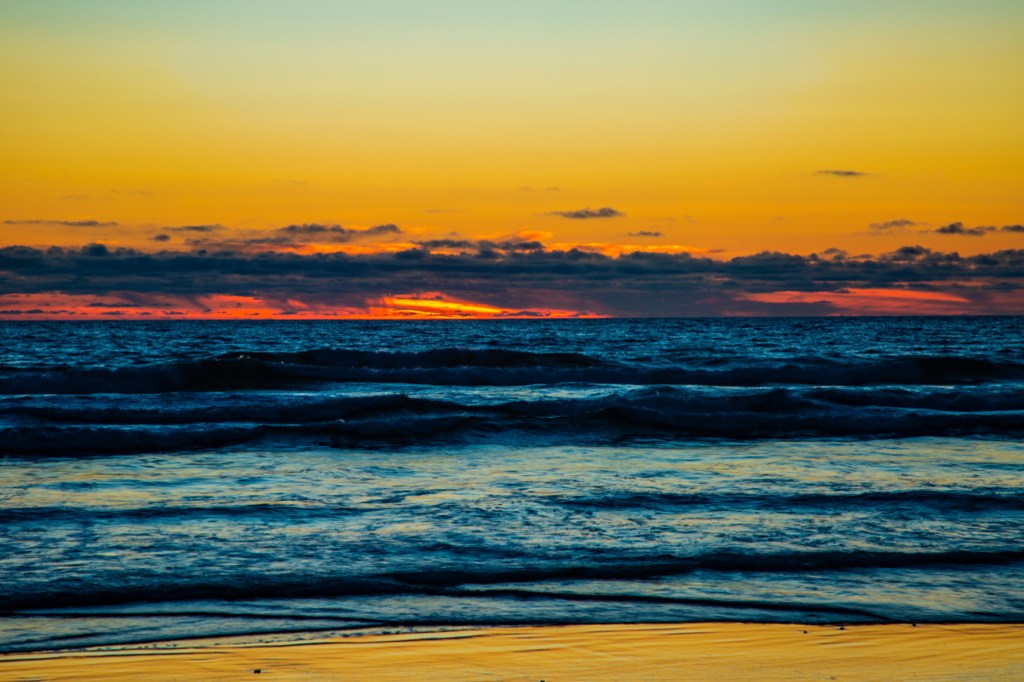
Last evening, just before sunset, I hiked back to the beach in hopes of catching a nice sunset. I wasn’t disappointed. It was the first evening since we arrived in South Beach that the marine layer stayed offshore. Take a look.
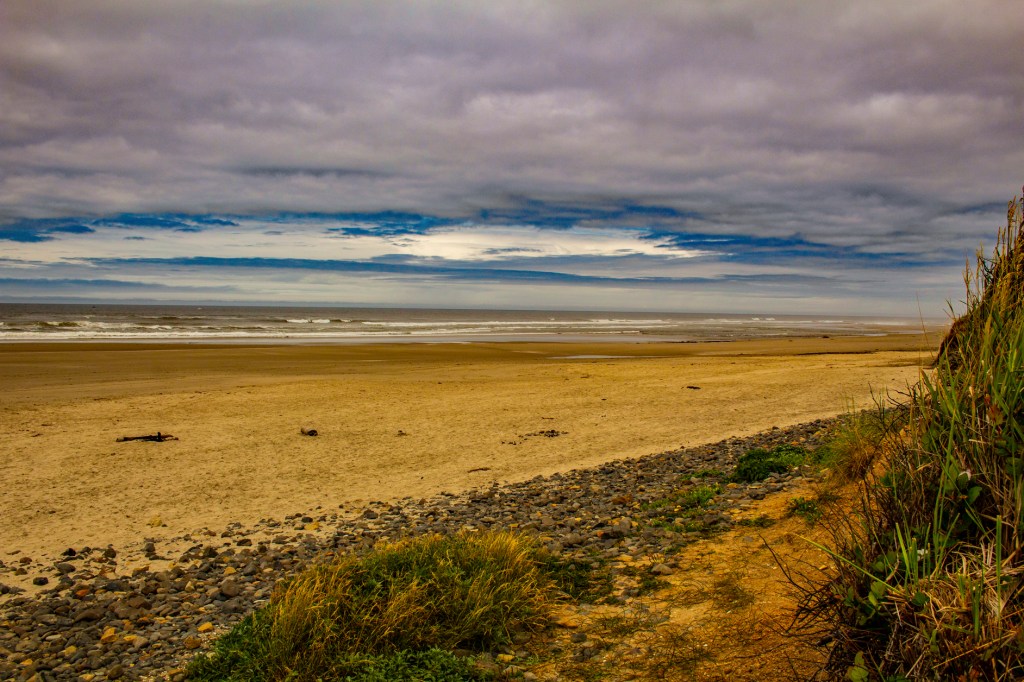
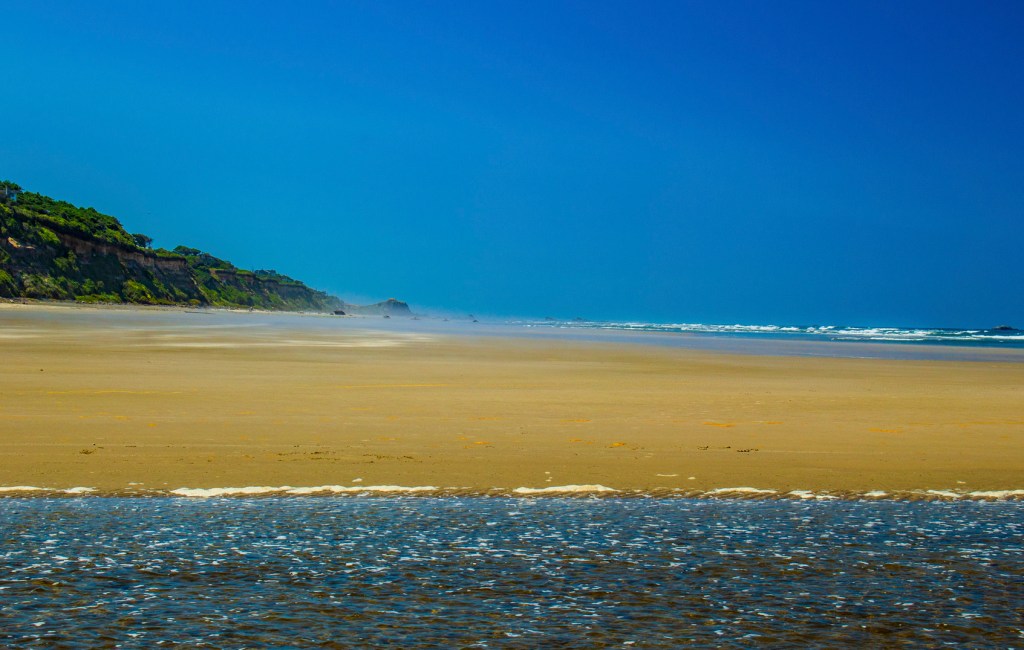
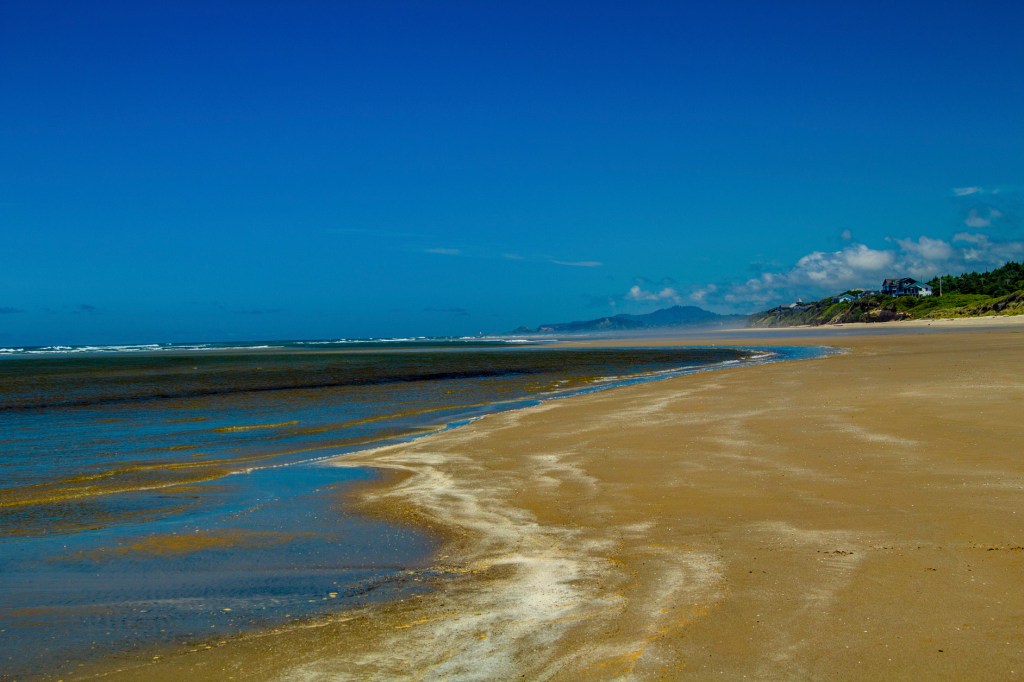
Almost every day since we arrived at Whalers Rest I have taken a hike to the beach. Sometimes I go more than once. Today was no different. I enjoy hiking along the beach when the tide is out because I never know what interesting things I may stumble across. Today I hiked as far south as I could along the beach until I came to a river that I couldn’t cross. By the time I completed my hike I had gone 4.5 miles. I great way to start the day.
Recently Barbara bought for me a pair of bone conduction headphones. I love these headphones. I have a pair of noise cancelling headphones, but when I wear them I can’t hear what’s going on around me. I don’t like not being able to hear what’s going on around me while I’m hiking. With my new, bone conduction headphones not only can I hear my music, but I can hear most everything going on around me. Today I listened to Neil Diamonds, Jonathan Livingstone Seagull, which I thought was fitting considering my surroundings. I was able to enjoy the music while listening to the surf and the birds in the distance.
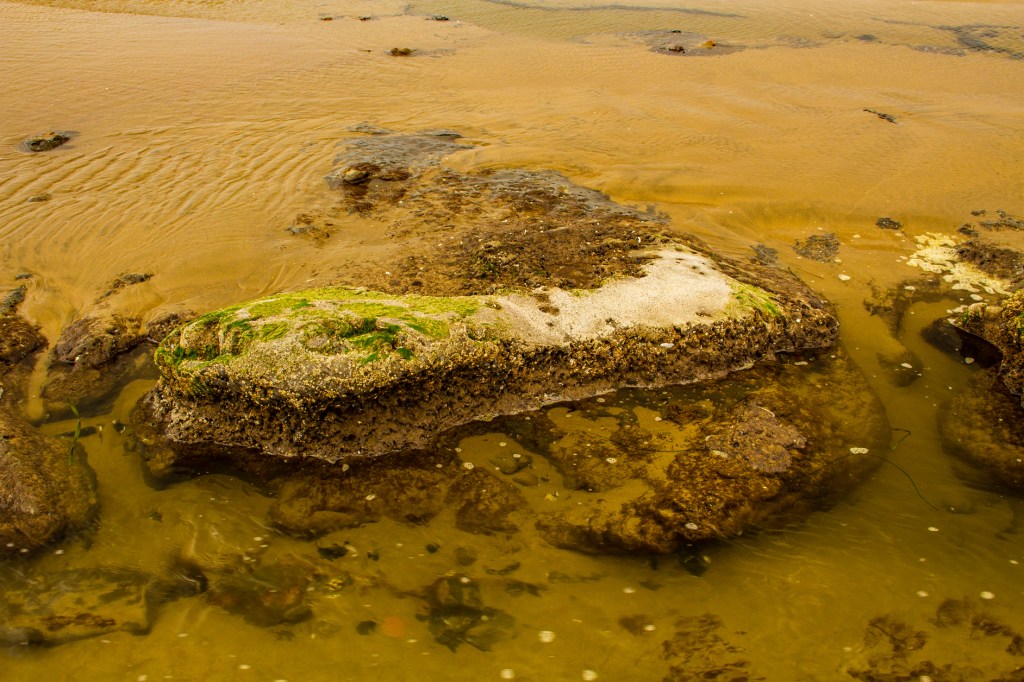
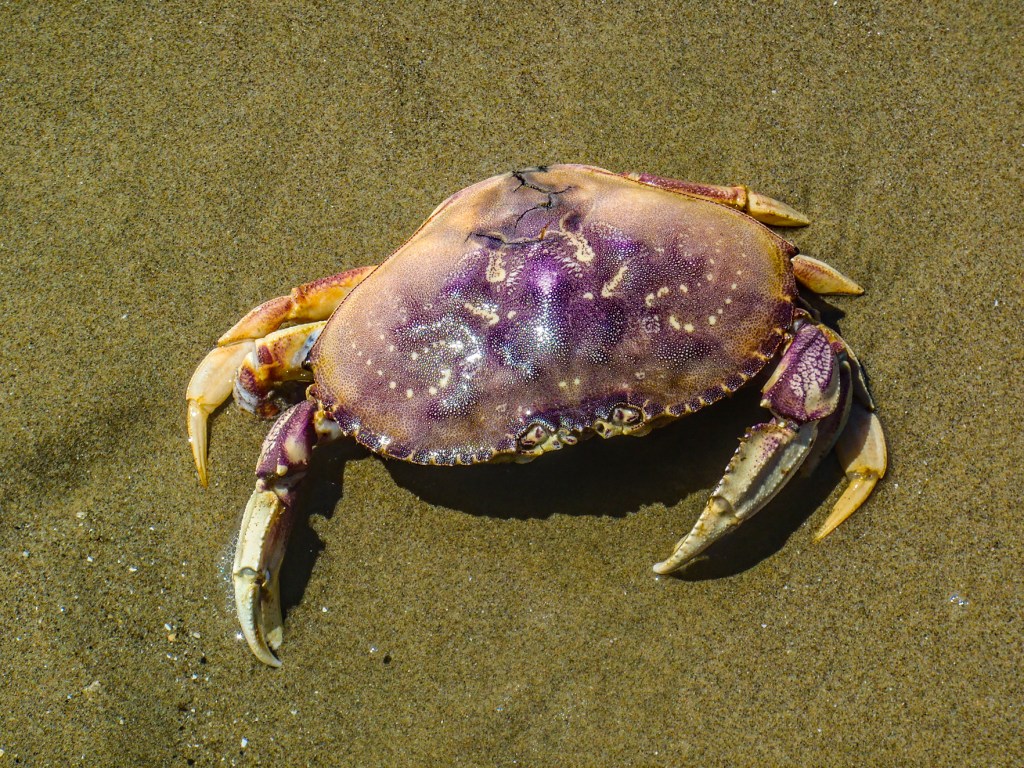
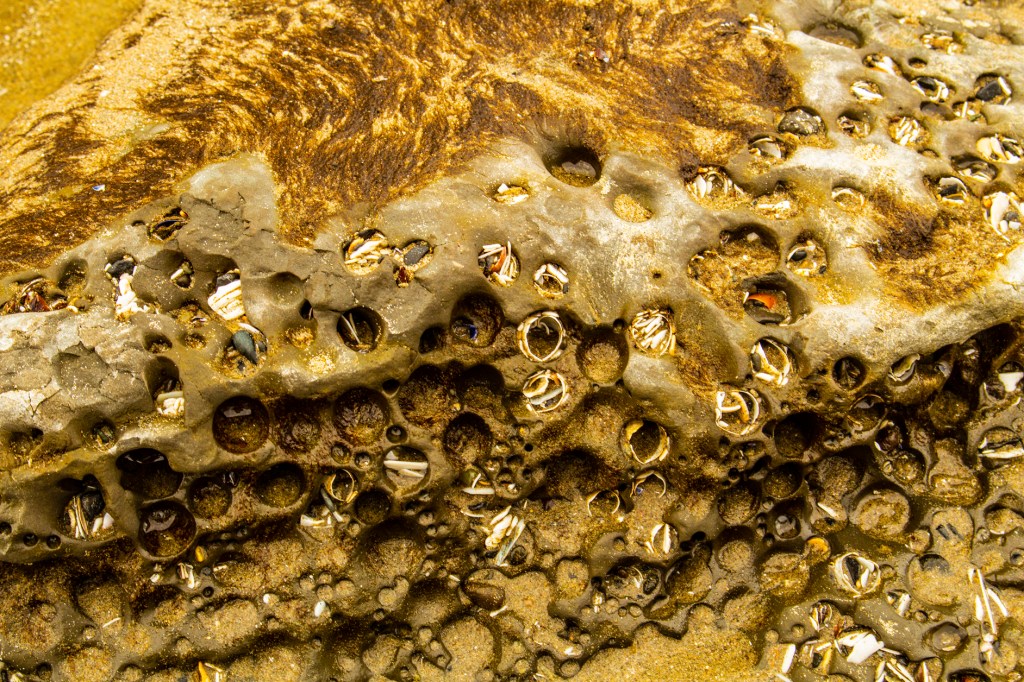
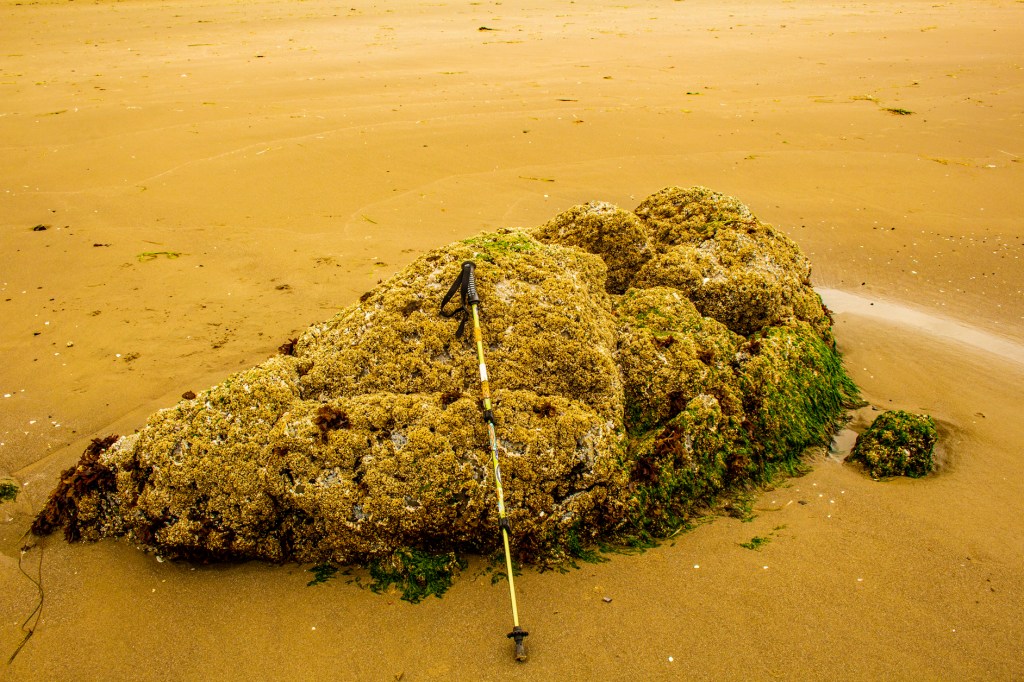
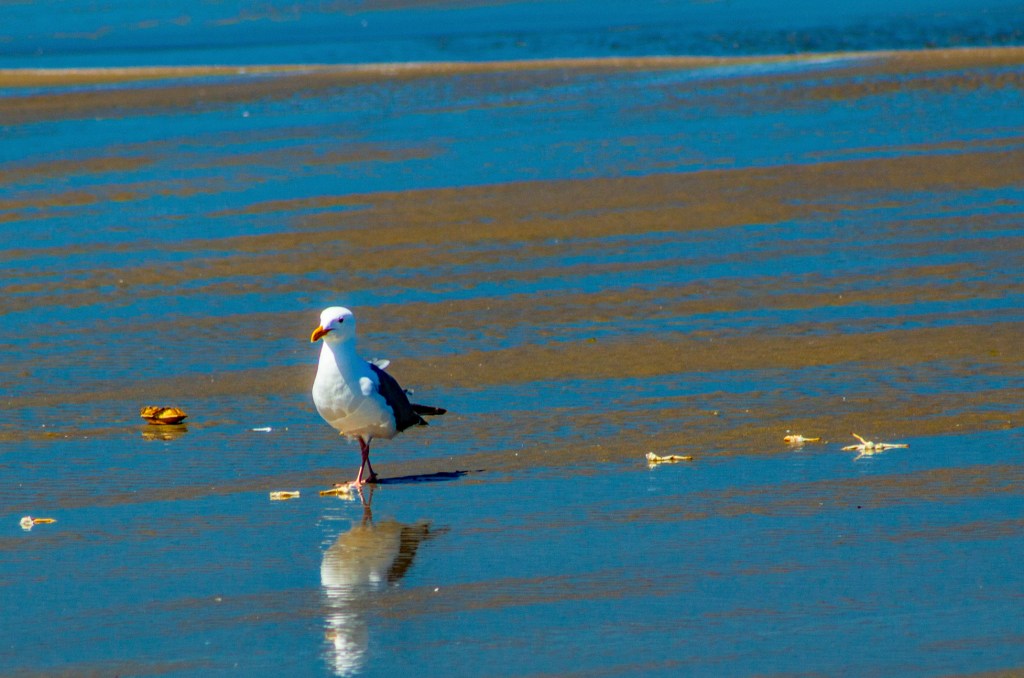
A coral bed with new life on top. Crustaceans that once occupied the voids in the coral. More coral covered with barnacles and plankton. This seagull just finished breakfast when I arrived. Time to turn around.
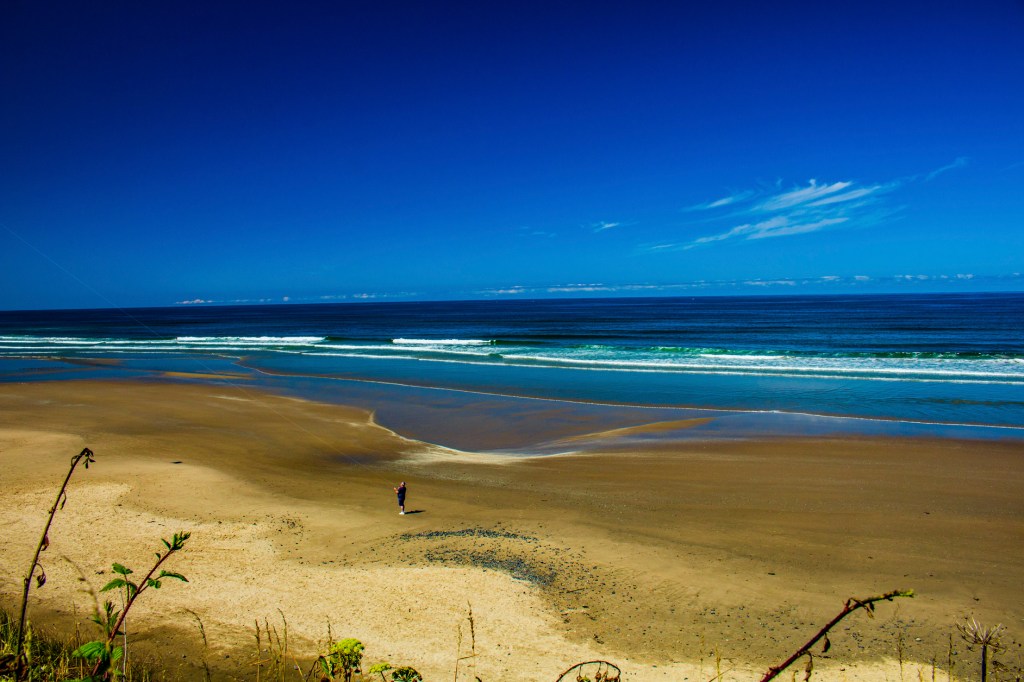
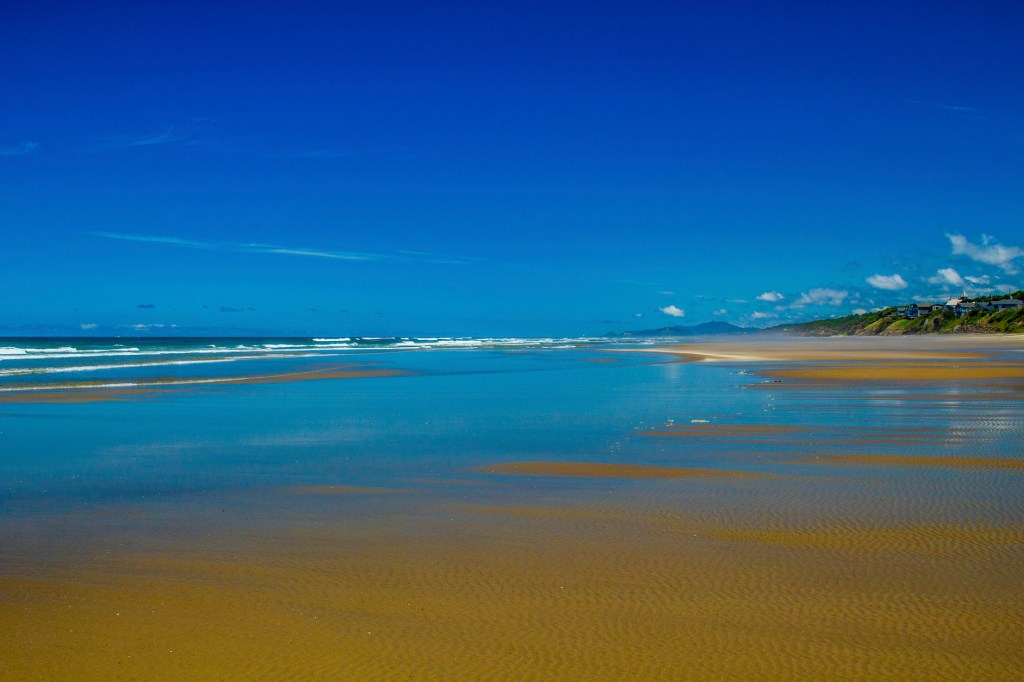
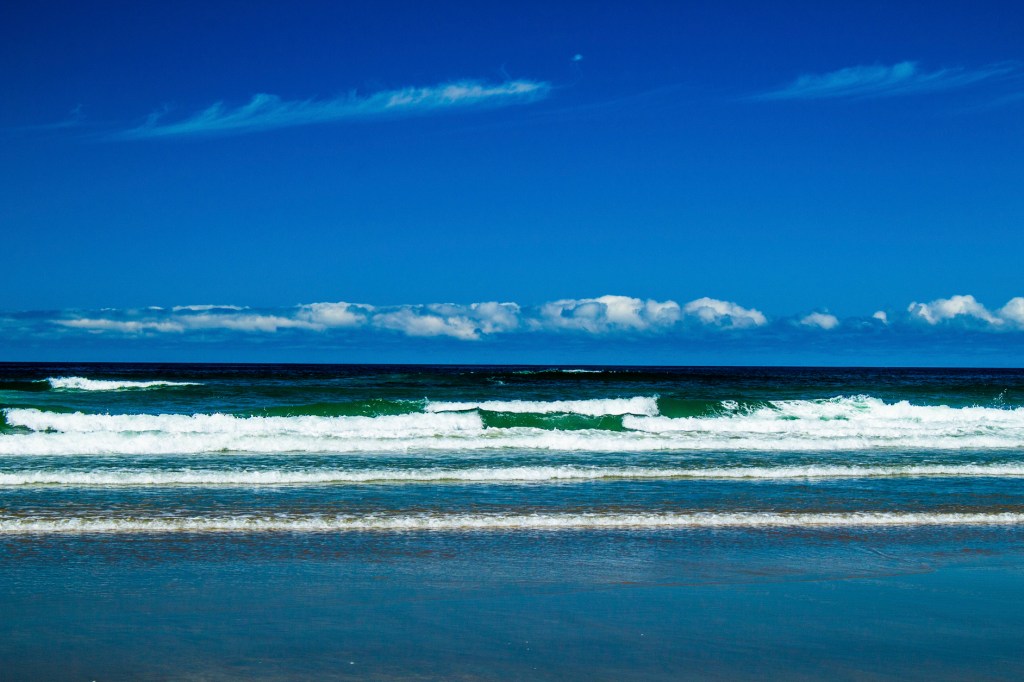
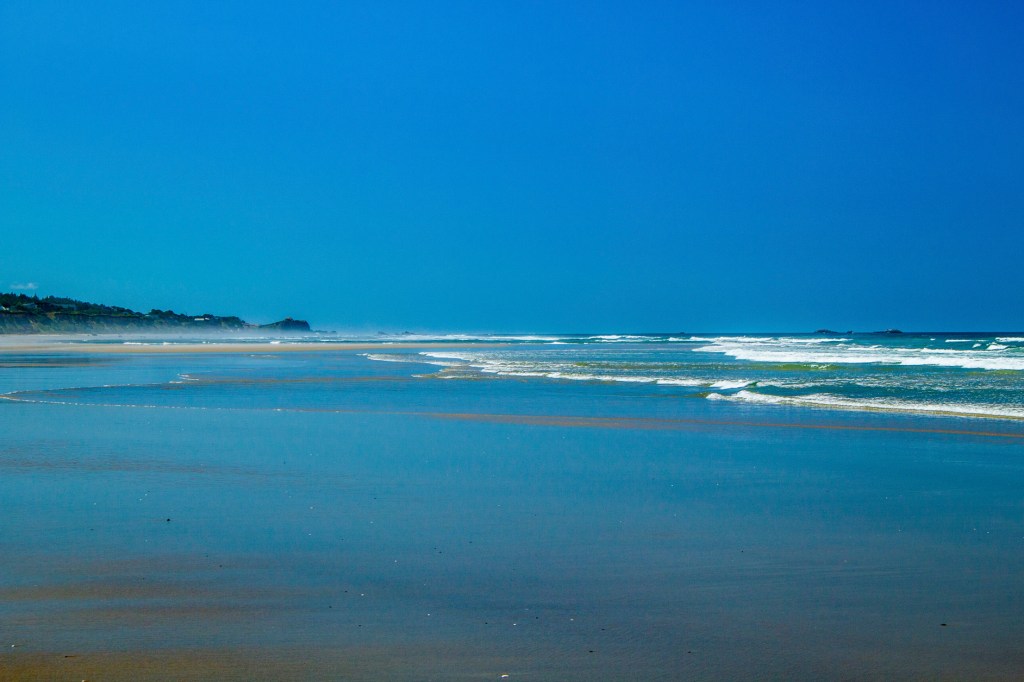
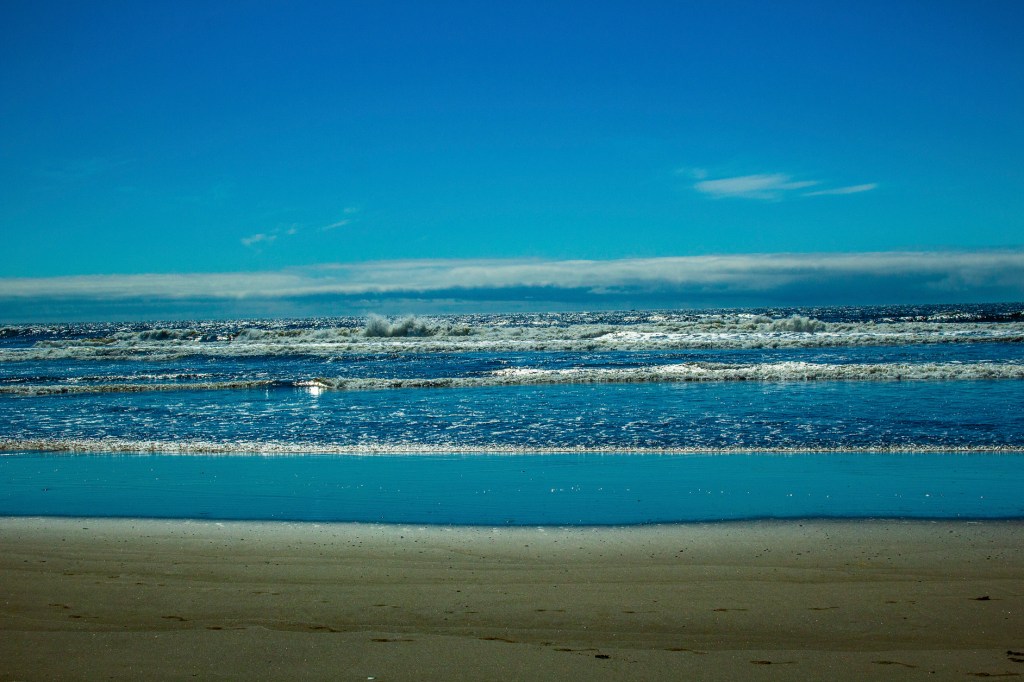
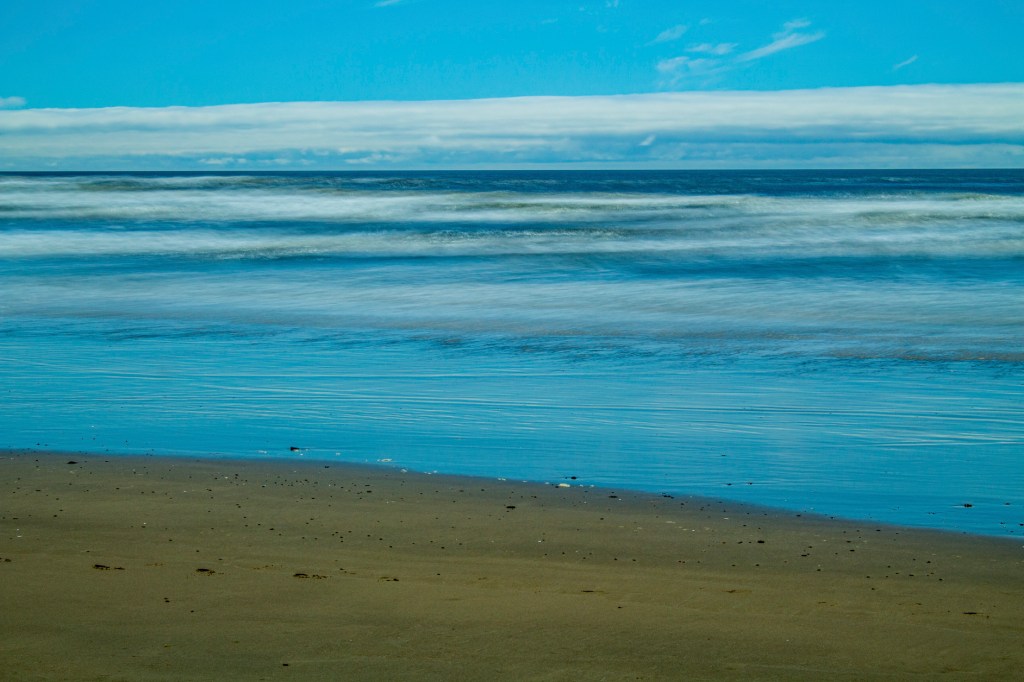
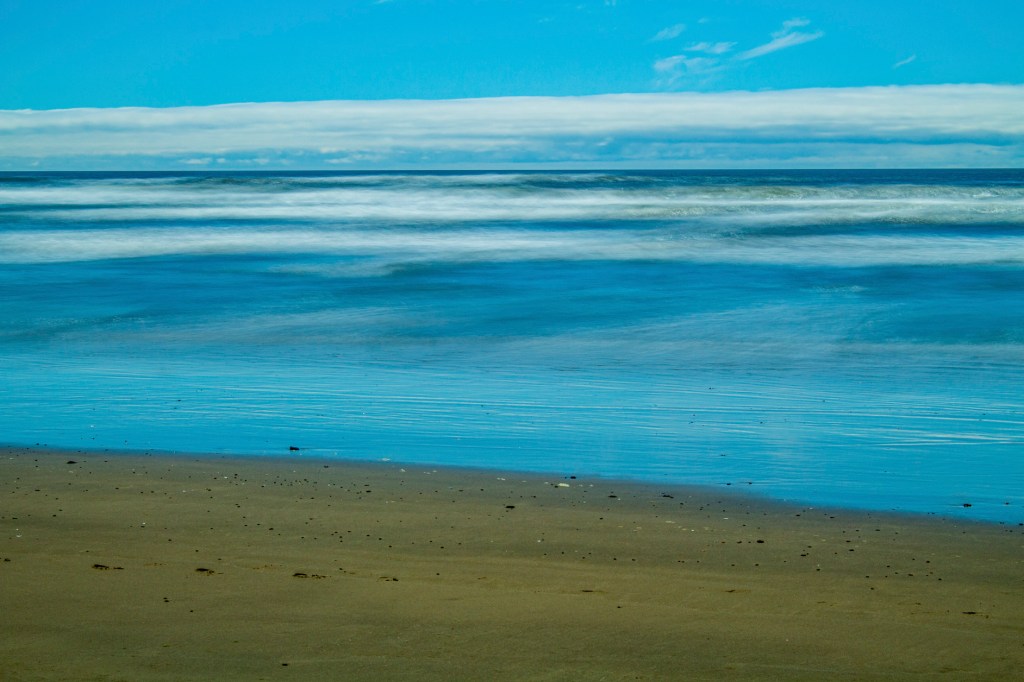
On Monday Barbara and I moved over from Sunriver, Oregon, where the temperatures were in the low 90’s to South Beach, along the coasts, where the high’s are in the low 60’s. Where we are staying, at Whalers Rest, Thousand Trails RV Park, we are approximately 300 feet from the Pacific Ocean. It’s nice to hear the waves as we fall asleep at night. Yesterday I walked down to the beach and took just a few photos of the waves and the blue sky. We will be here through the July 4th holiday until July 13th when we travel north to Seaside, Oregon.
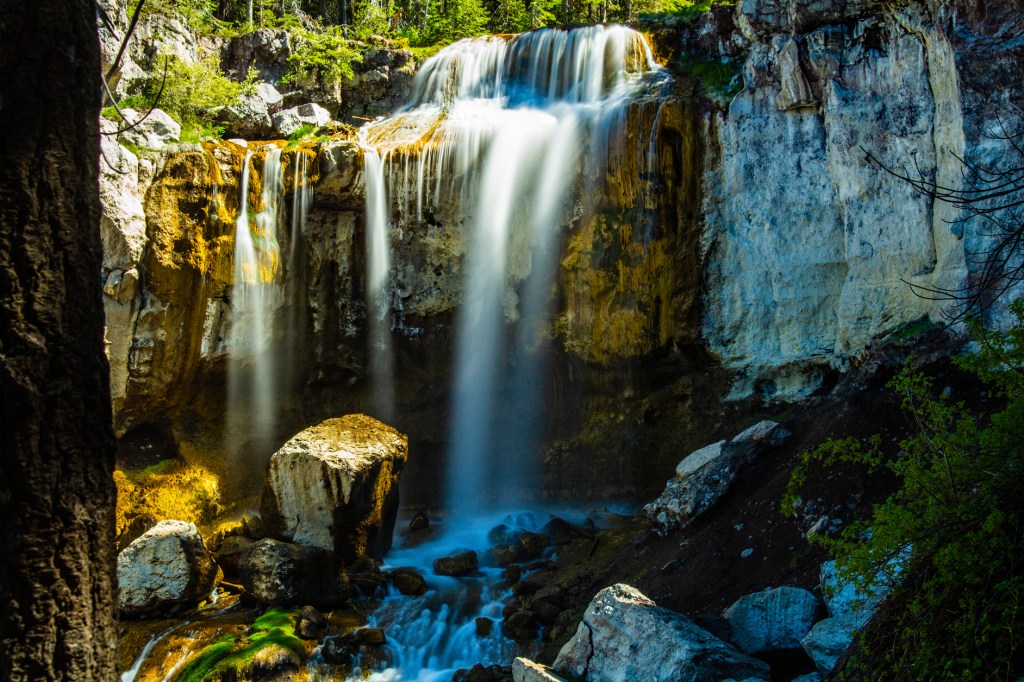
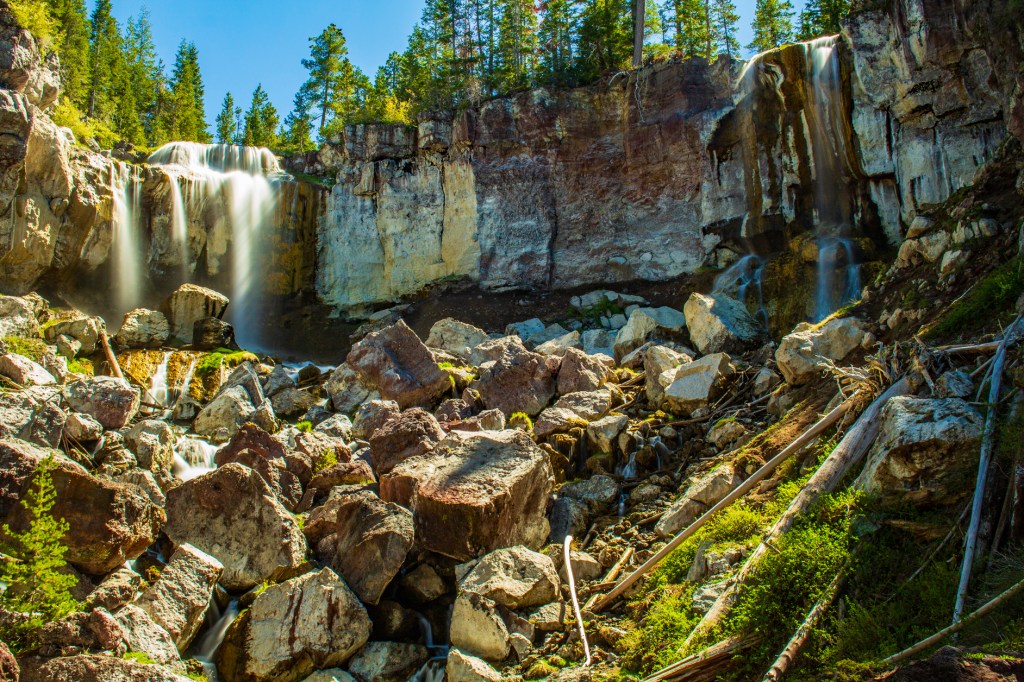
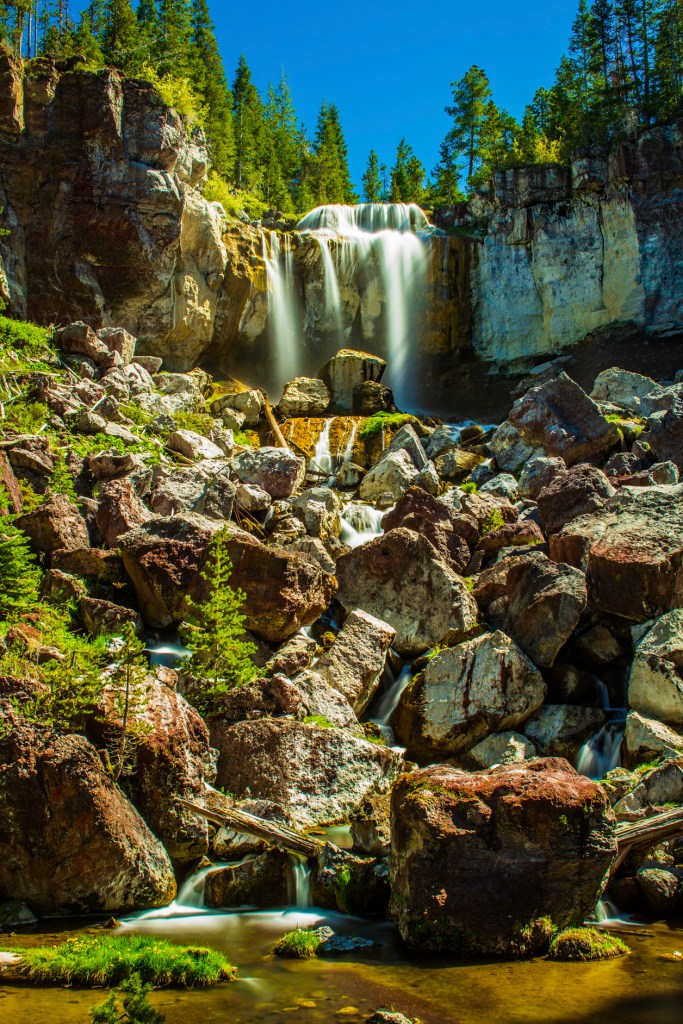
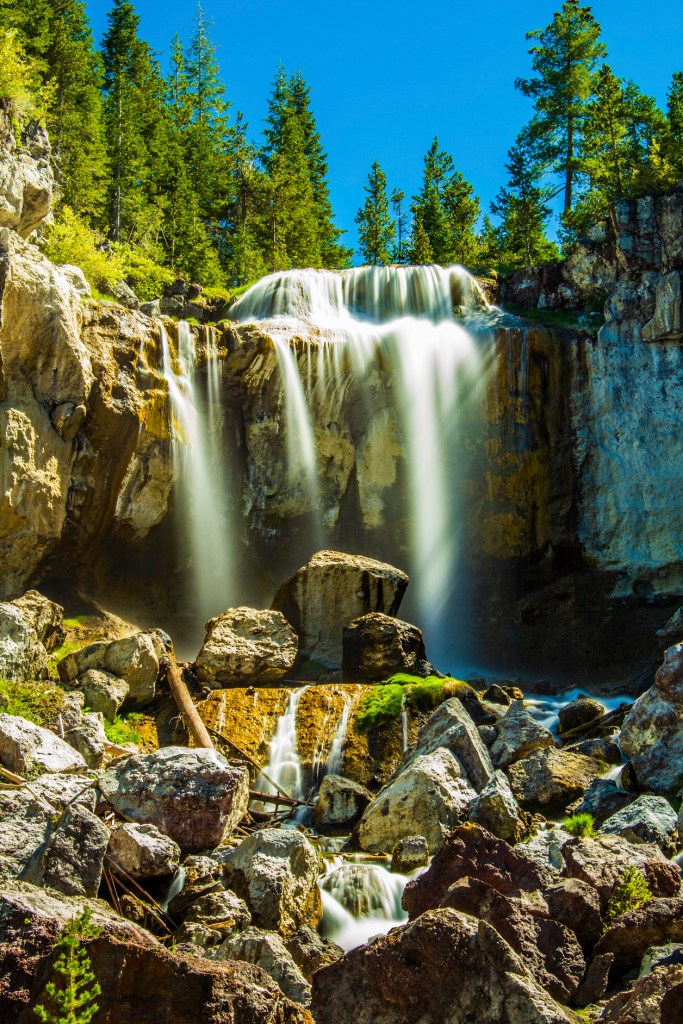
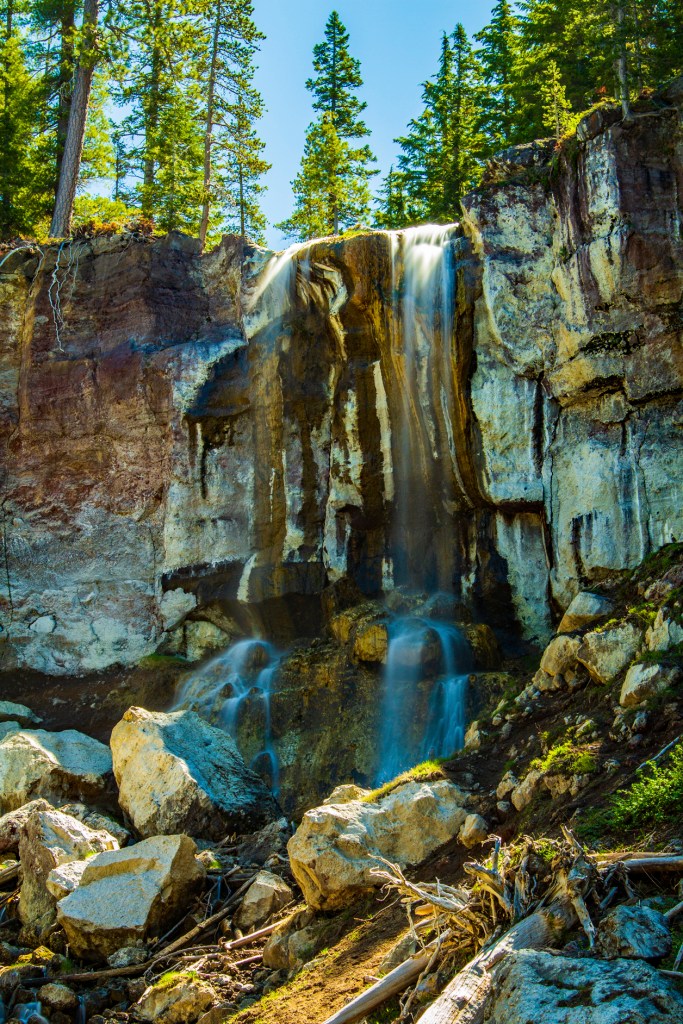
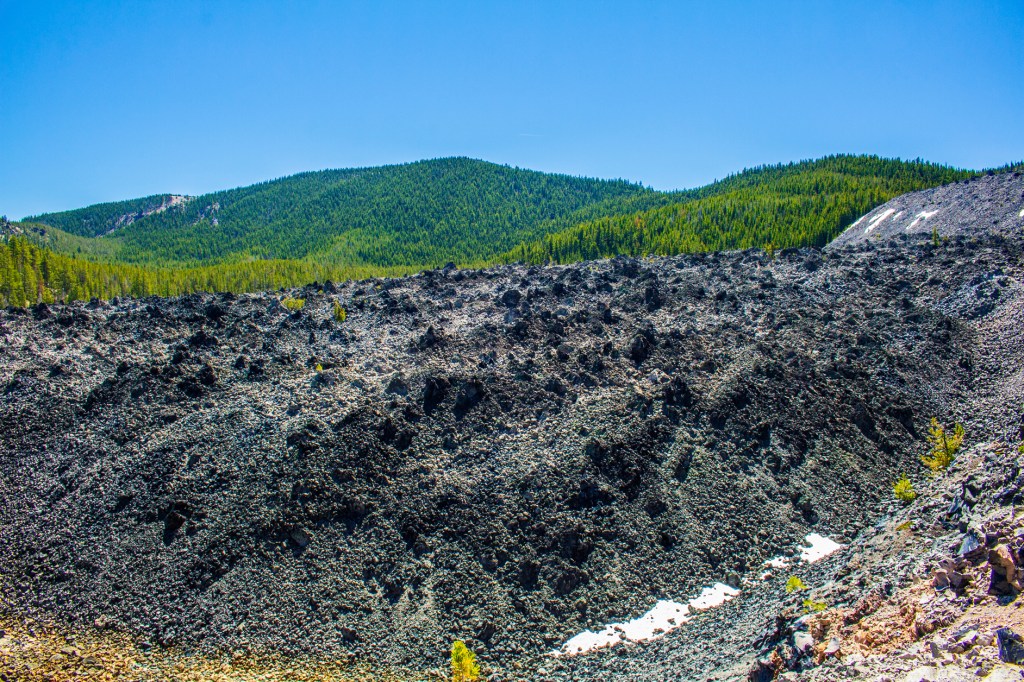
Yesterday Barbara and I spent a few hours exploring the interior of the largest volcano in the Cascade volcanic chain. Rising 4,000 feet above nearby Bend, Oregon the Newberry Caldera hides in plain sight. The Newberry Caldera is home to more than 400 volcanic vents and covers an area the size of the state of Rhode Island, approximately 1,200 square miles. The caldera itself contains several Hawaiian type lava flows, two lakes (Paulina Lake and East Lake) and the beautiful Paulina Falls. For those of you who enjoy exploring the great outdoors, you haven’t lived until you have explored the interior of an active volcano. As a geologist I have had the pleasure of exploring many of these giants as well as sleeping inside a few. While in college I got to climb to the top of Mount Saint Helens, post May 18, 1980 eruption. I have even had the pleasure of flying over the Kilauea volcano in a helicopter watching the lava churn below.
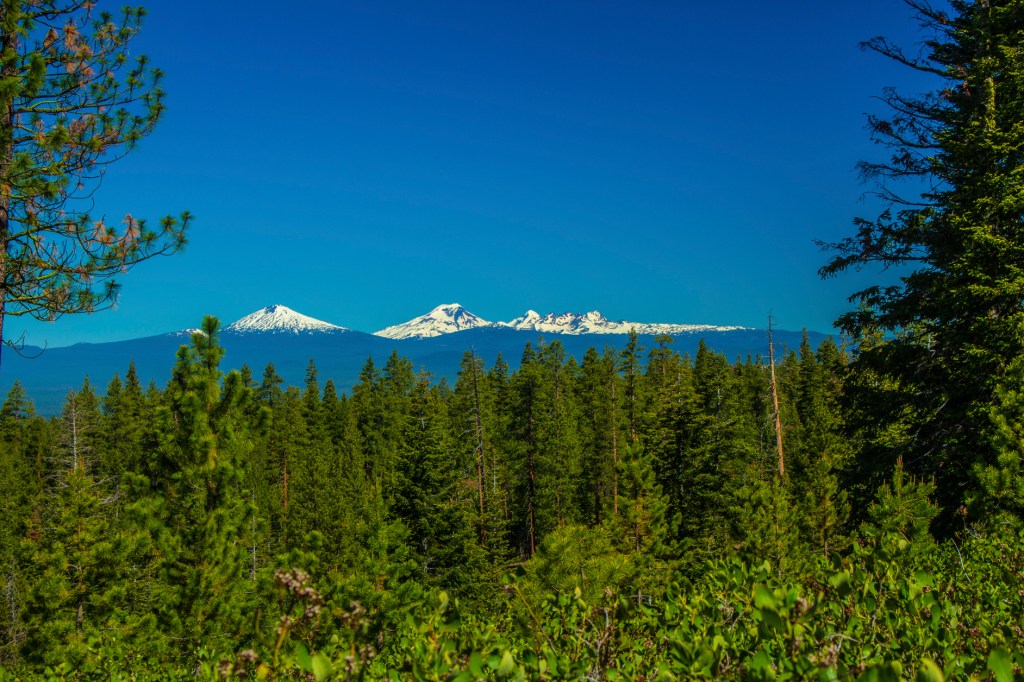
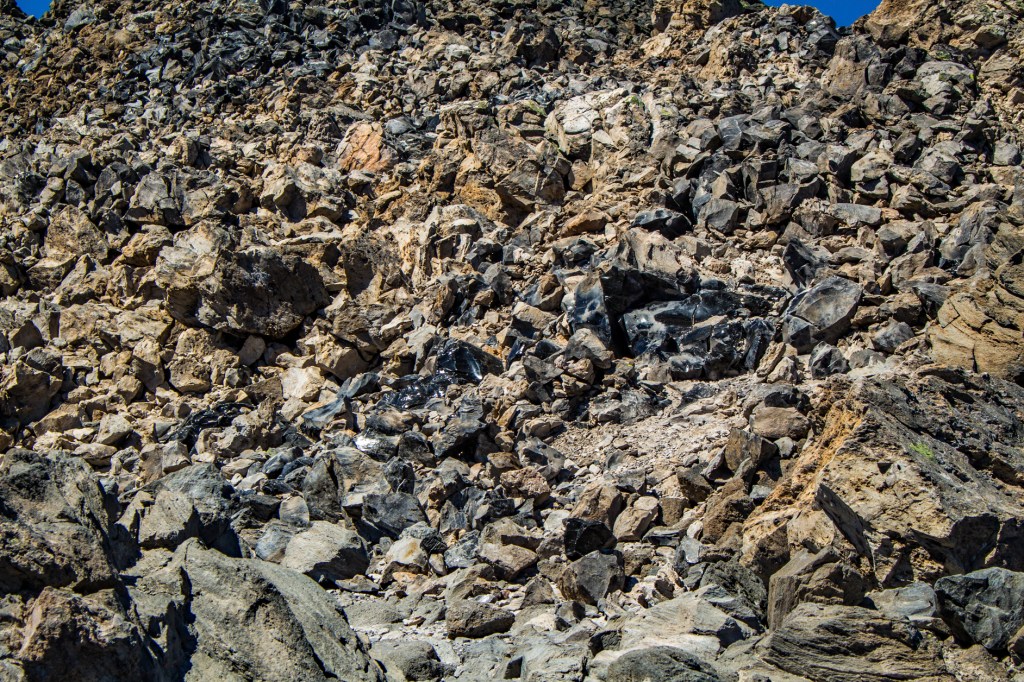
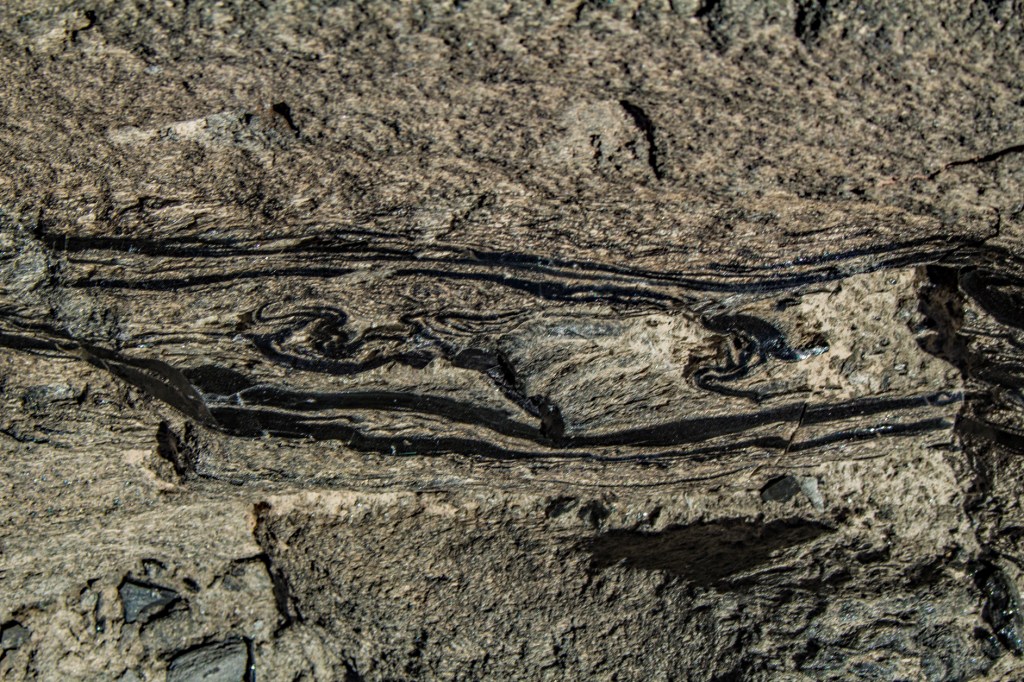
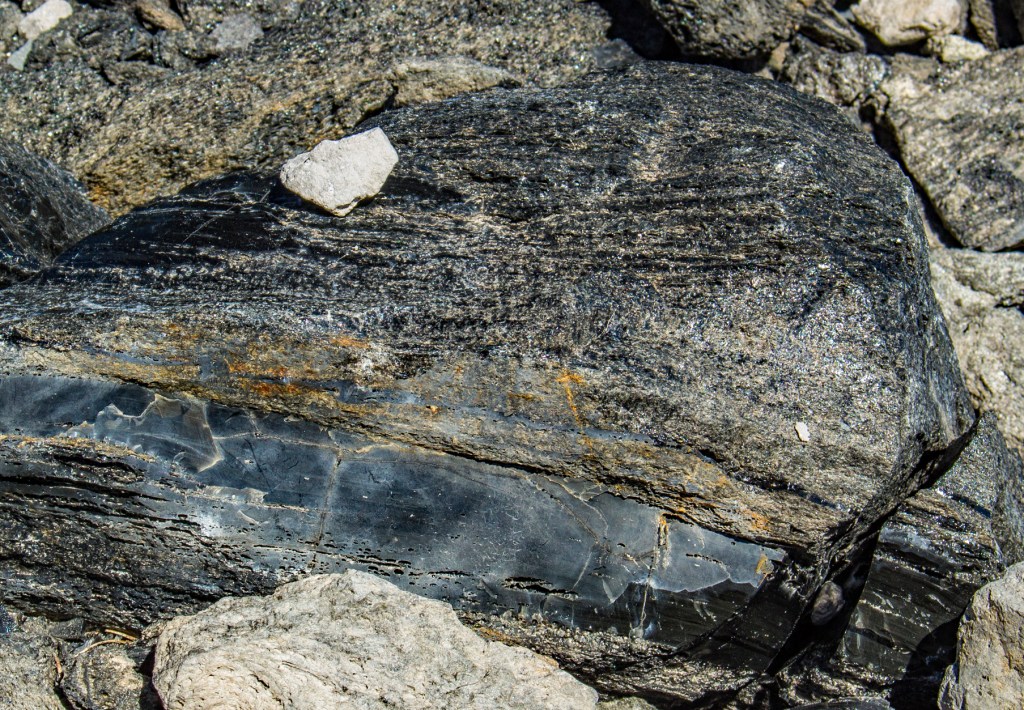
Nearby Cascade volcanos.Paulina FallsThe Big Obsidian Flow. Here you will find obsidian (volcanic glass) and pumice. Bands of obsidian within pumice. Chemically they are the same. The only difference is the gas vesicles are now filled with air that make the pumice so light weight. Pumice within obsidian. East Lake with Paulina Peak in the distance.Paulina Lake.
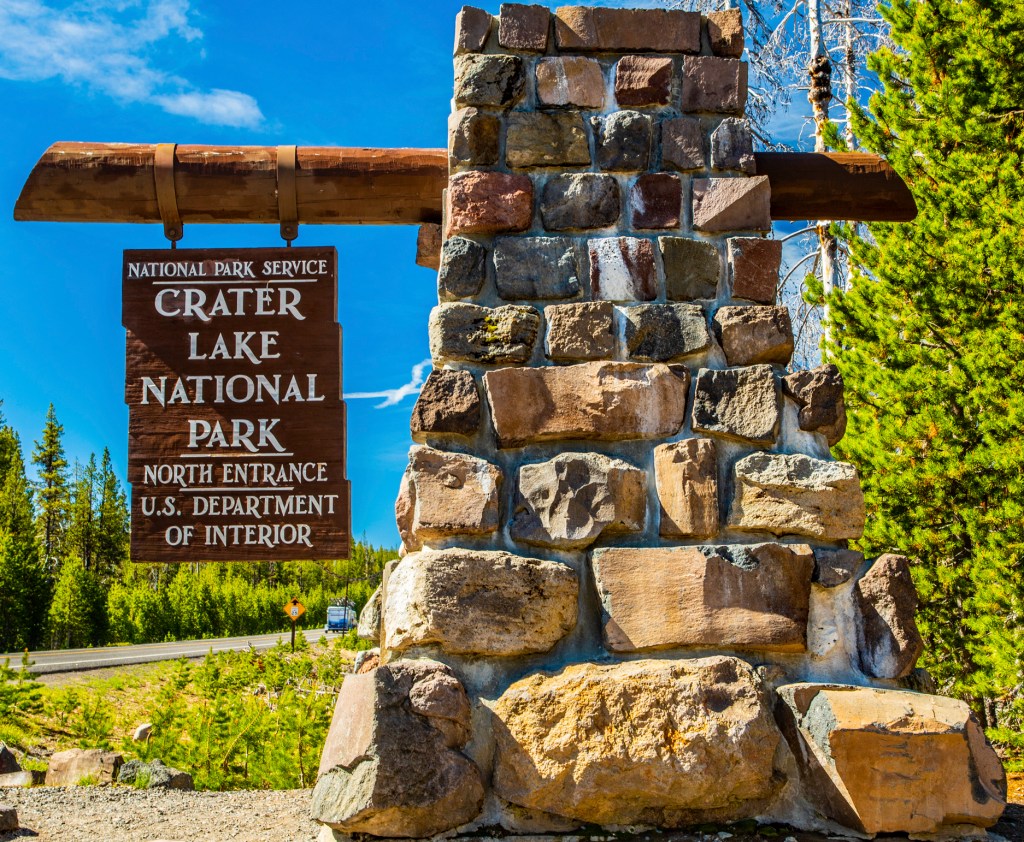
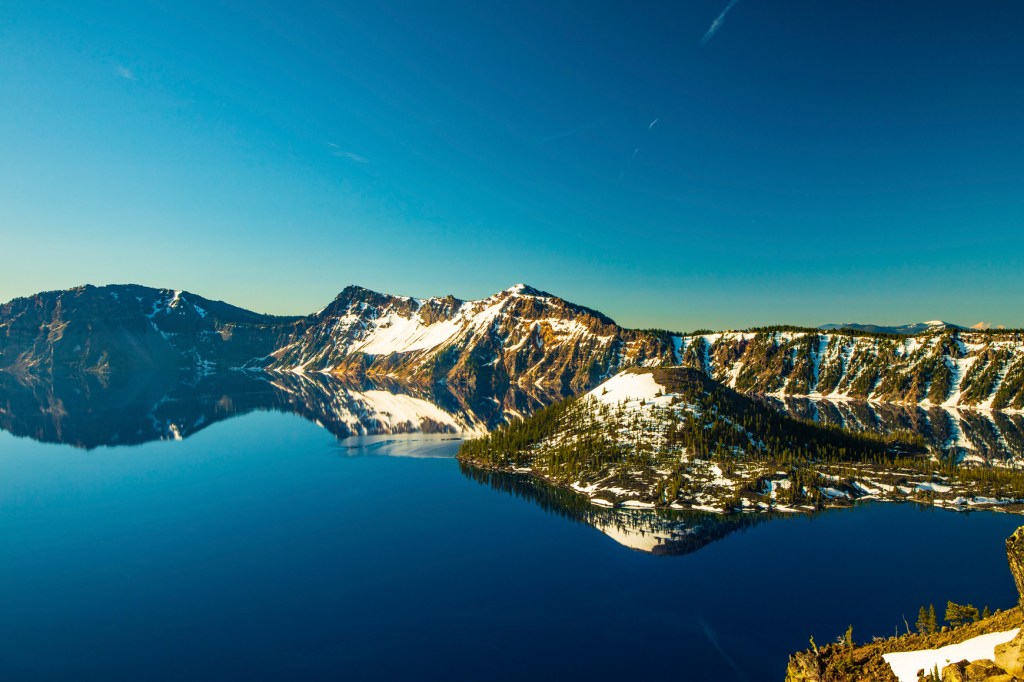
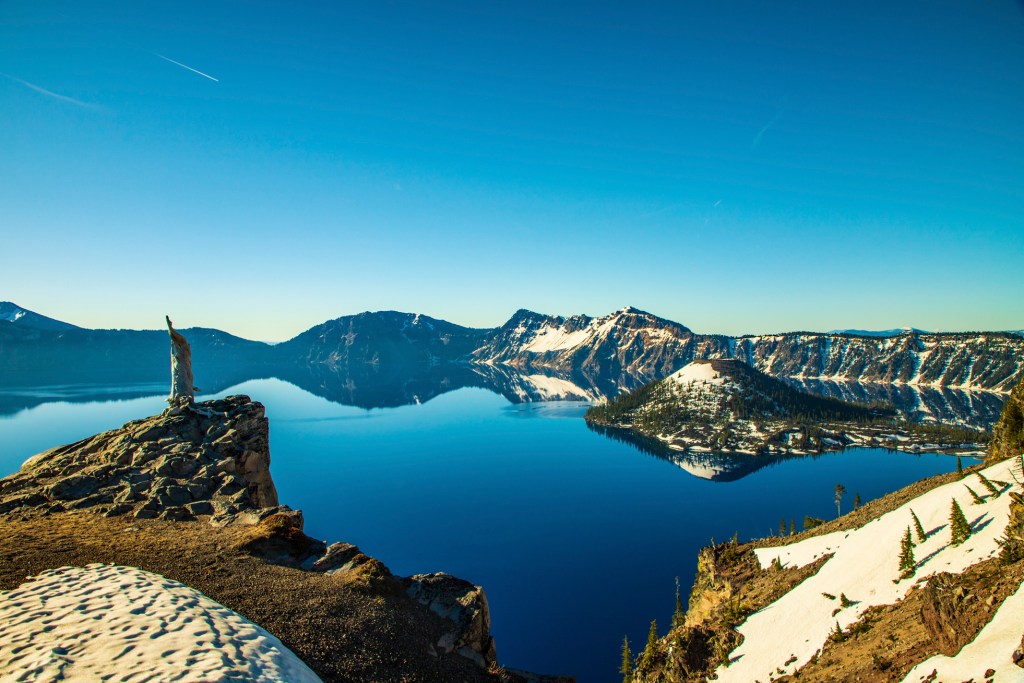
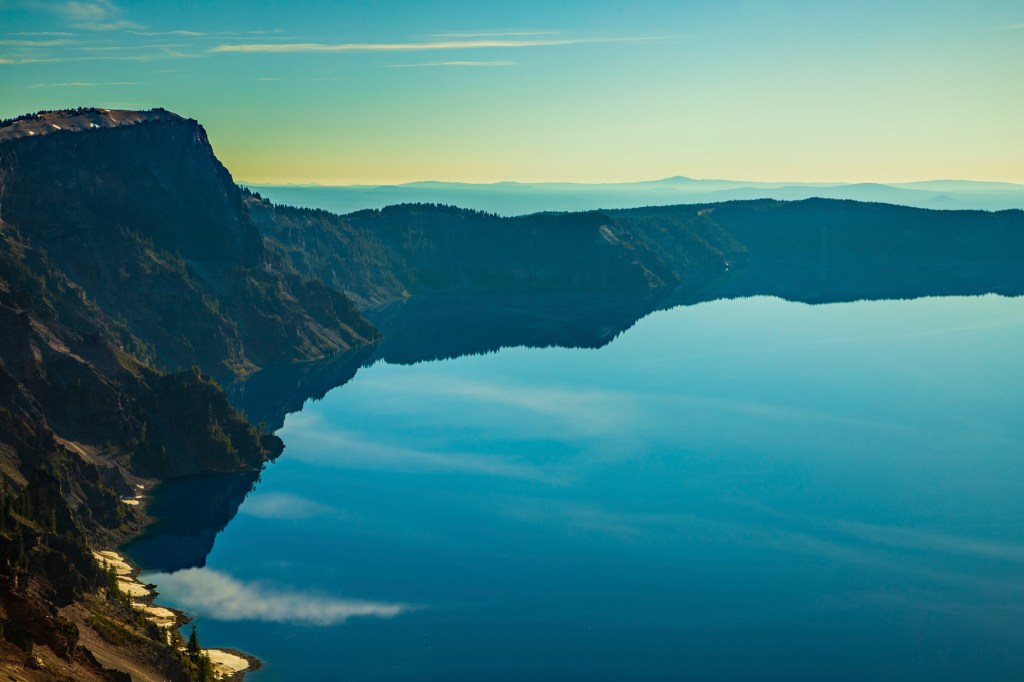
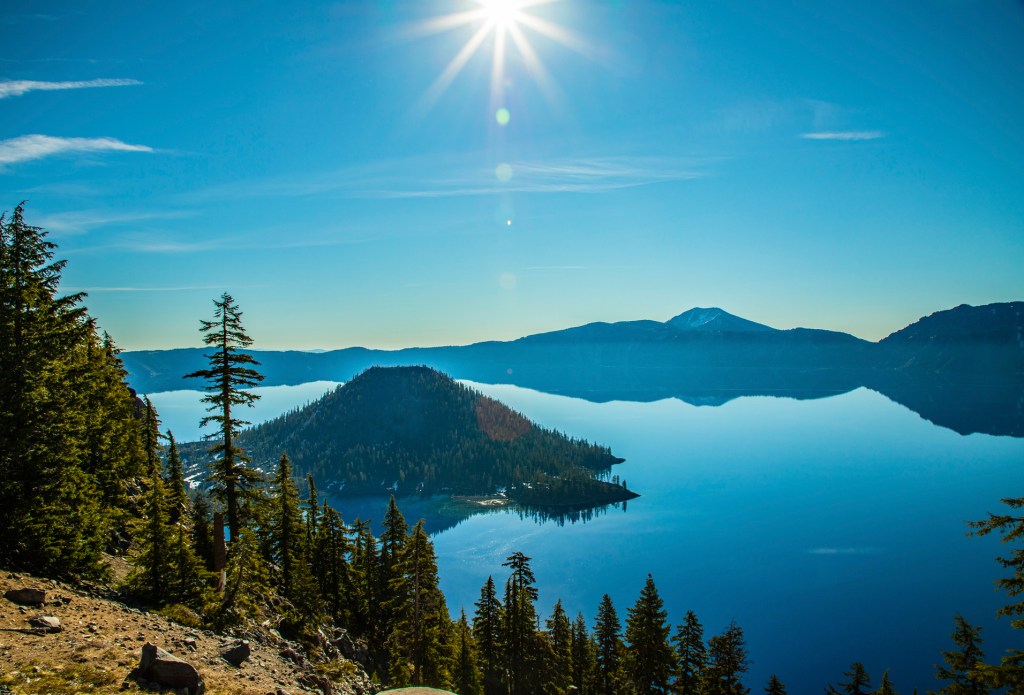
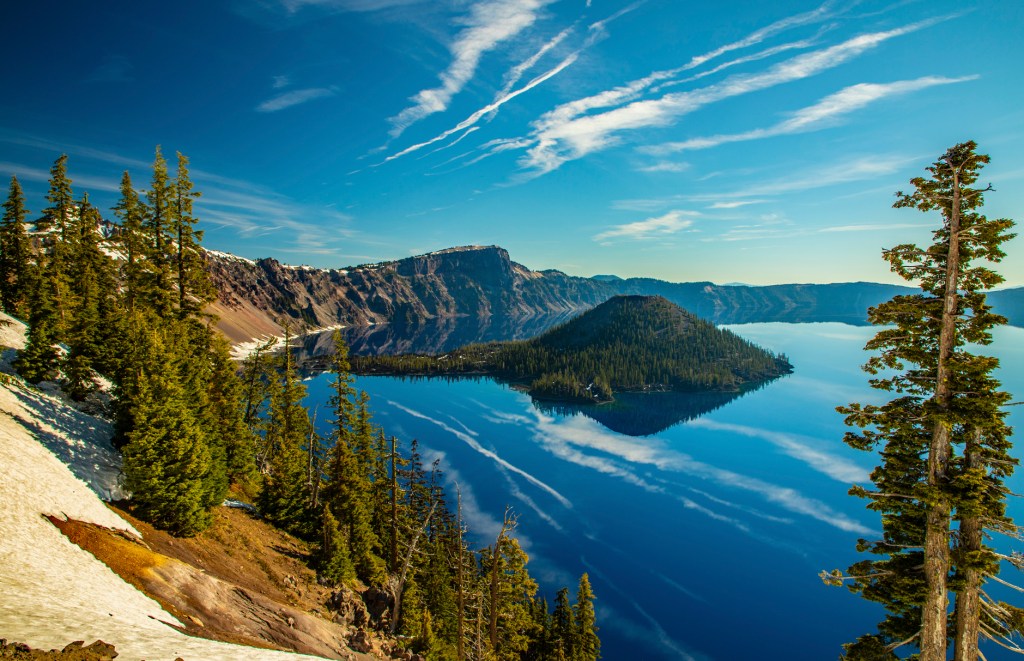
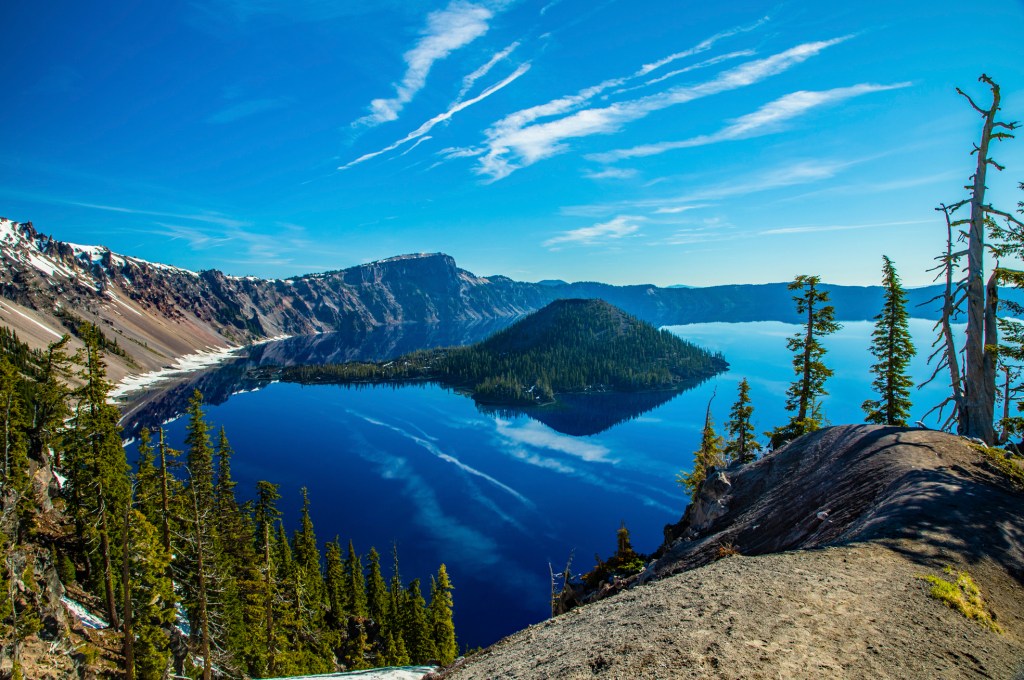
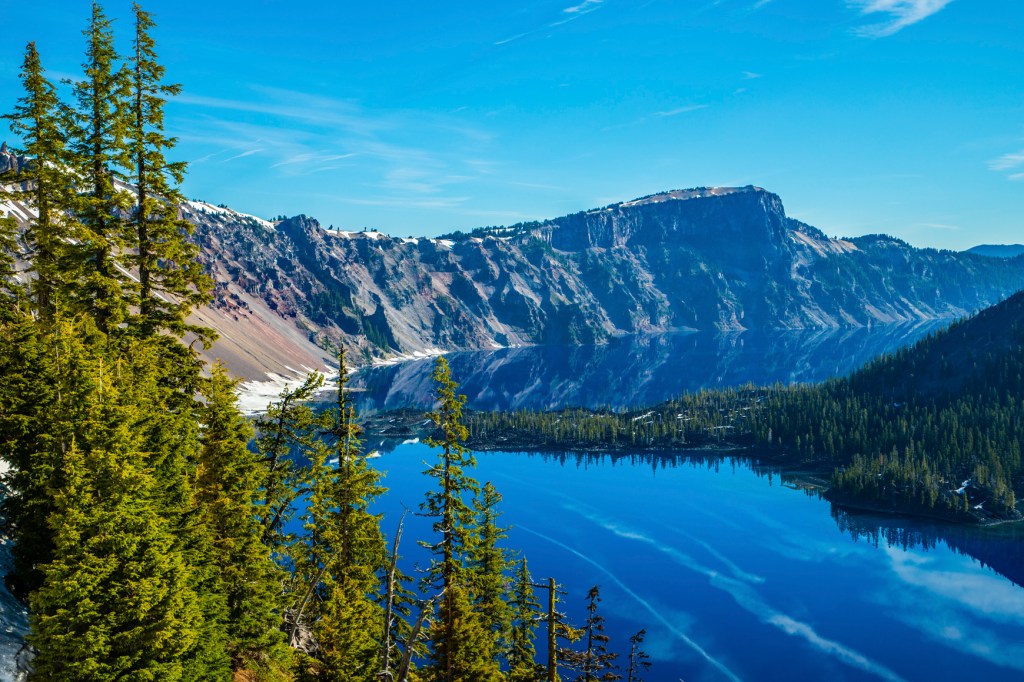
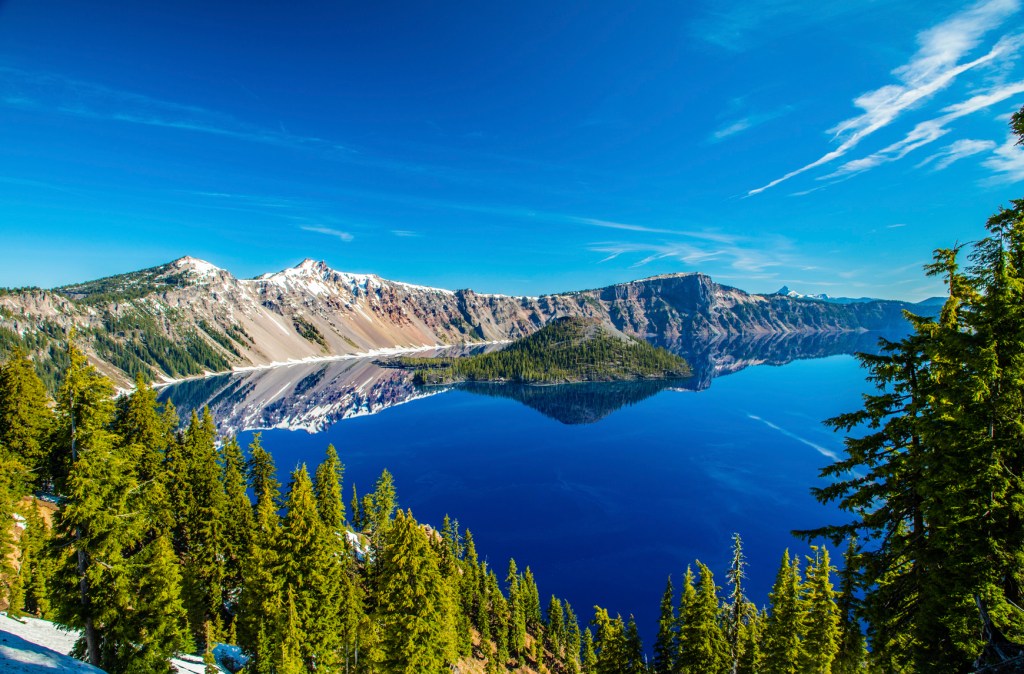
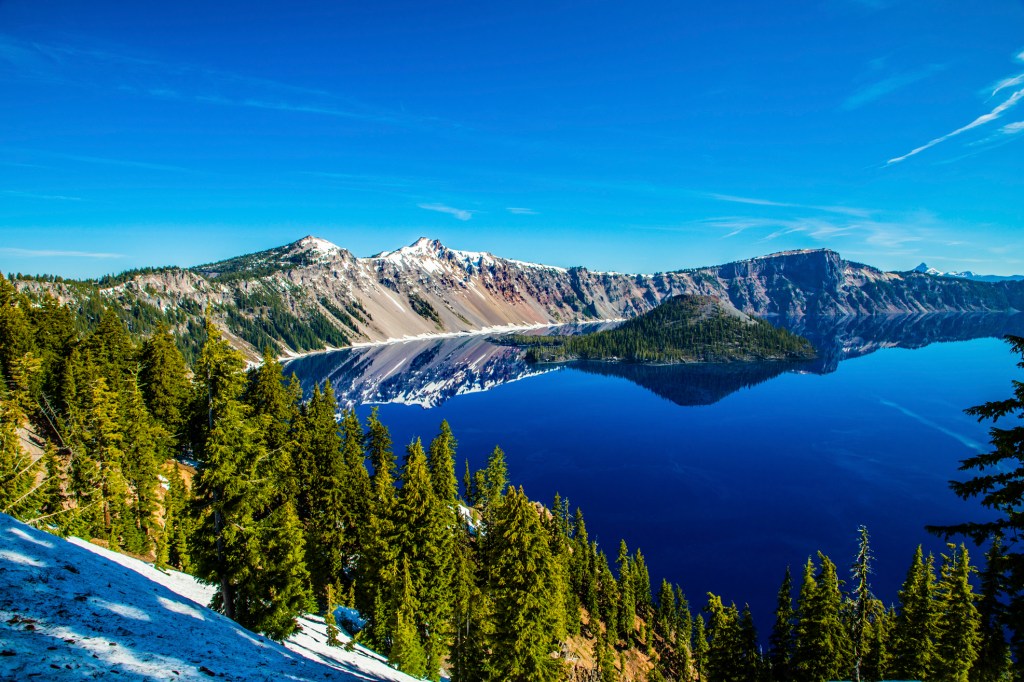
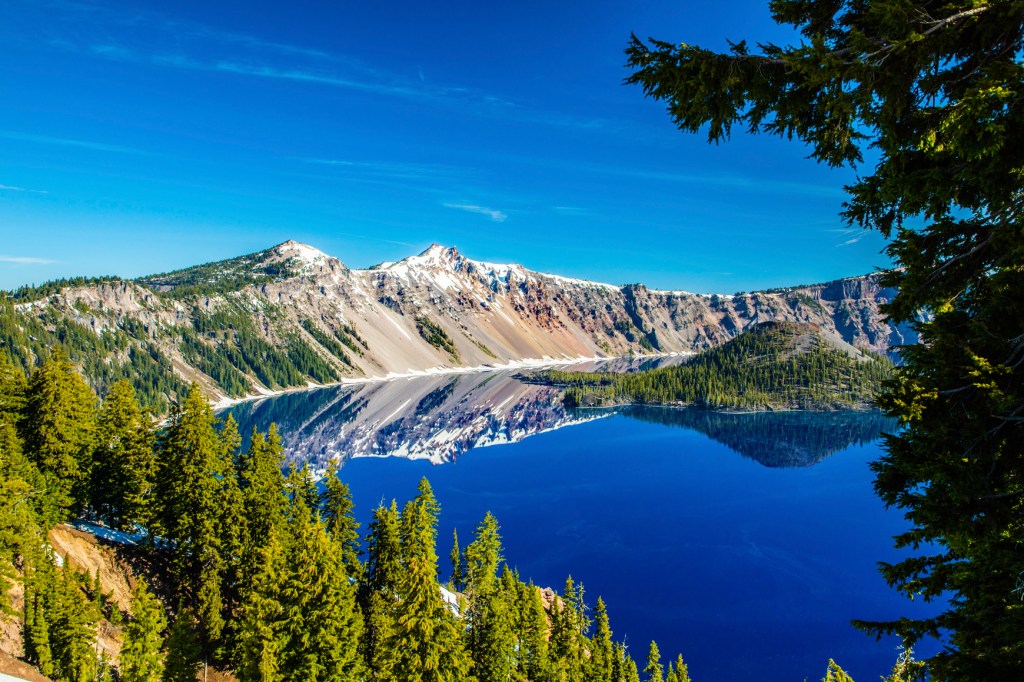
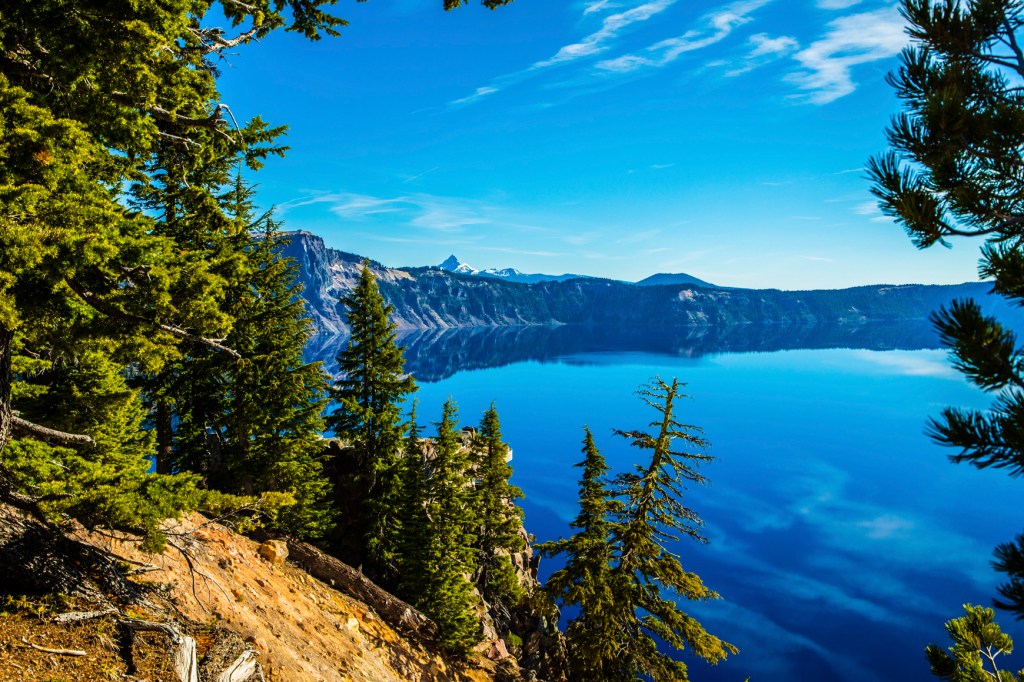
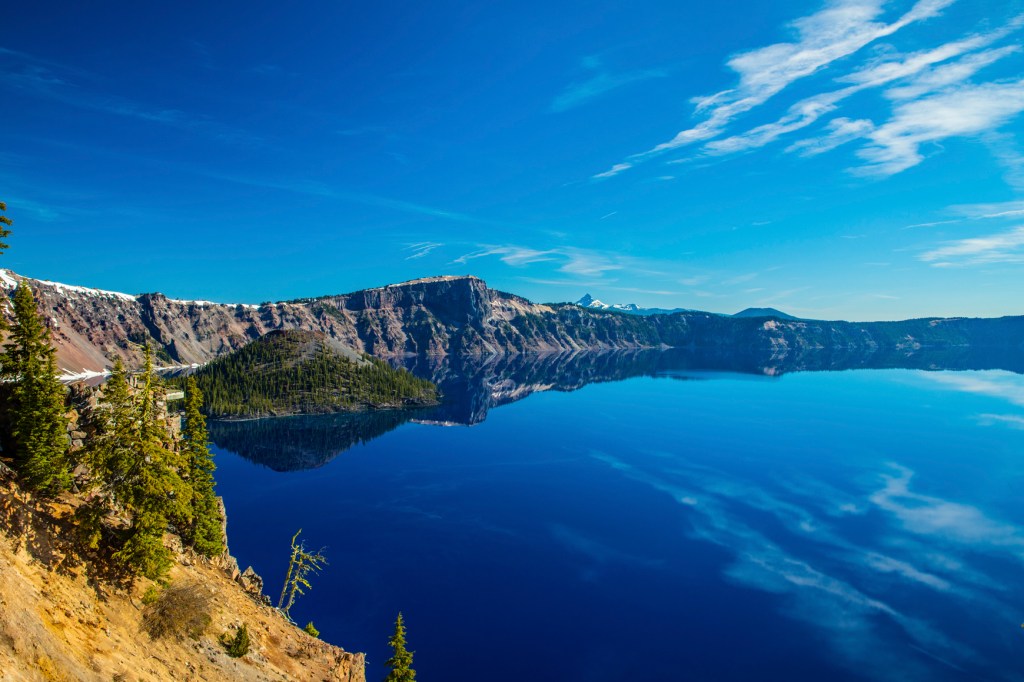
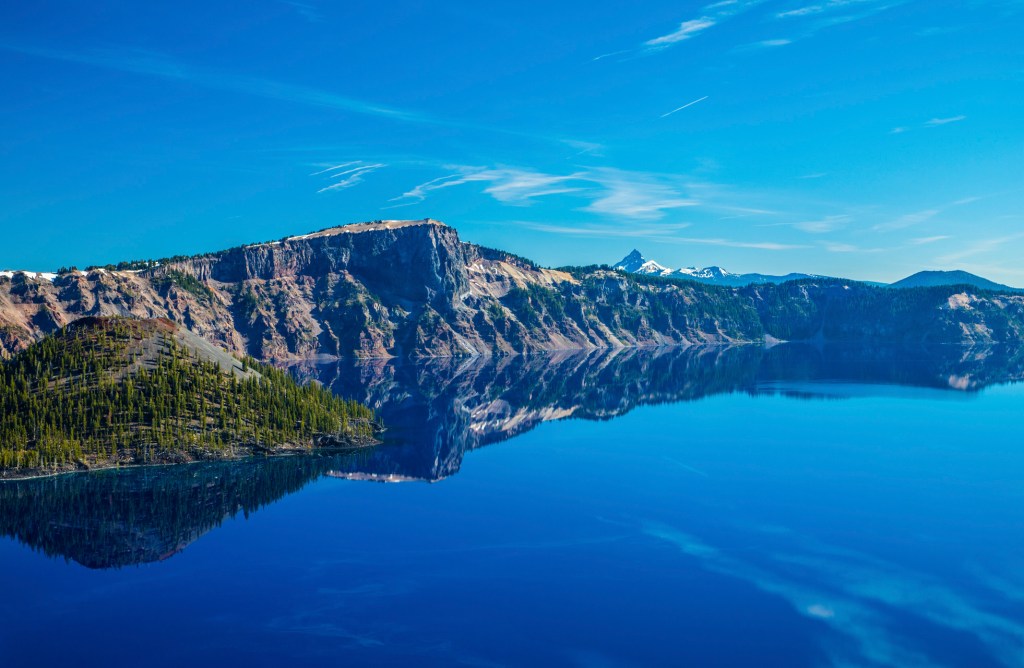
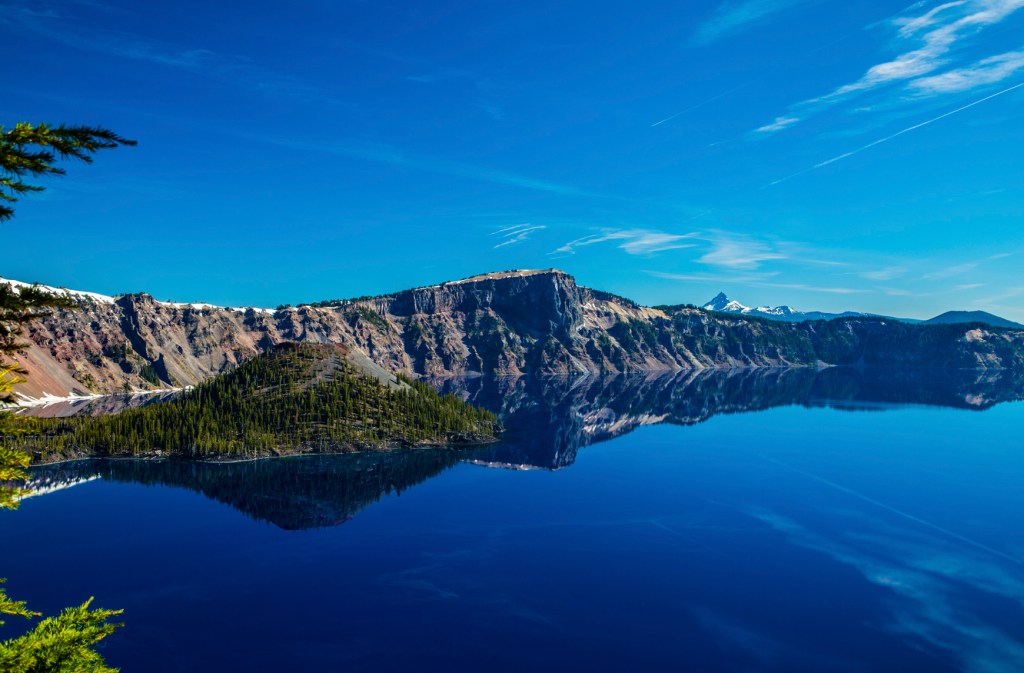
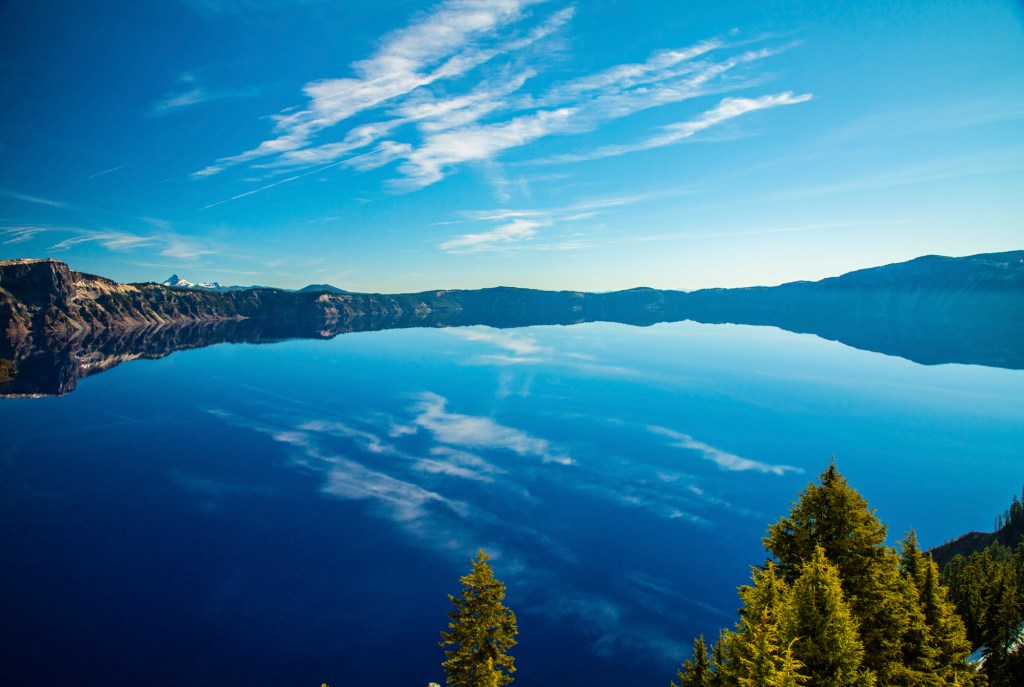
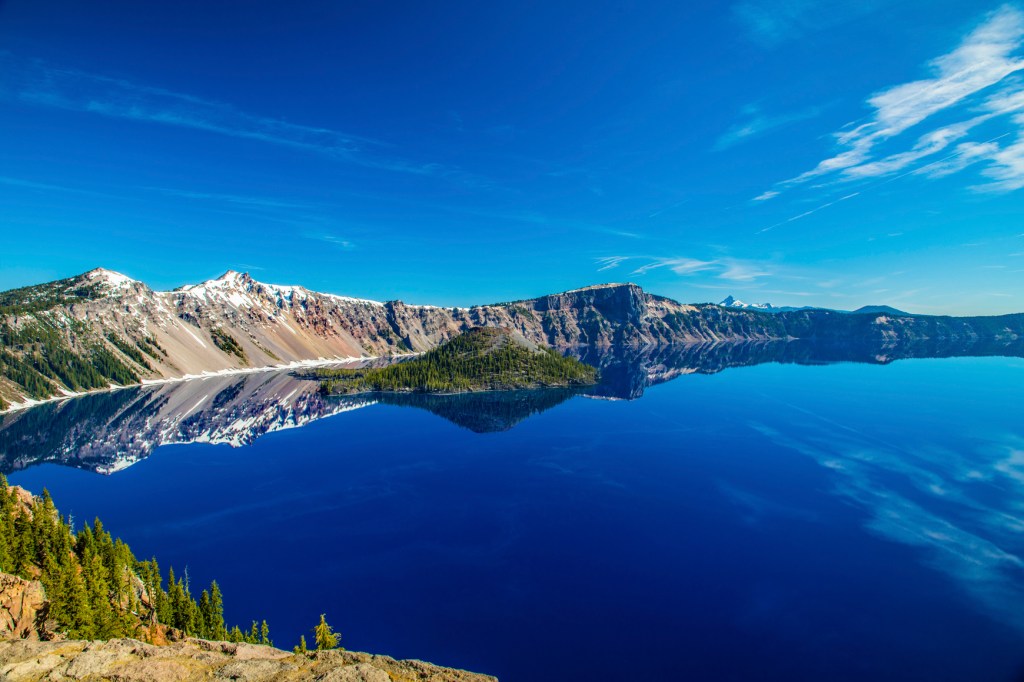
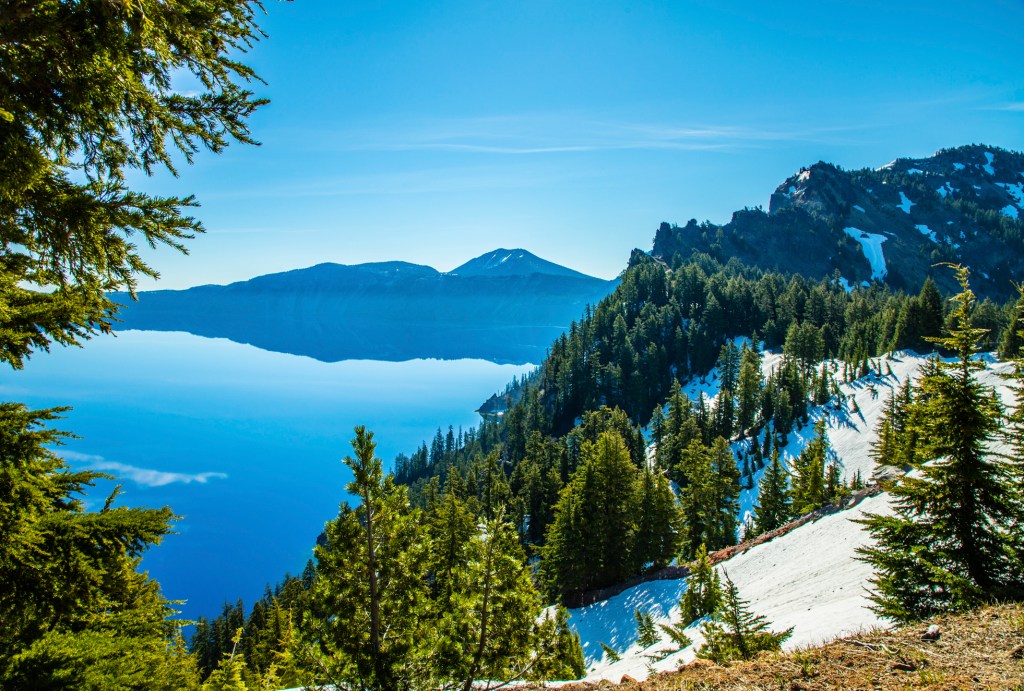
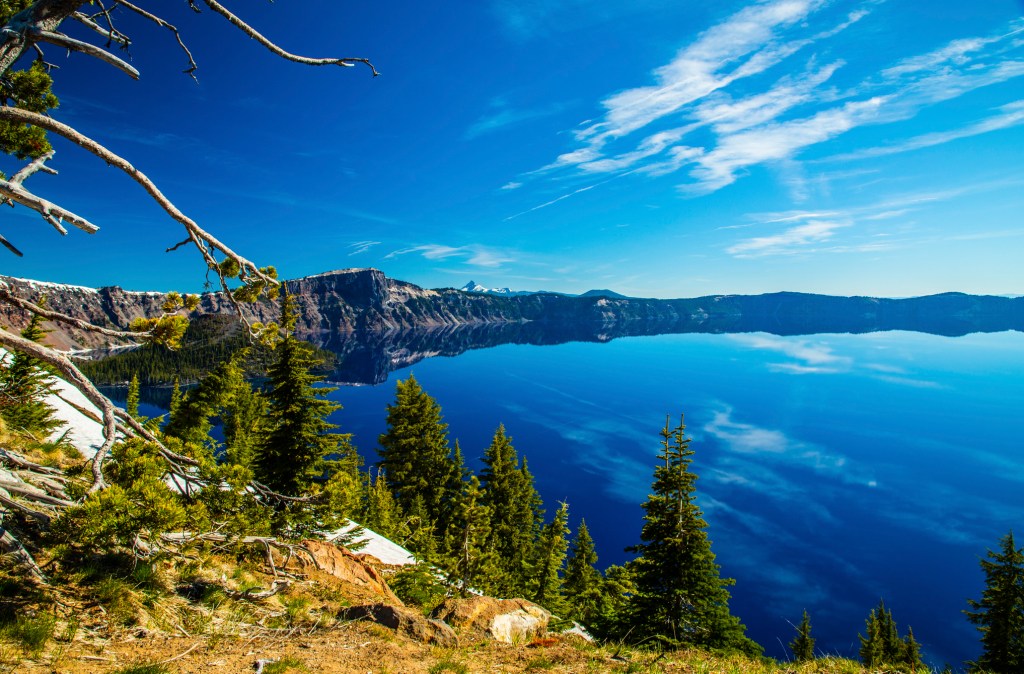
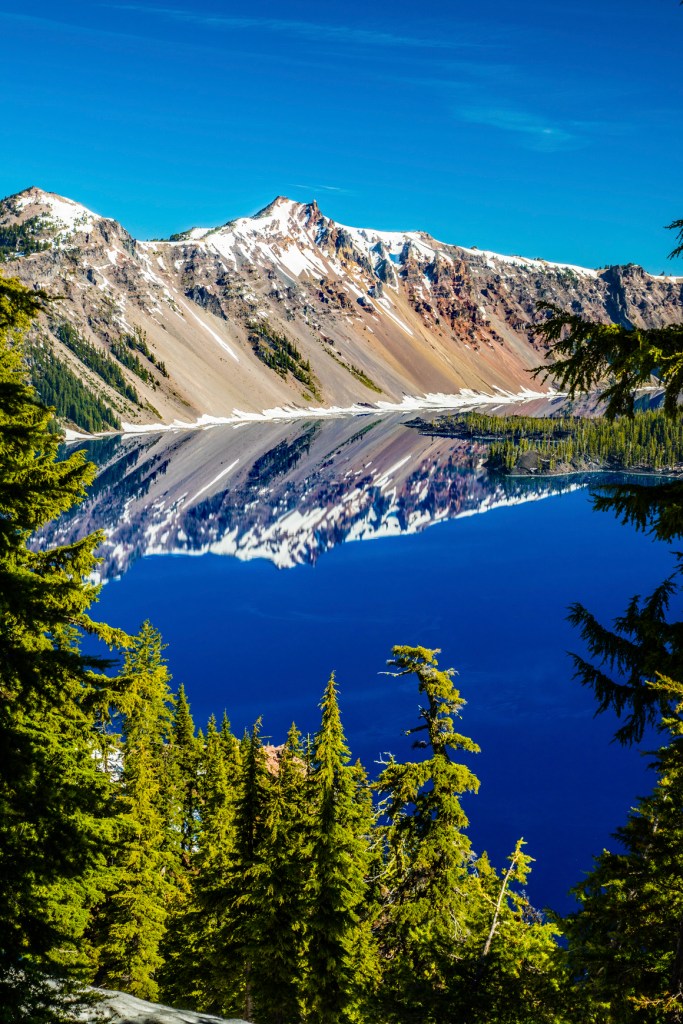
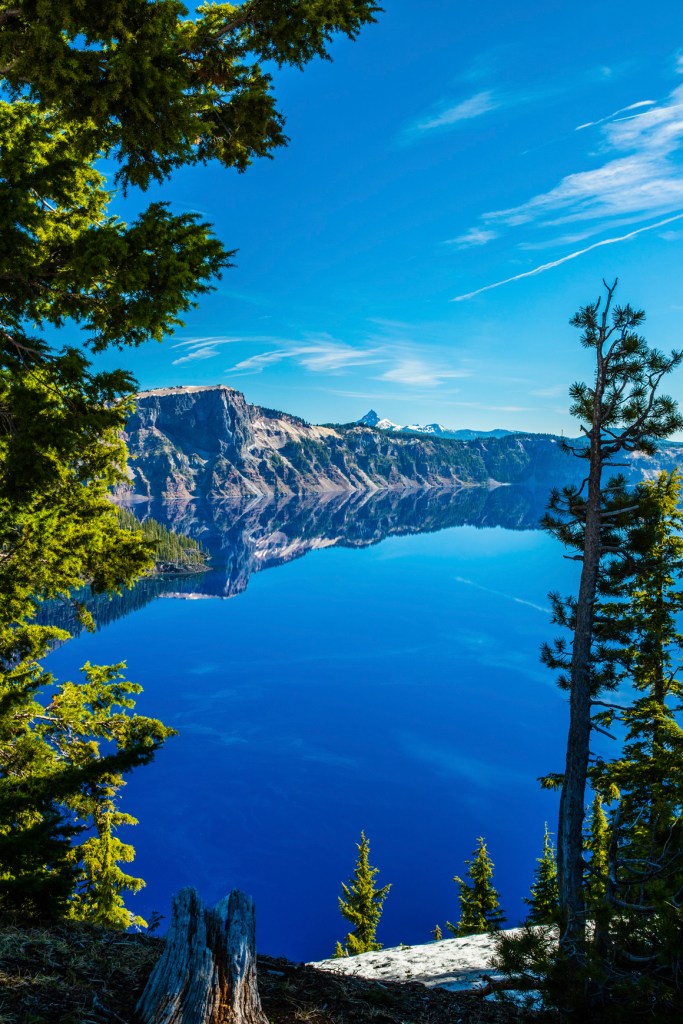
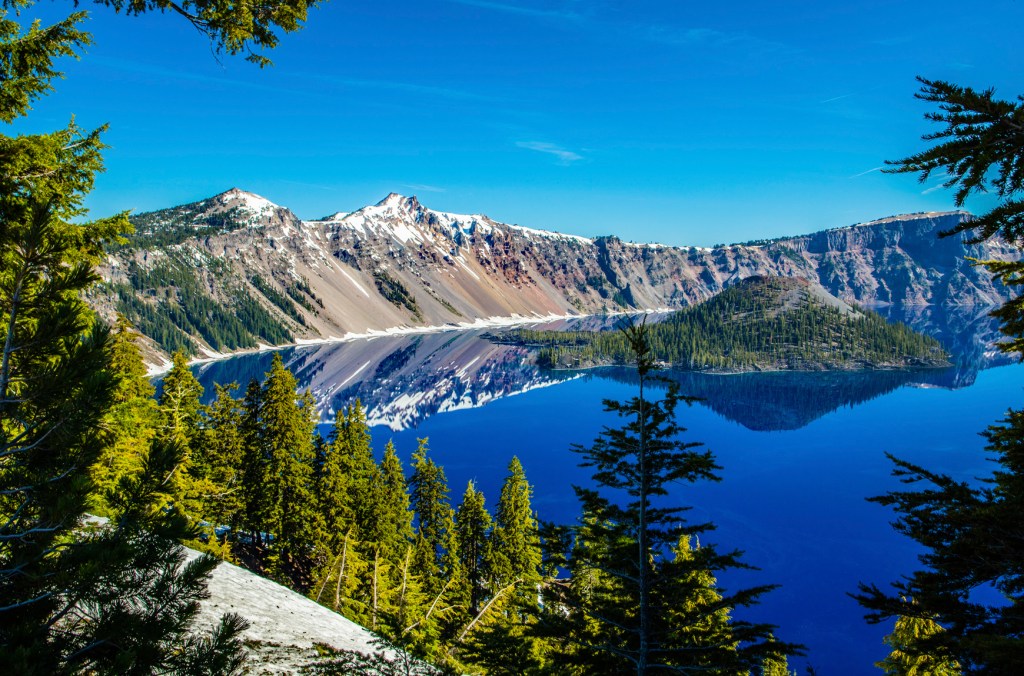
This morning Barbara and I got up at the crack of dawn and headed south to Crater Lake National Park. It turned out to be a really good move because there were no crowds, which made it easy for us to get the views and photos we wanted without a bunch of selfie takers spoiling the views. In fact we were there before the toll gate and the visitors center opened. In my opinion, Crater Lake is by far the most beautiful lake in the lower 48 states.
Approximately 7,700 years ago Mount Mazama erupted in the largest explosive eruption in the Cascades during the past 1 million years. This eruption removed approximately 3,700 feet (ft) of the summit and the subsequent collapse of the new summit created the caldera that would eventually become Crater Lake. Over time the caldera filled with rain and snow melt to form the lake we see today. In fact, the lake receives more precipitation than it looses from evaporation, but due to cracks in the underlying rock the lake level remains fairly steady. The lake originally didn’t contain any fish, but during the late 1800’s trout and salmon were introduced and thrive there today. The last known eruption at Crater Lake occurred when a small lava dome erupted underwater on the east flank of the base of Wizard Island about 4,800 years ago. Since that time, the volcano has remained quiet, allowing as much as 30 m (100 ft) of sediment to accumulate on the lake bottom.
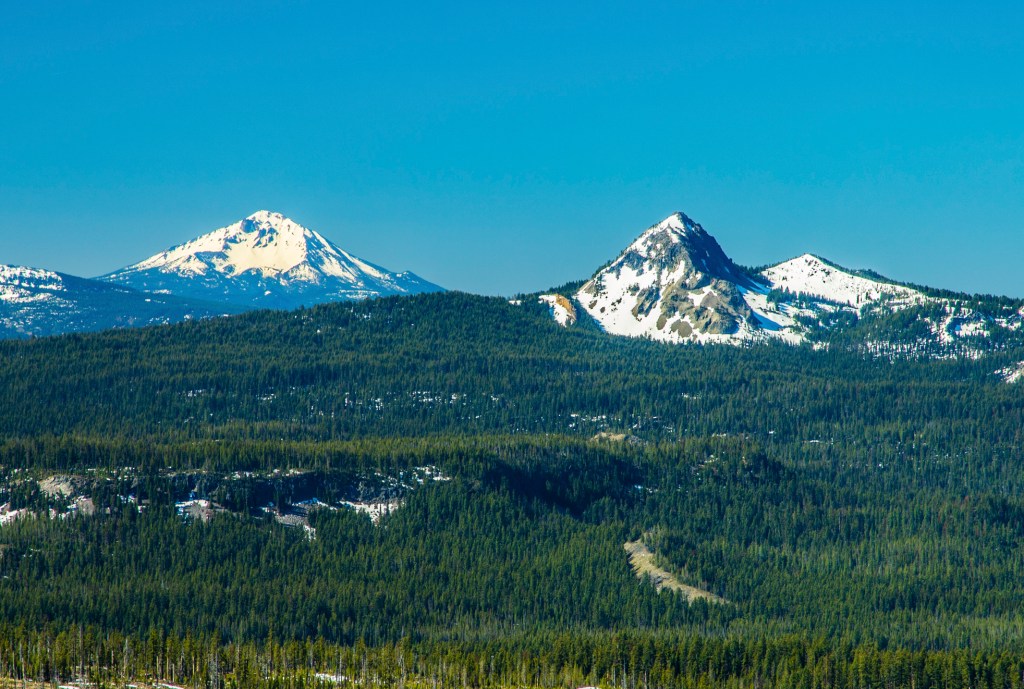
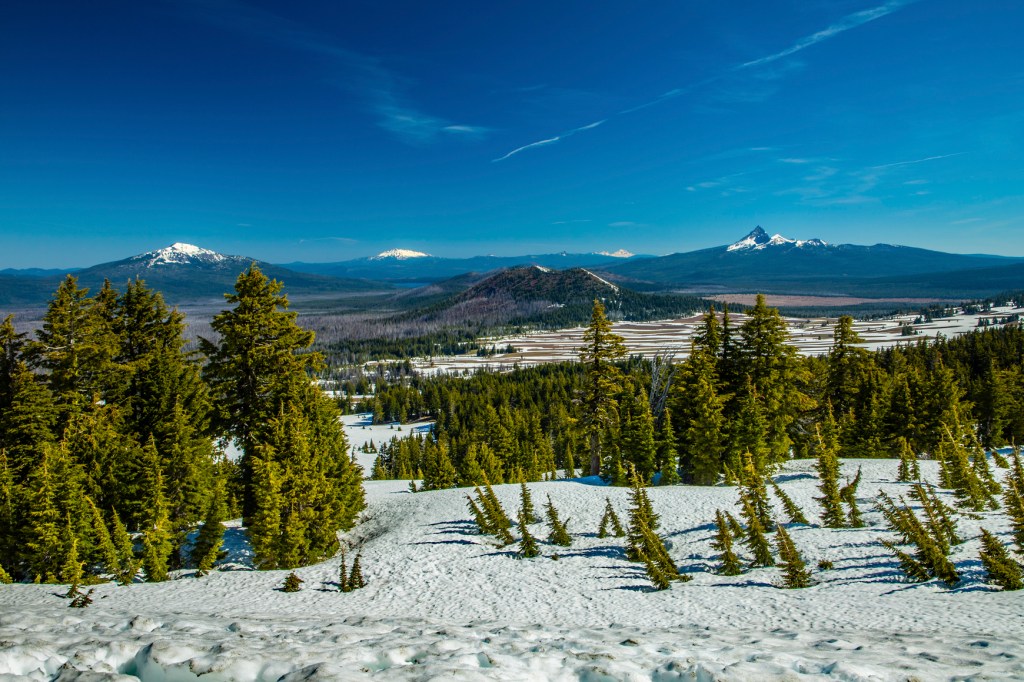
More Cascade volcanos looking south from Crater Lake.More Cascade volcanoes looking north from Crater Lake.
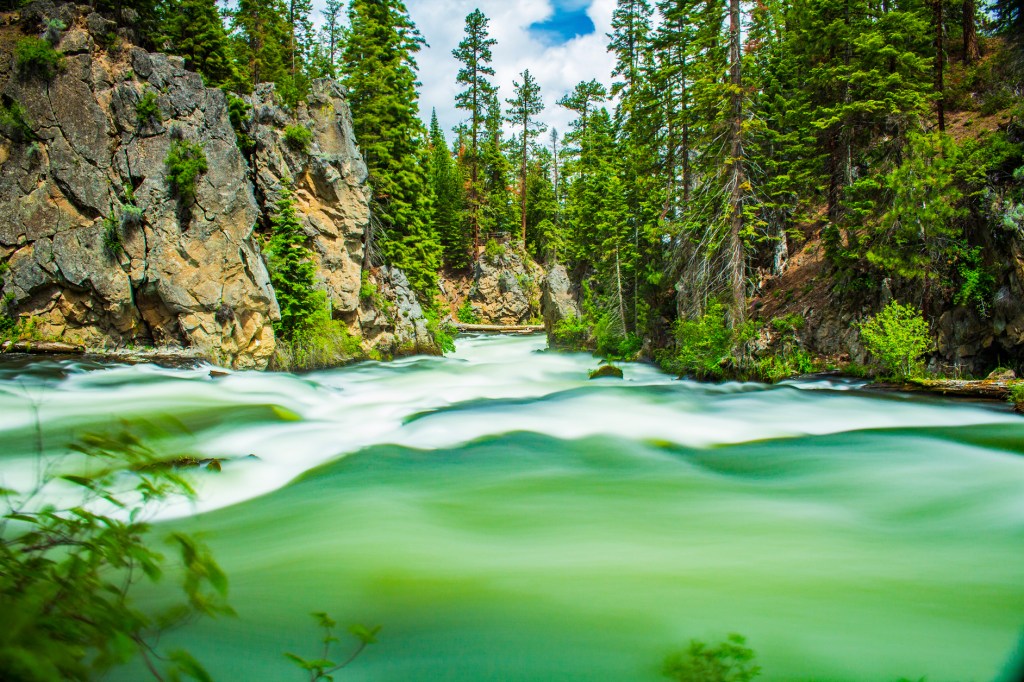
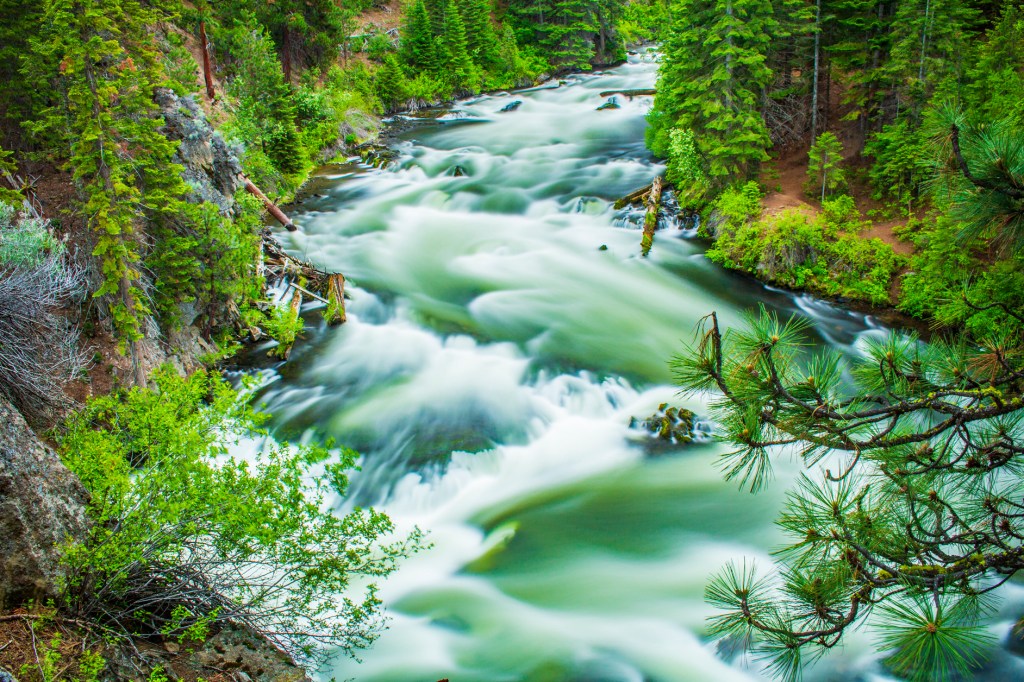
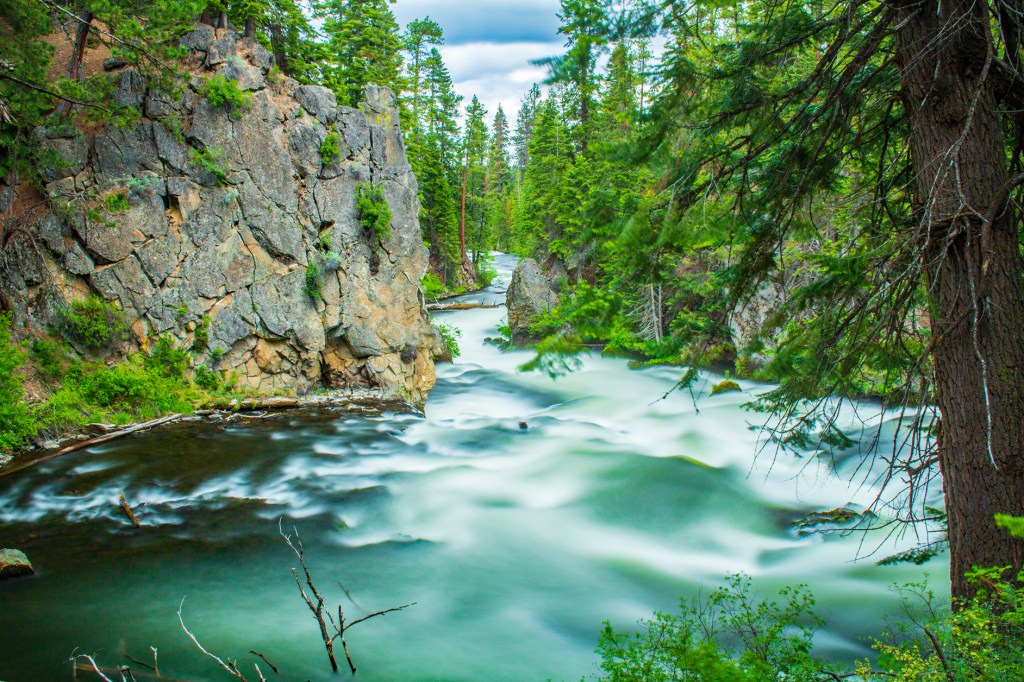
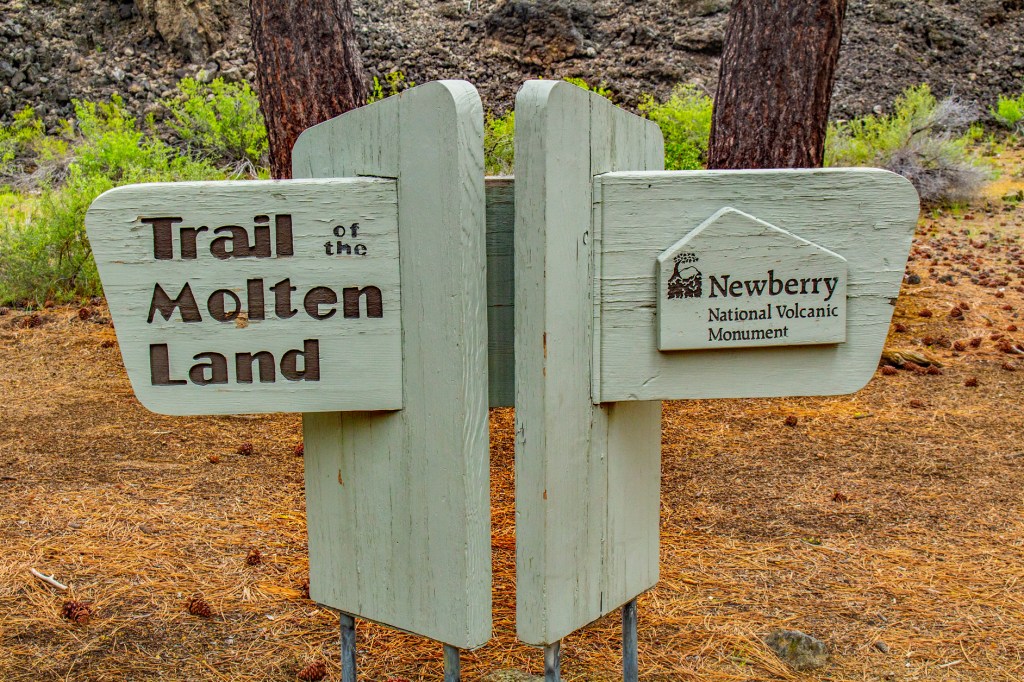
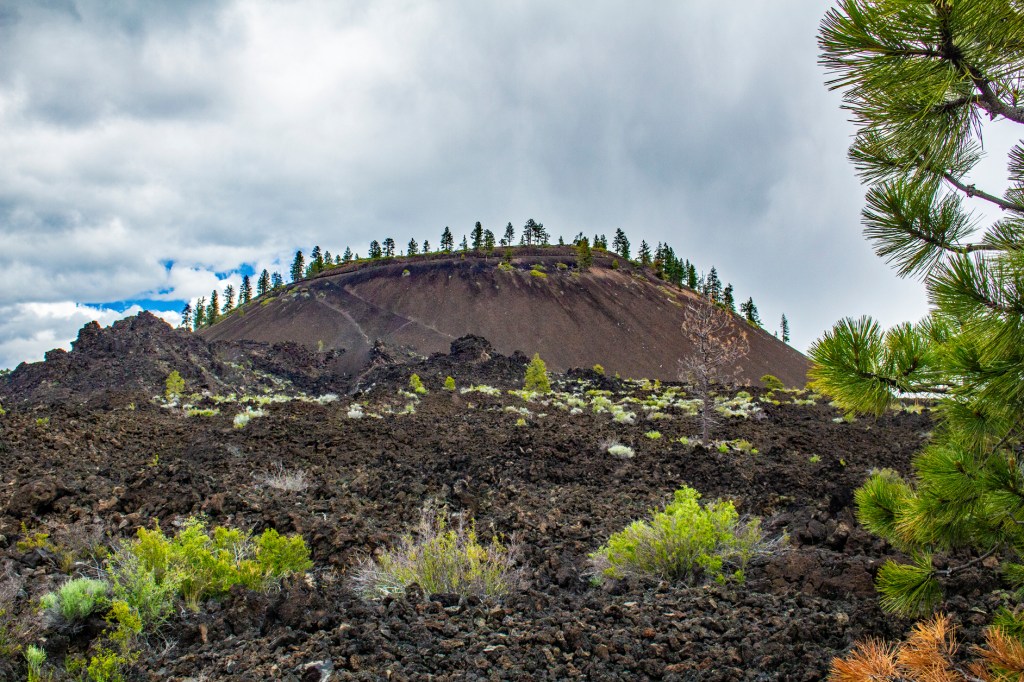
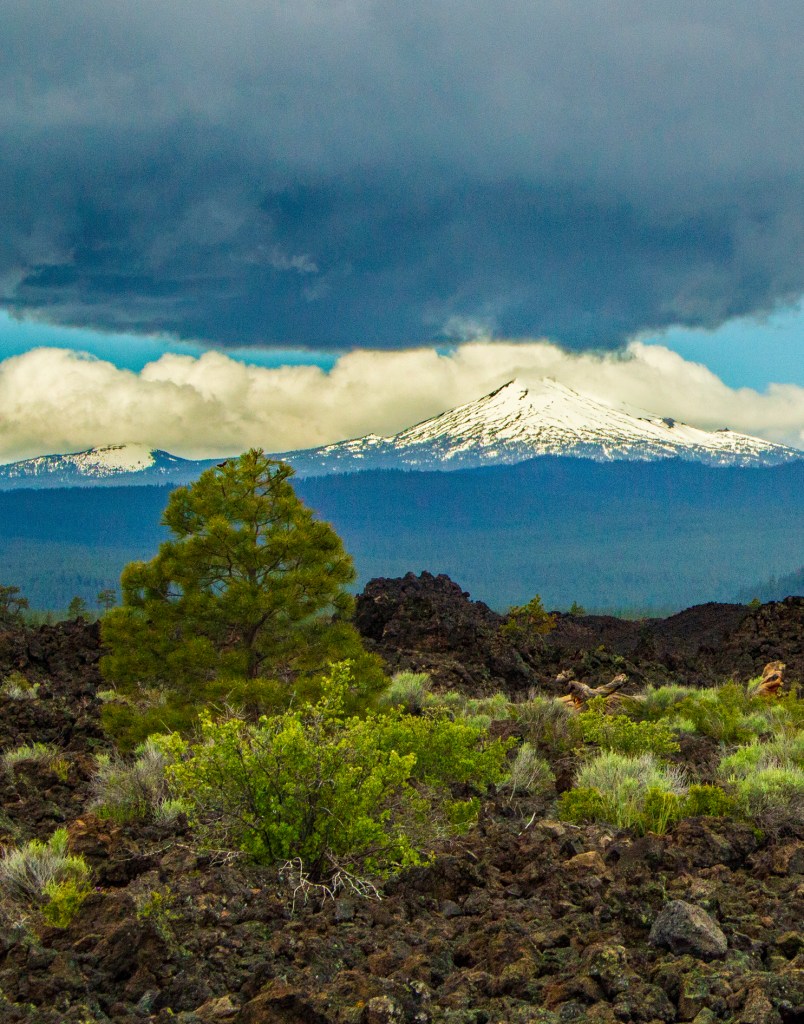
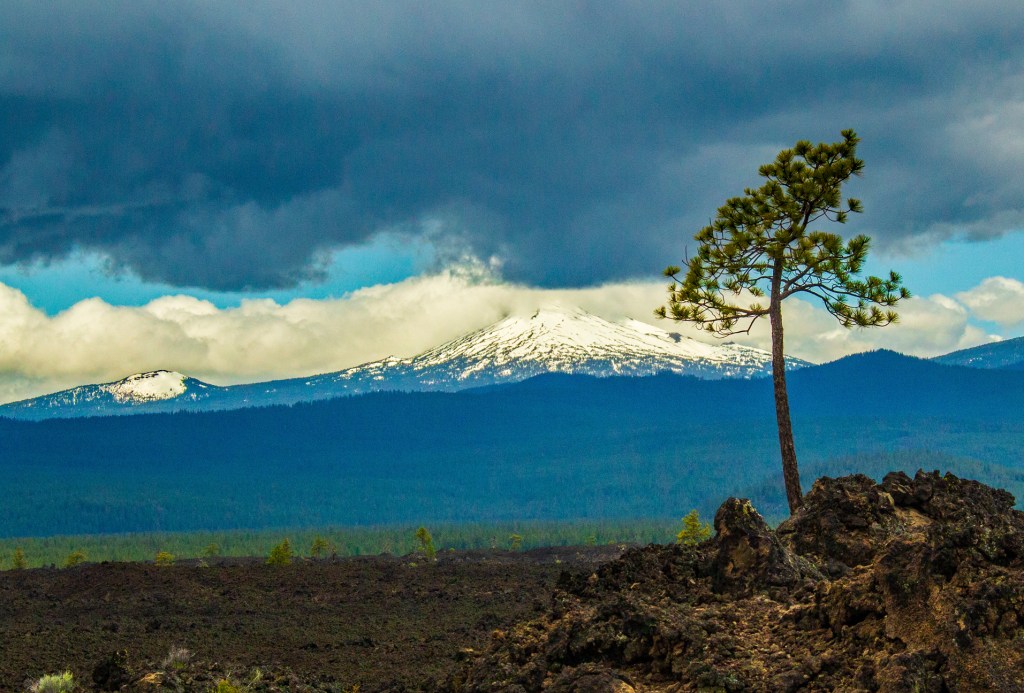
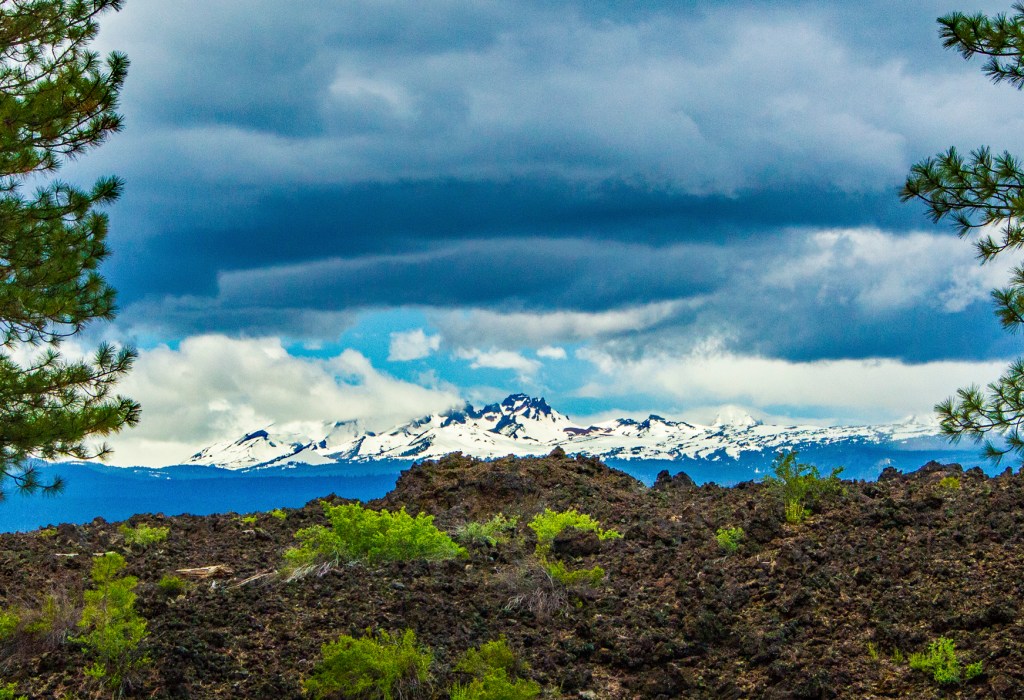
Today our friends, Keith and Janice, took Barbara and I sight seeing in central Oregon. First we traveled to the Benham Falls trail head. Once there we hiked along the Deschutes River to Benham Falls. After taking a few photos of the falls and the surrounding area, we took a short drive to the Lava Lands Visitors Center at the base of Lava Butte cinder cone. At the visitors center I hiked the Trail of the Molten Land and was treated to wonderful vistas of the nearby Cascade Mountains. This trail crosses numerous lava flows that originated from the base of Lava Butte.
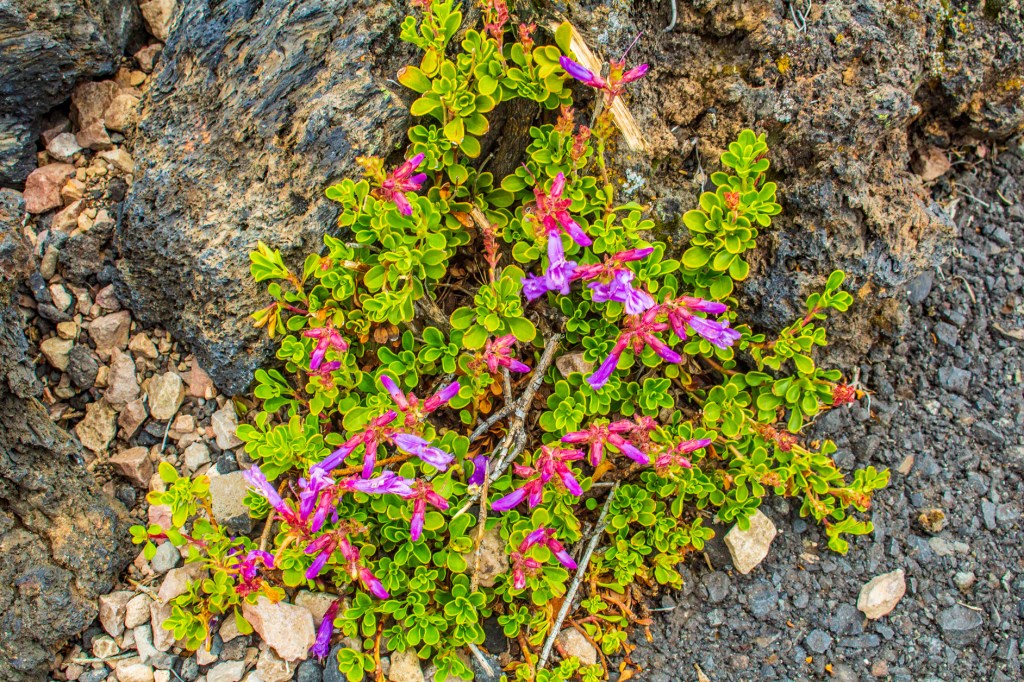
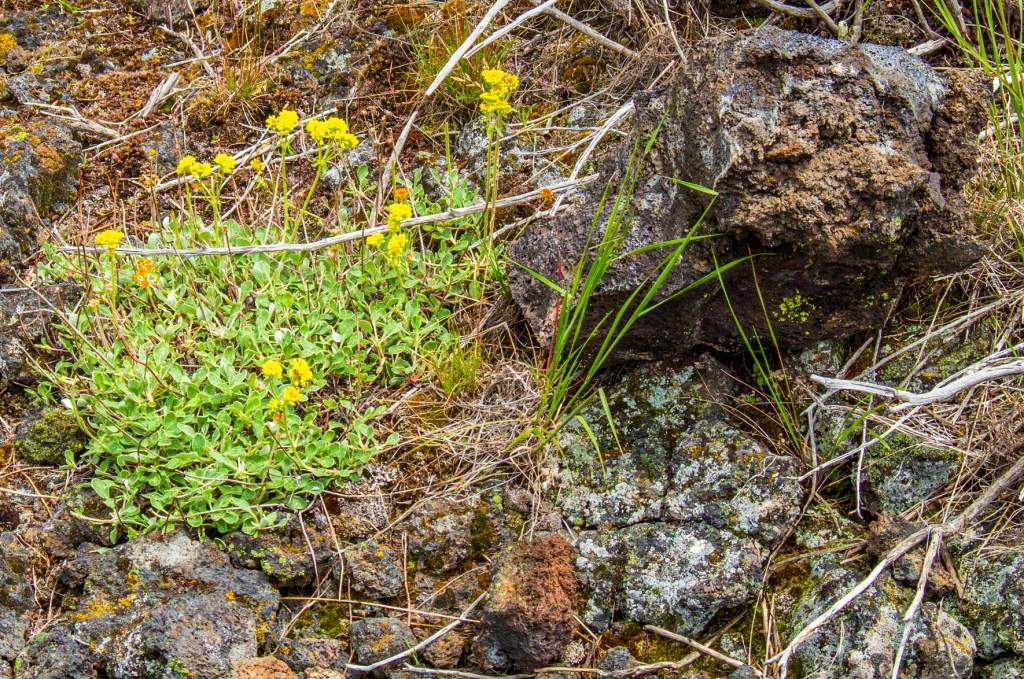
The Deschutes River.The Deschutes River.Benham Falls.Benham Falls from above.Benham Falls.The Lava Butte cinder cone with one of many lava flows at the base. Mt. BachelorLife in an unhospitable environment.Mt. BachelorLooking southwest at all of the visible volcanic vents. More life.The Three Sisters.
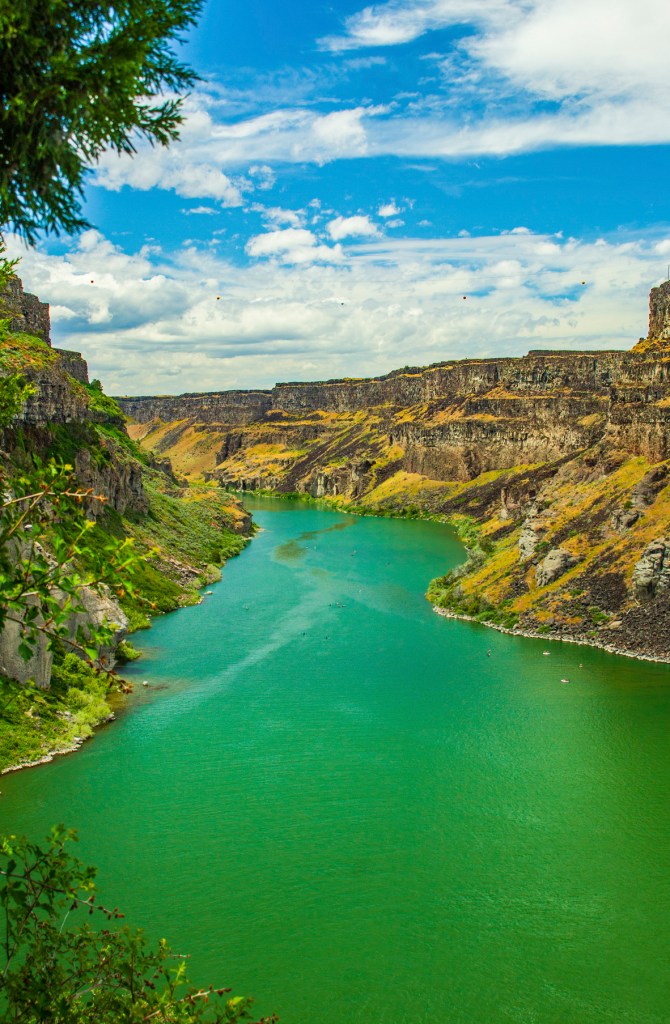
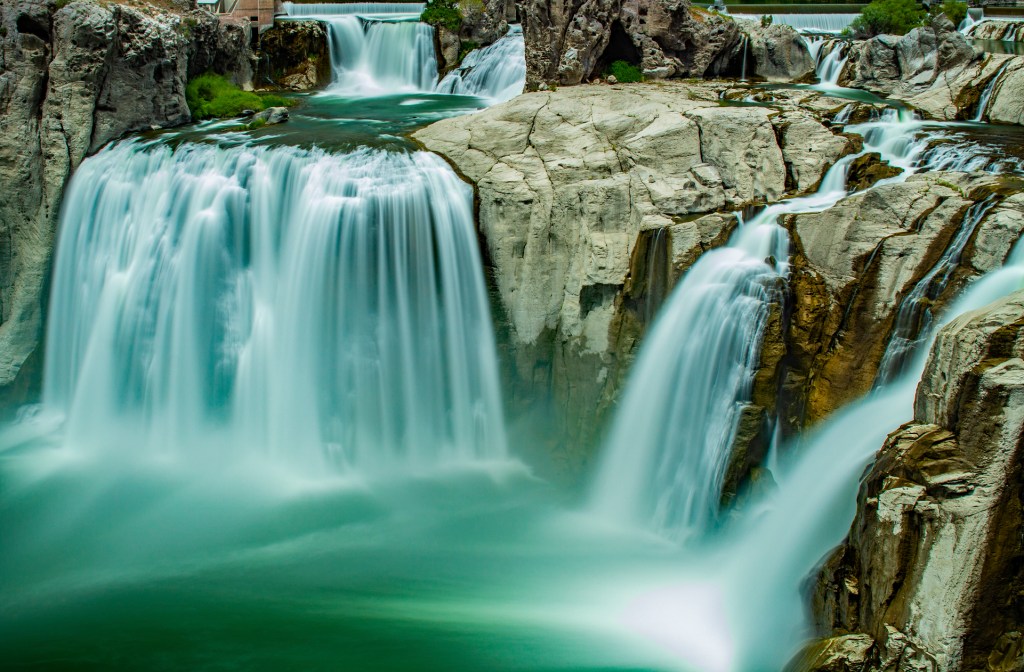
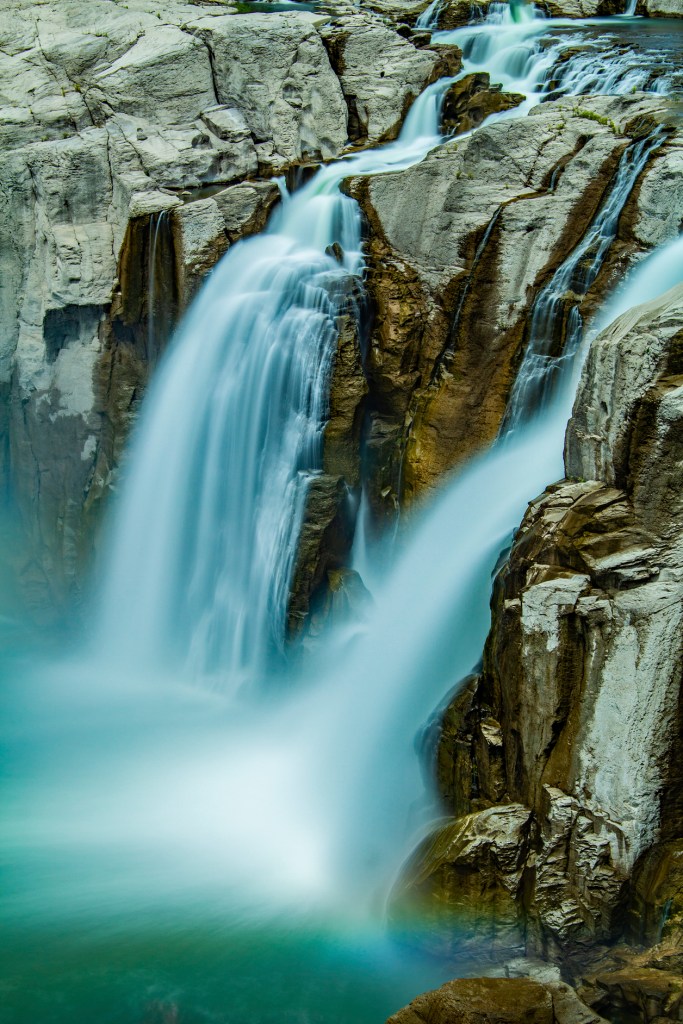
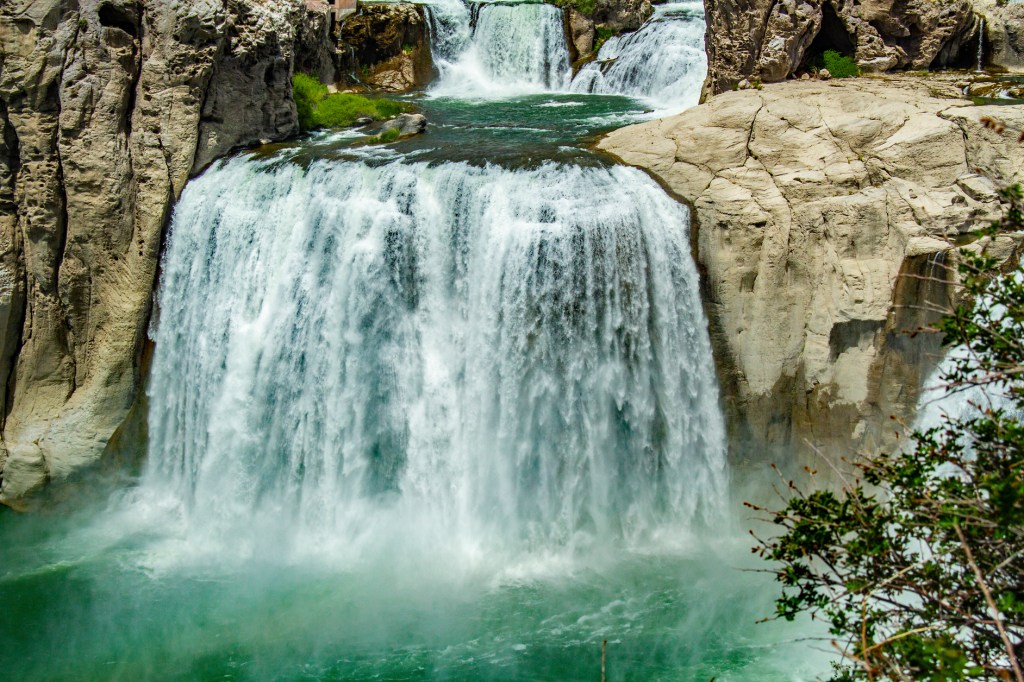
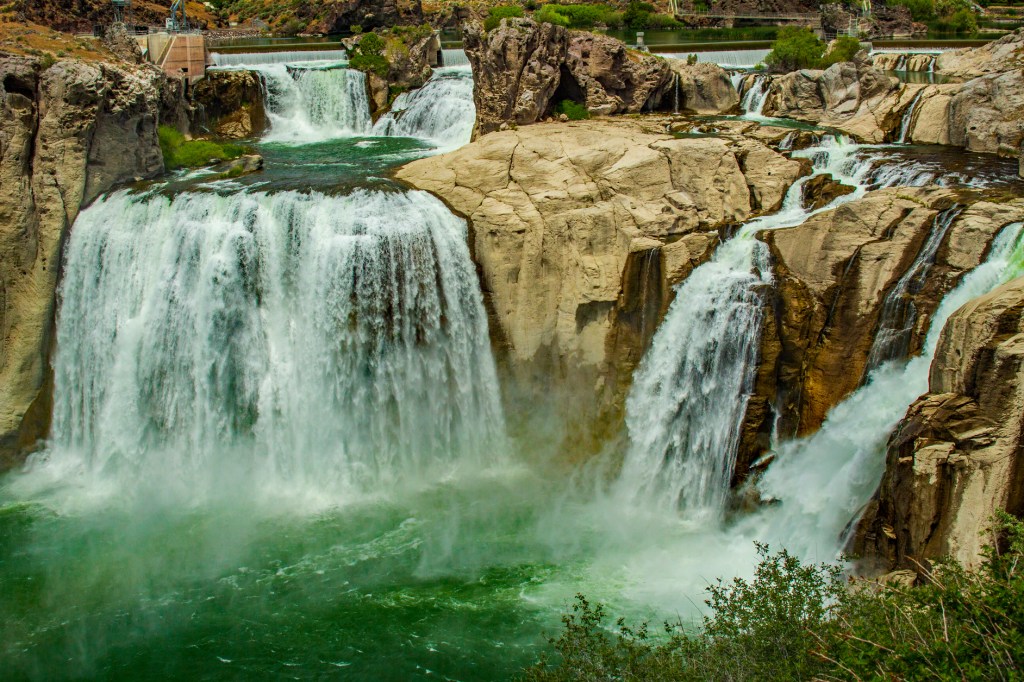
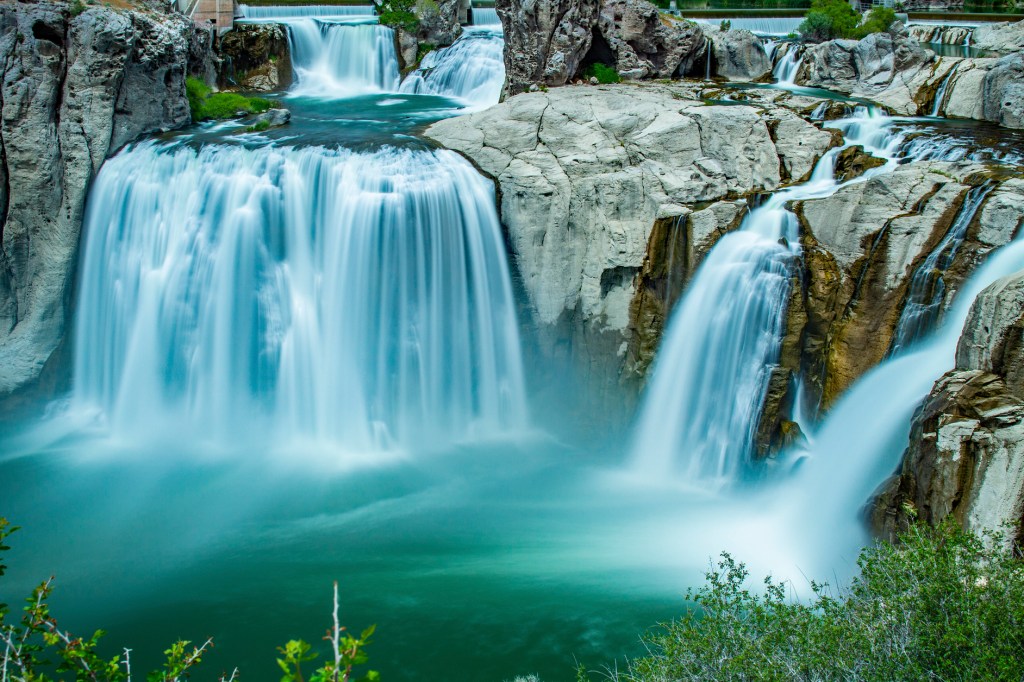
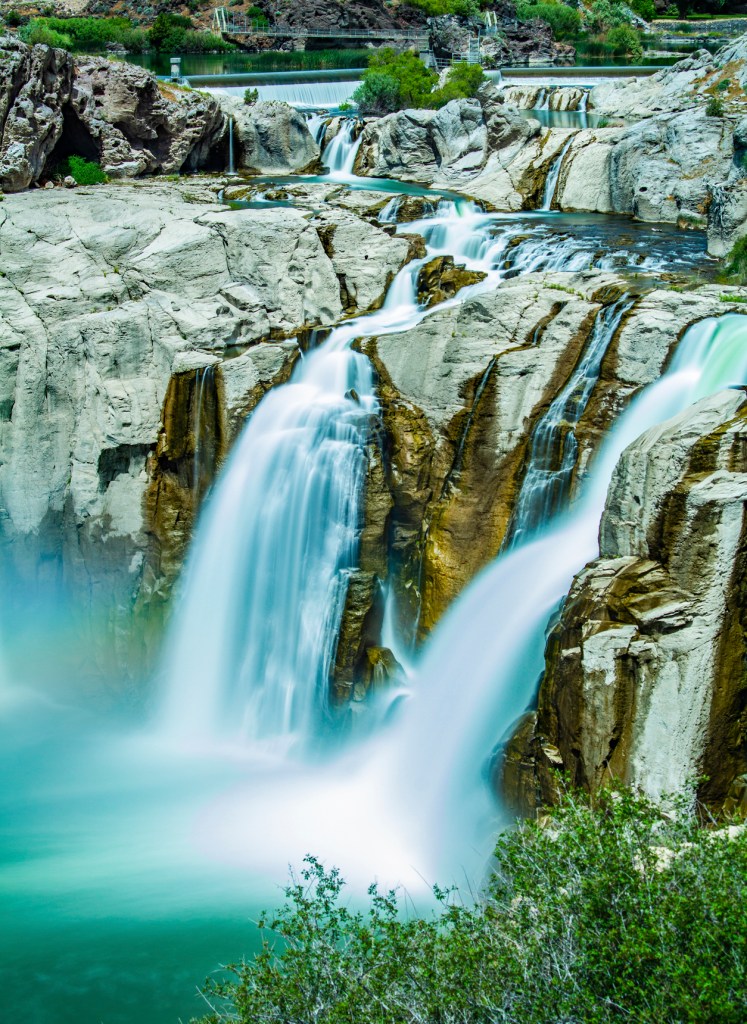
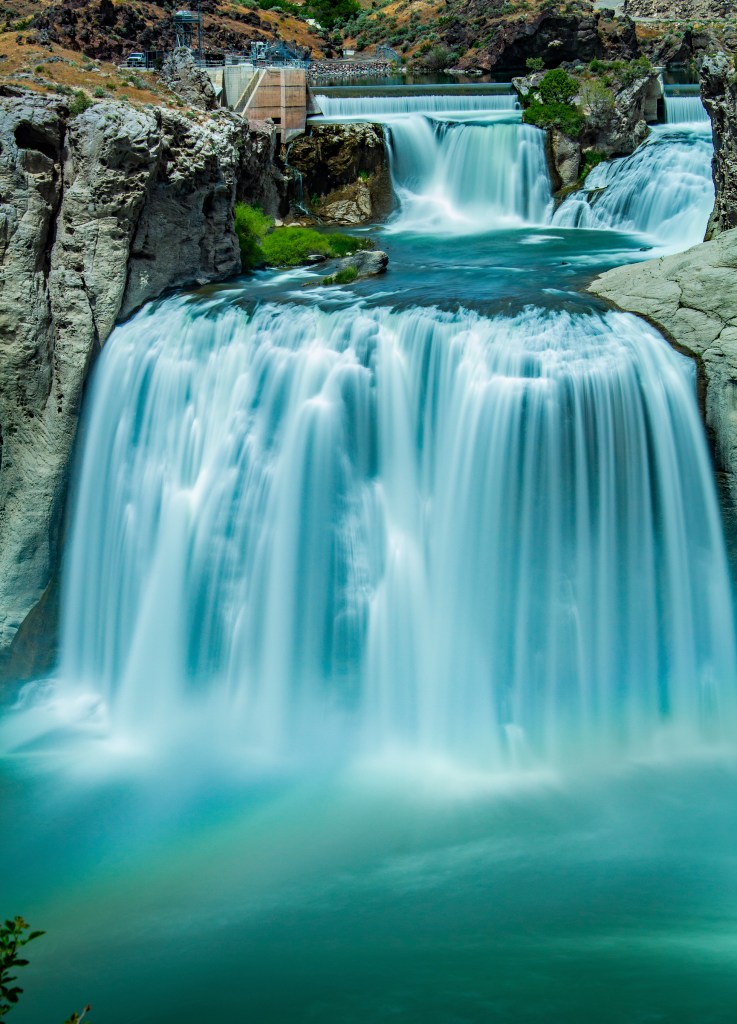
On our way to Mammoth Cave yesterday, we made a stop at a rest stop along the way. Inside the rest stop was a photo of nearby Shoshone Falls. So after we visited Mammoth Cave we headed southeast to the Snake River and Shoshone Falls. Take a look!
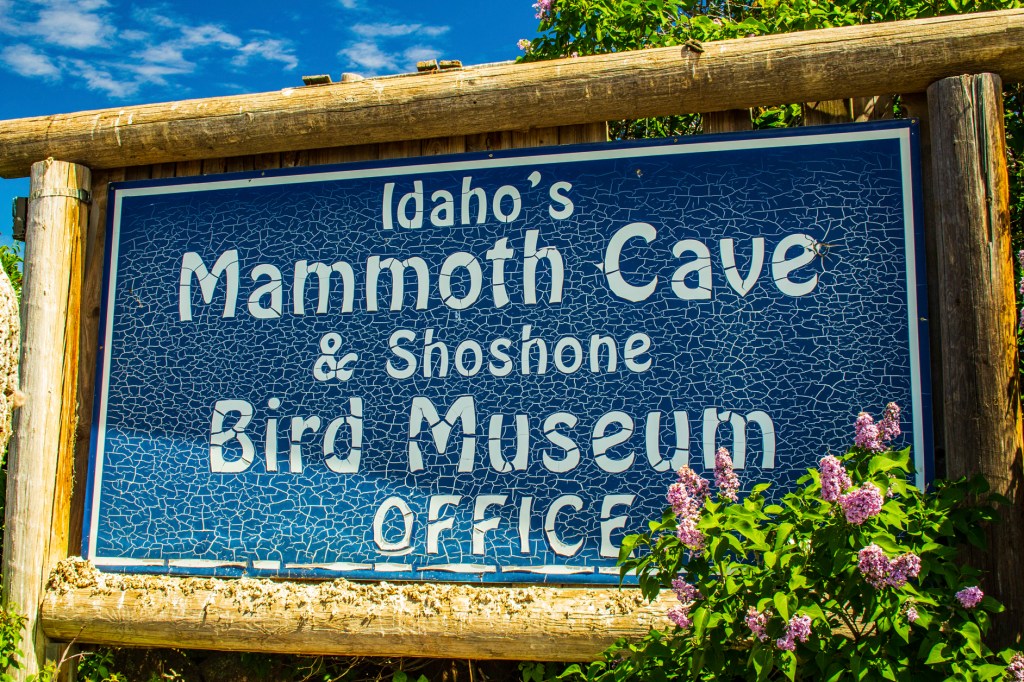
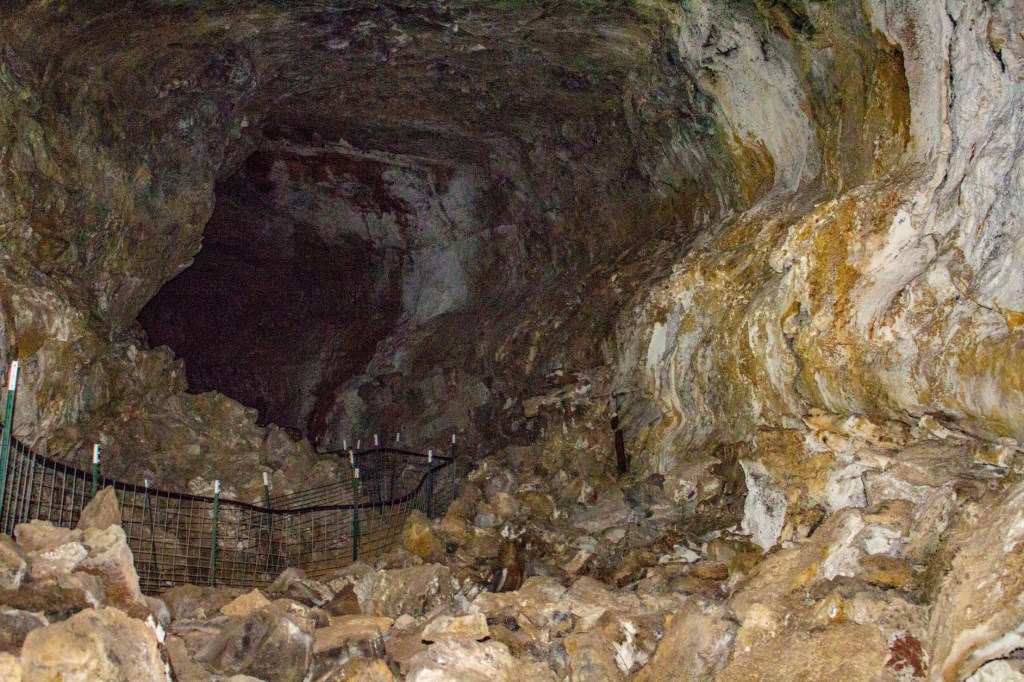
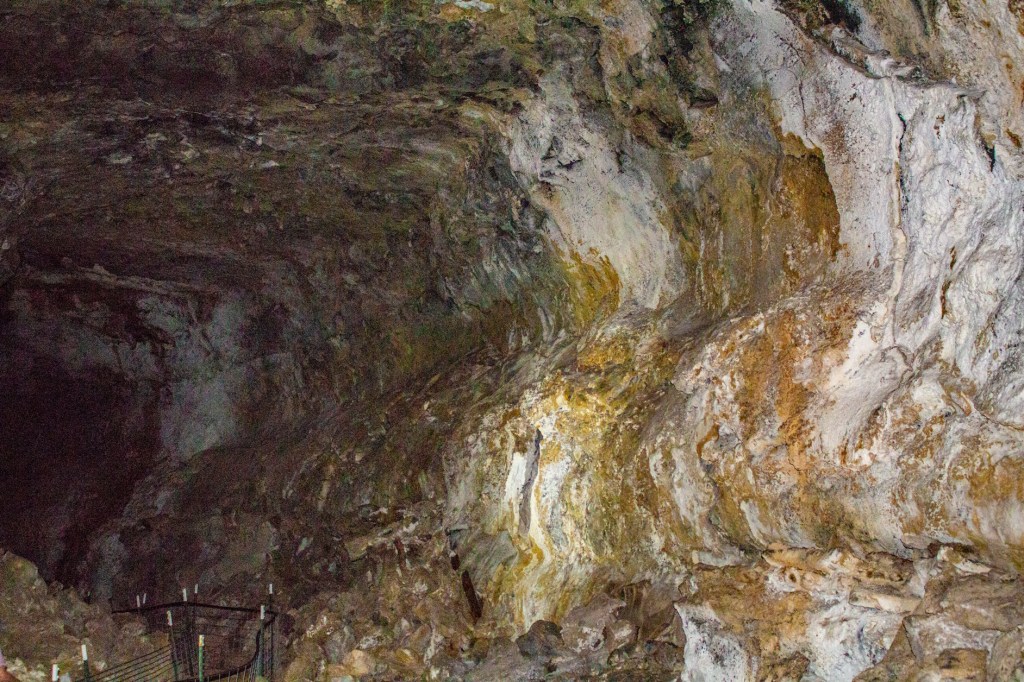
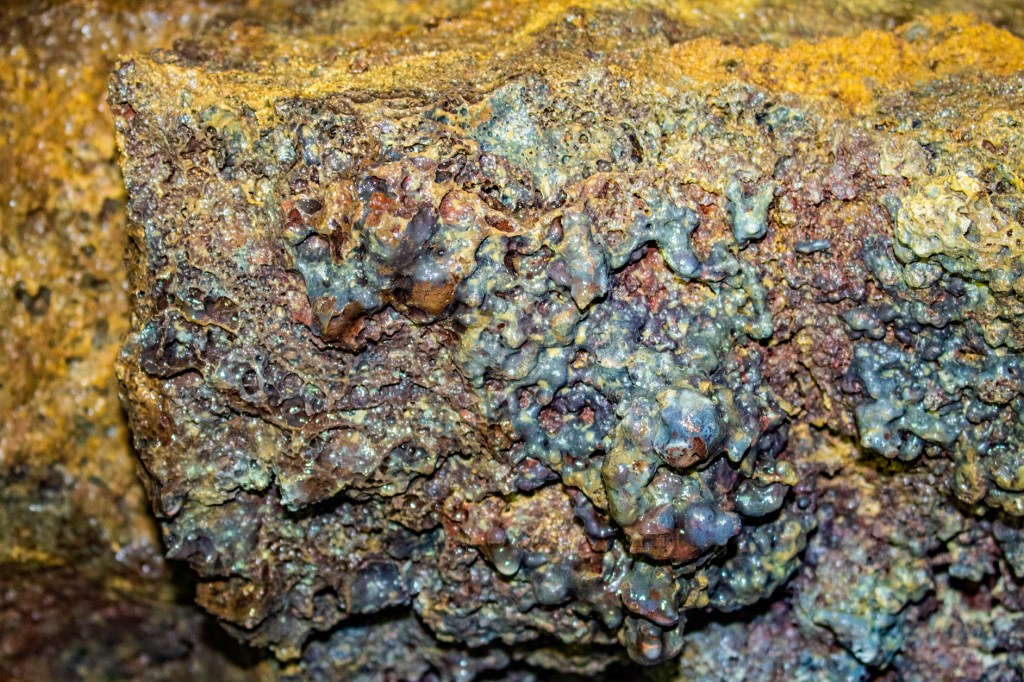
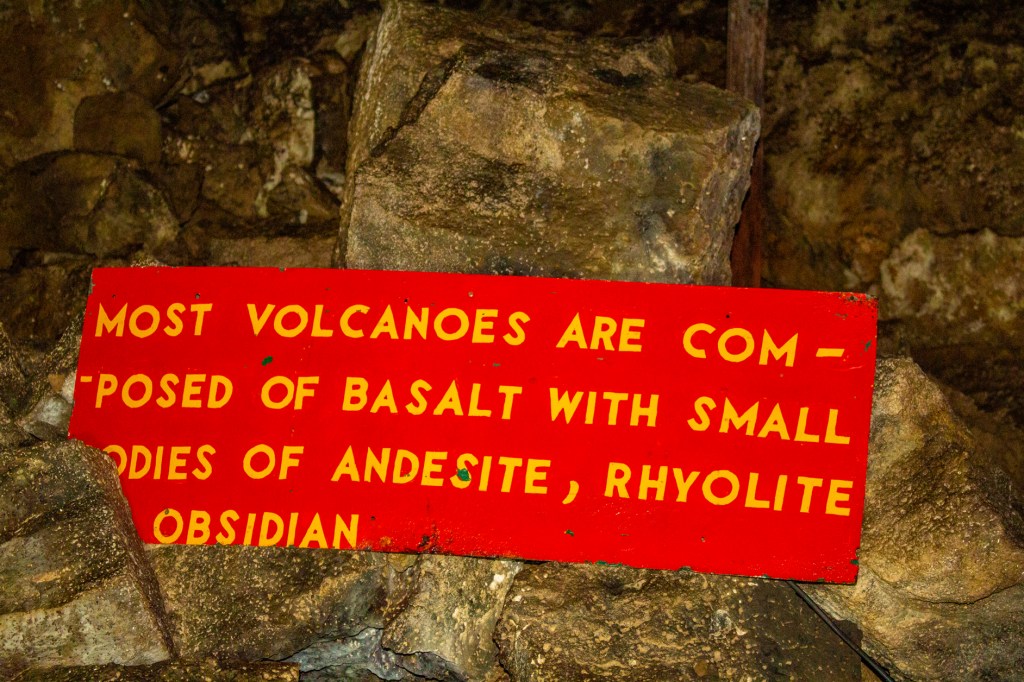
Yesterday our good friends Linda and Dale took Barbara and I for a drive to visit the Mammoth Cave in Idaho. This actually isn’t a cave at all. It’s actually a lava tube. Well me being a geologist I’m always interested in caves, lava tubes, anything thing that is geology related. Now most people believe that lava tubes are pretty much devoid of life, but as I will show you in my photos below there is a lot of life inside. Most caves and lava tubes make good homes for bats and this lava tube is no exception. This lava tube is home to a bat that weighs approximately one once and had a wing span of 6-inches. They are great for controlling insects inside.
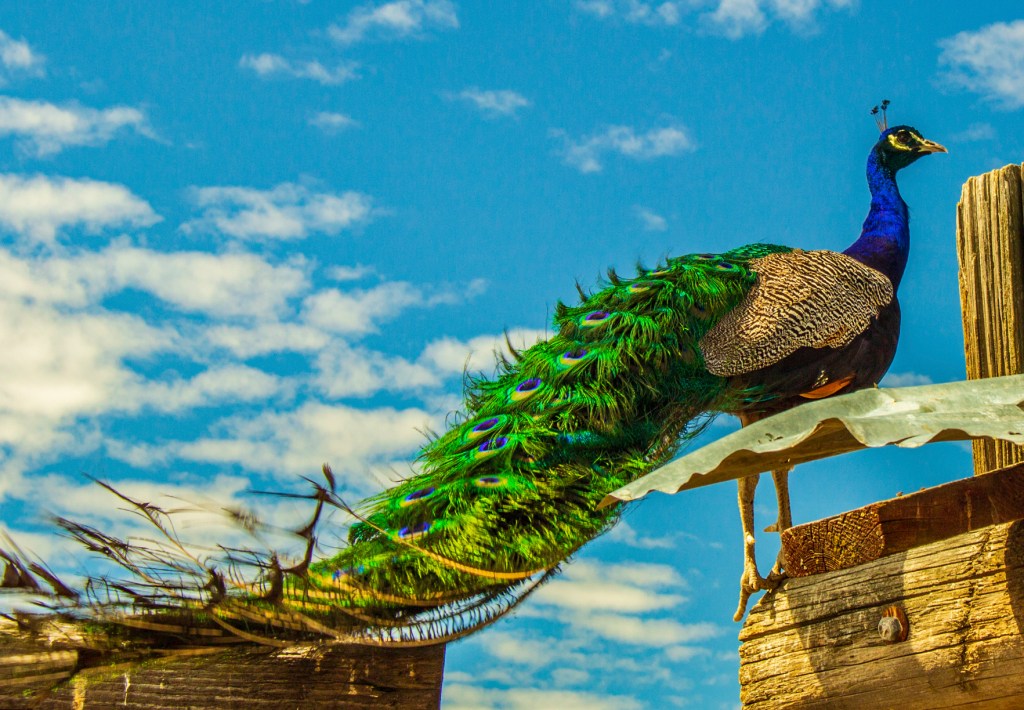
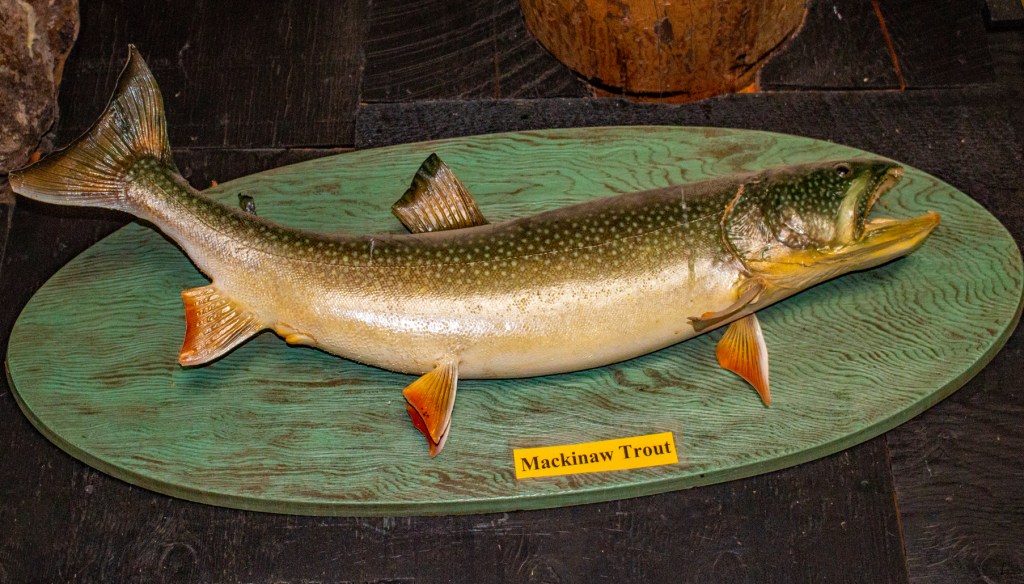
Also here is a bird sanctuary and museum. The museum is especially interesting. I’ve never seen so many things; bones, stuffed animals, rifles, etc. packed inside such a small space. It is an interesting place, so if you are ever in southern Idaho, near the town of Shoshone stop, by for a visit.
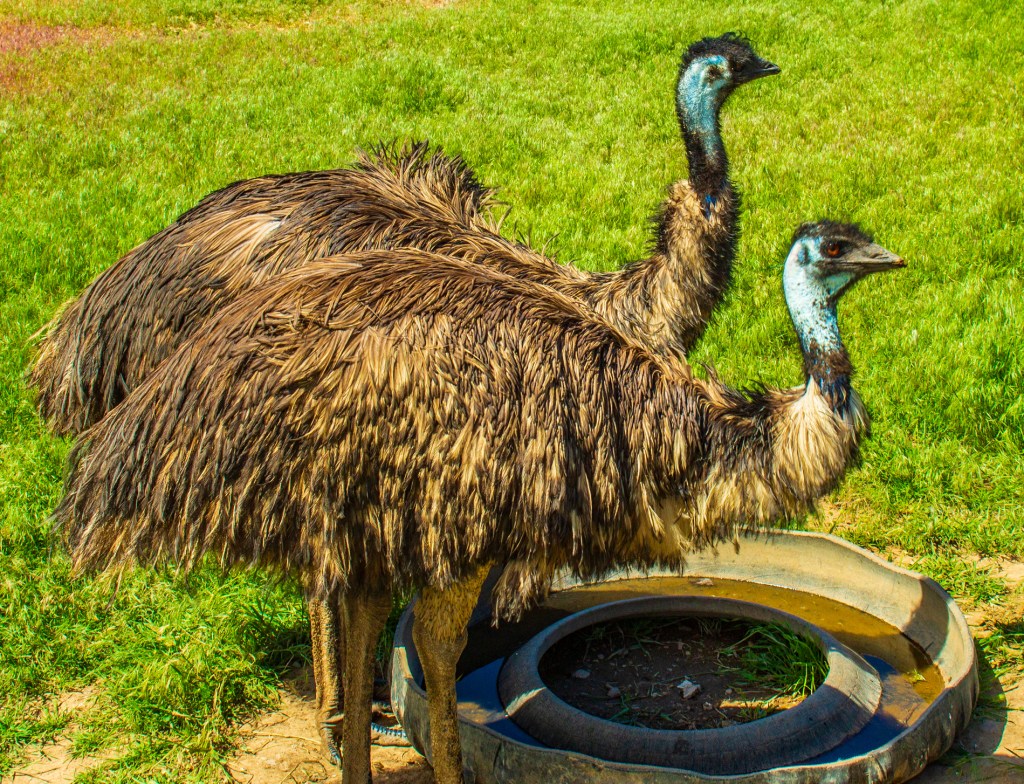
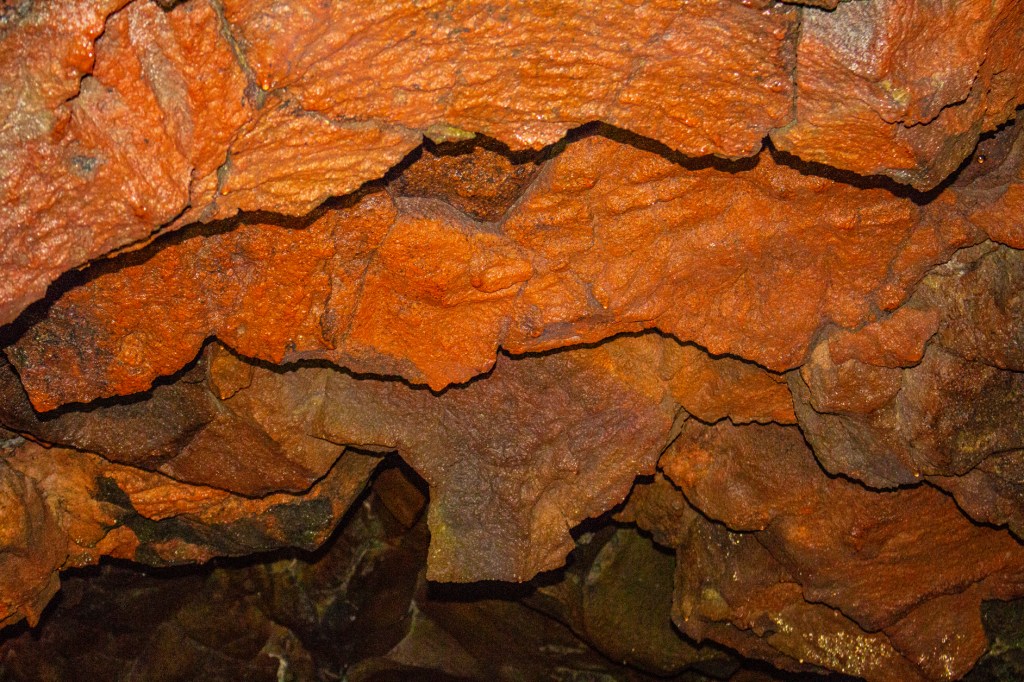
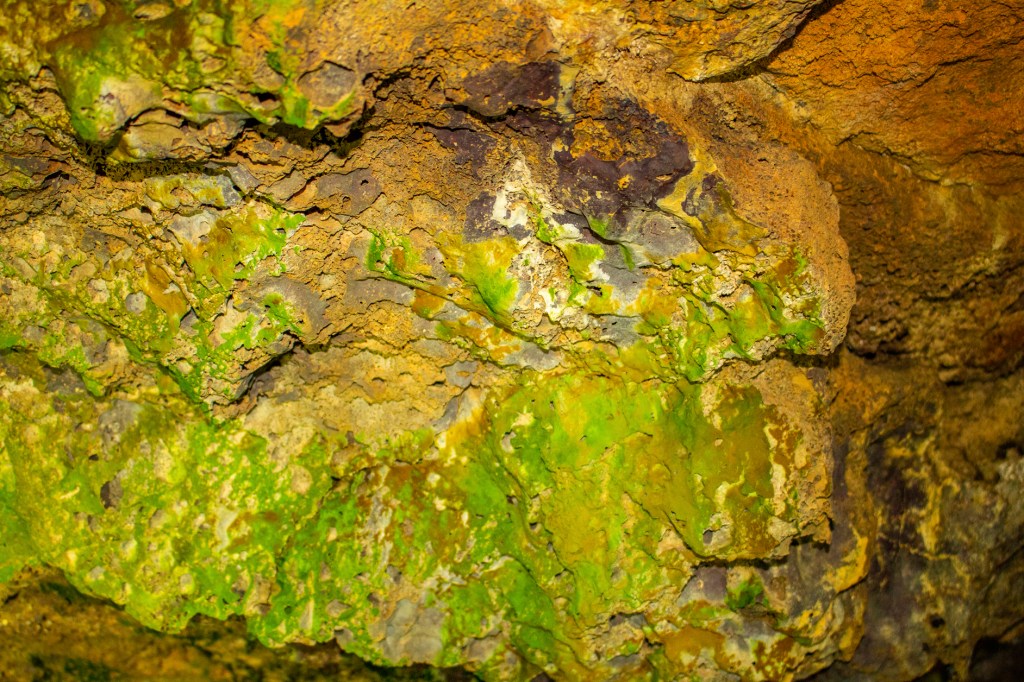
PeacockEmusDissolved solids in the water precipitate out on the cave walls.Here water, the minerals in the rock and the dissolved solids; CaCO3, CaOH2, etc. react with each other. Water enters the cave through cracks in the ceiling and oxidizes the iron in the rock (rust).Enough indirect sunlight gets into the cave, near the entrance, that this algae can grow on the rock.Inside the museum.
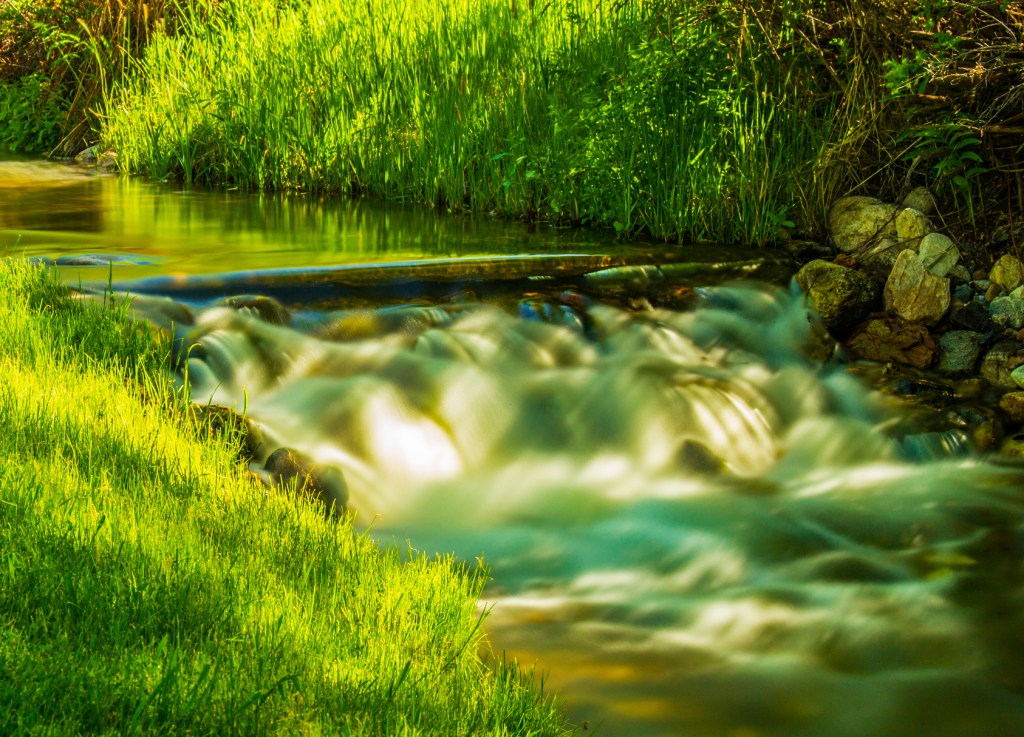
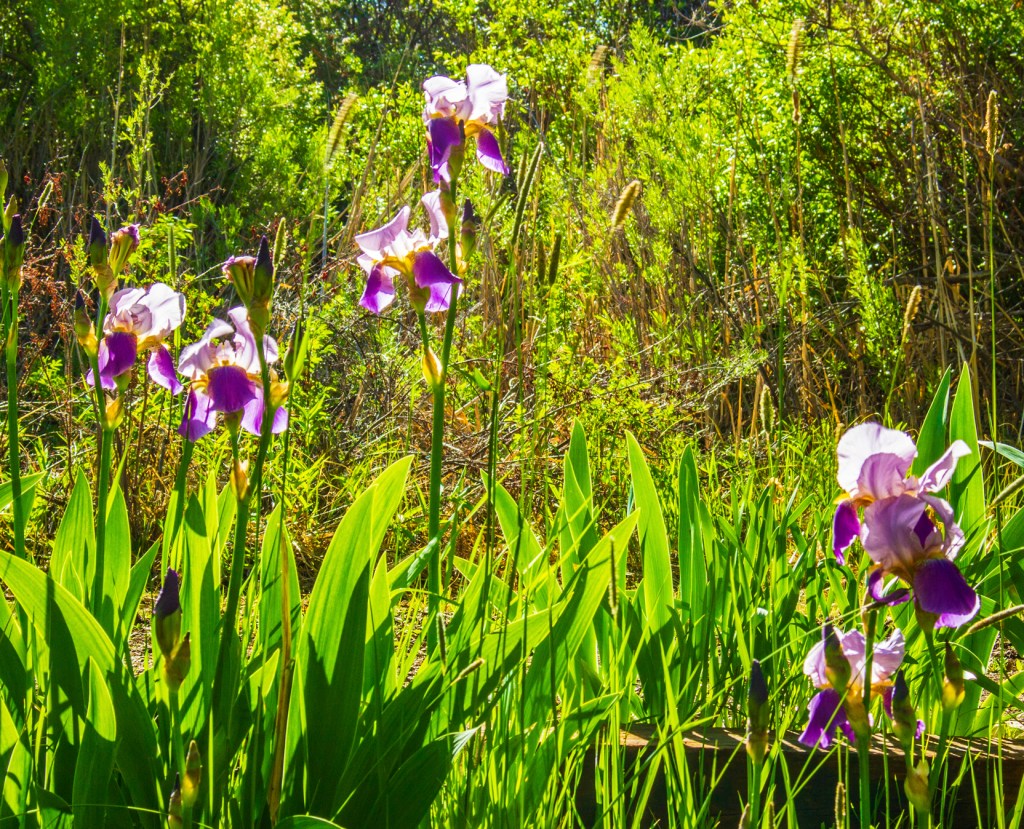
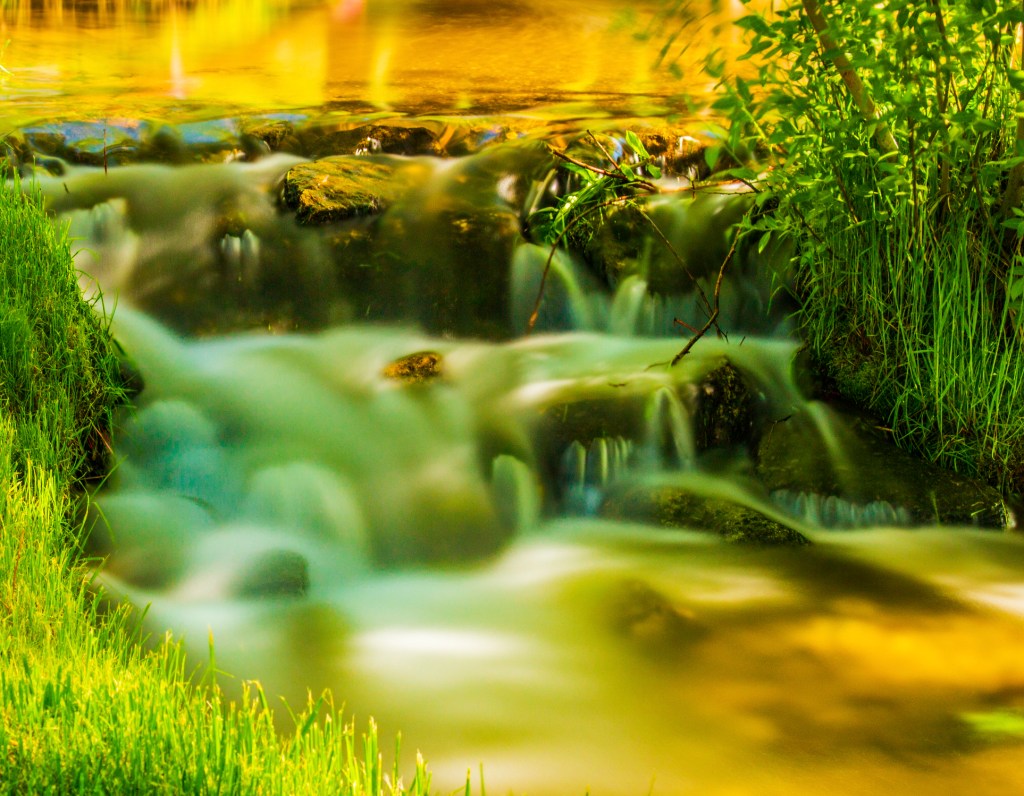
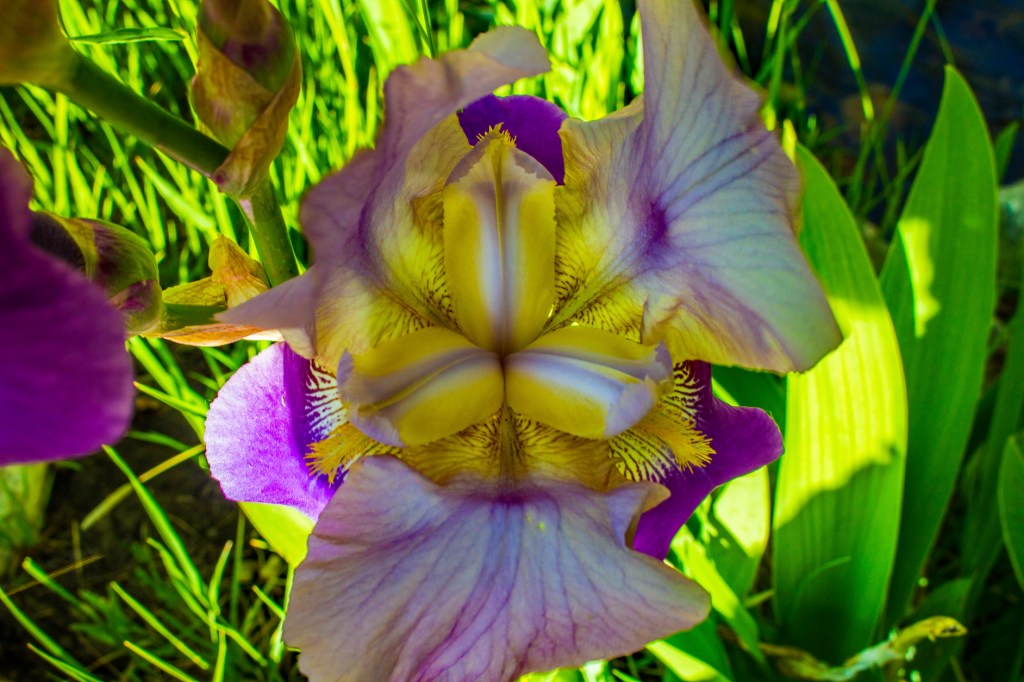
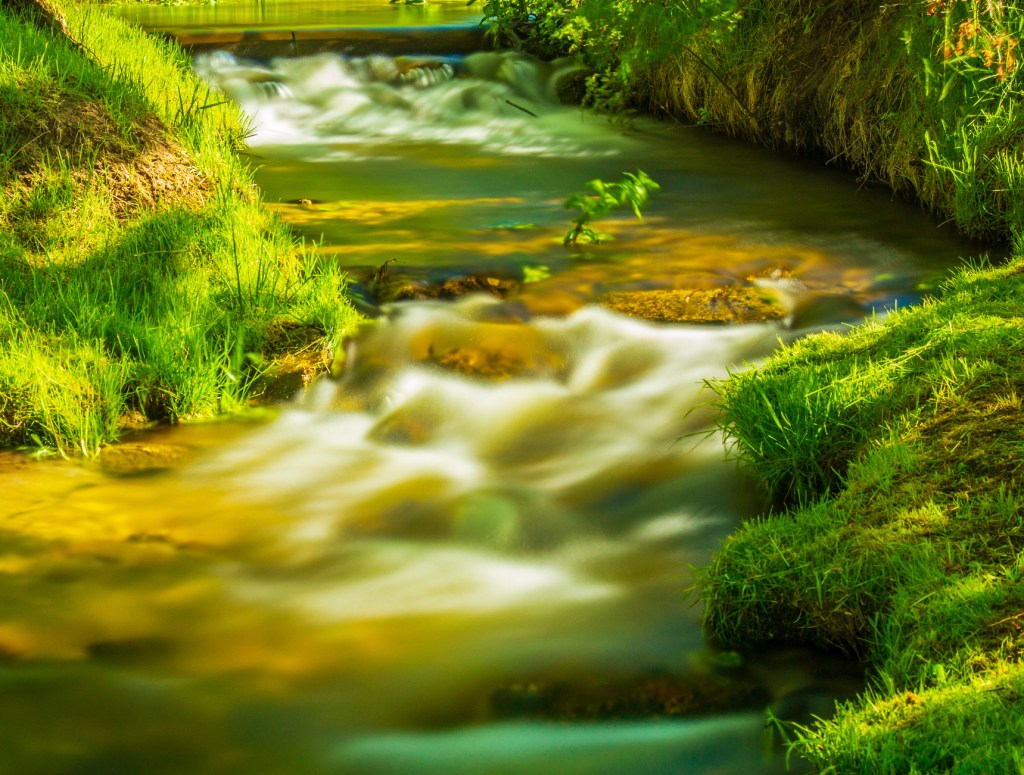
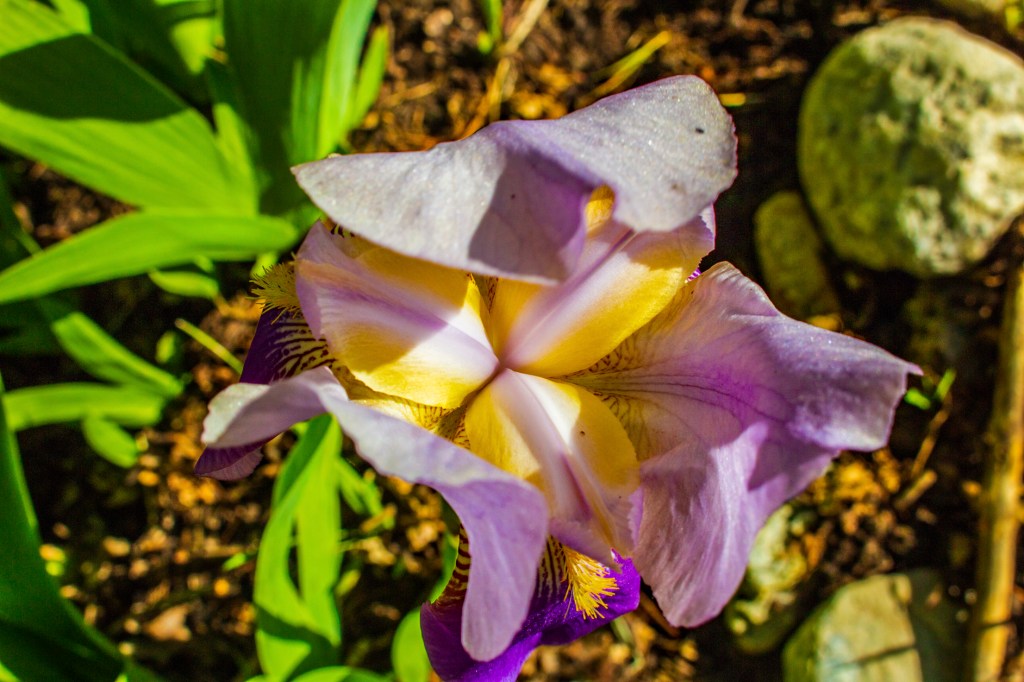
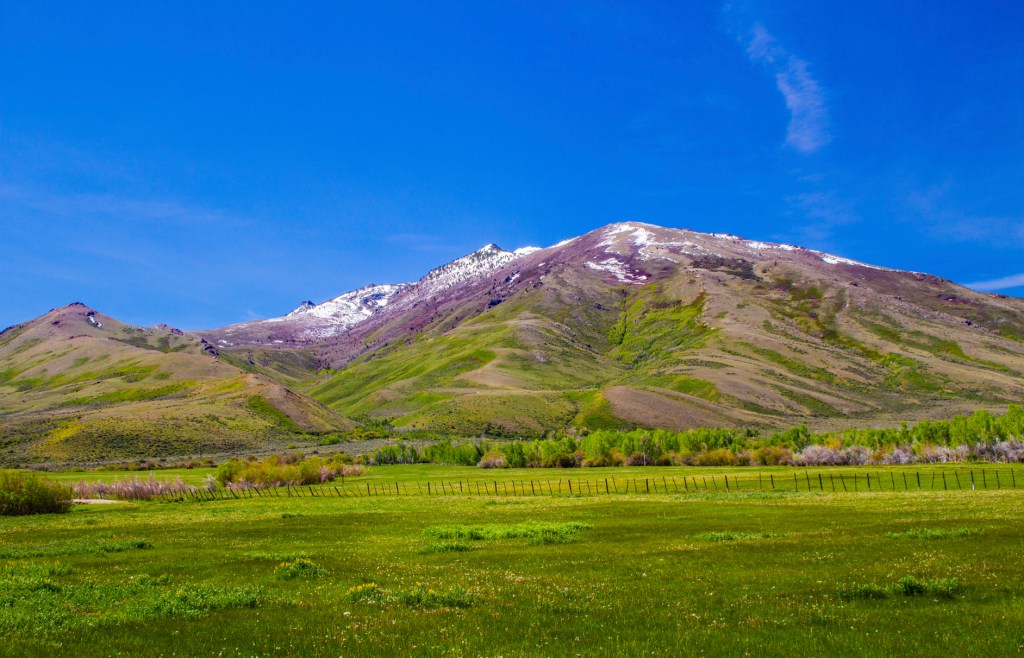
Barbara and I stayed at the Welcome Station RV Park, just west of Wells, Nevada last week. It is a nice park that Barbara and I call an oasis in the desert. Trout Creek comes off of the Humboldt Mountains, just to the south, splits and goes around the RV park on each side and rejoins on the north side providing the park with ample water. They have natural grass throughout the park and they grow their own vegetables and some nice iris and tulips. Below are a few photos I took of Trout Creek, the Humboldt Mountains and the iris.













 RV There Yet?